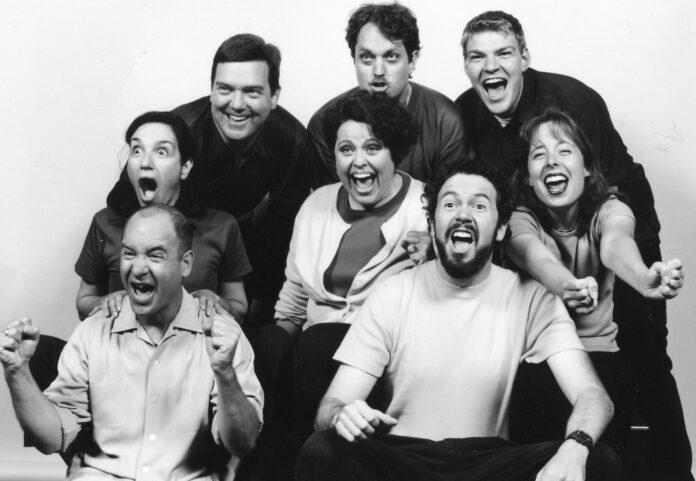
BATS Improv, San Francisco’s premier improv theatre company and school, is celebrating 40 years this season, including more summer youth camps, 40th anniversary specialty classes, community improv jams, a “Hitchcock Performance Lab,” and zesty new shows like Women of the West, Warp Speed: Improvised Star Trek, and Whodunnit? (Seriously, We Don’t Know Either).
From the very beginning, it’s been a wild flight into the unknown together.
Over four decades, the organization, in residence at the 200-seat Bayfront Theater at Fort Mason Center, became a blueprint for subsequent improv theatres. But founding member Rebecca Stockley remembers the early days as a combination of excitement and mystery.
“The excitement of improvisation was palpable, and the joy and discovery and being onstage together was addictive,” she says. “It was playful, lively, and surprising, and you wanted to do more, learn more, and perform more. The mystery of the unknown future, combined with the trust that we’d be able to take the next step, went hand in hand.”
Some of the biggest questions early on were where they would perform, where to hold workshops, who would attend them, and how much to charge.
She and her fellow improvists, including Brian Lohmann and William Hall, navigated those early days by taking one step at a time, as the company went from a workshop to a show to an organization.
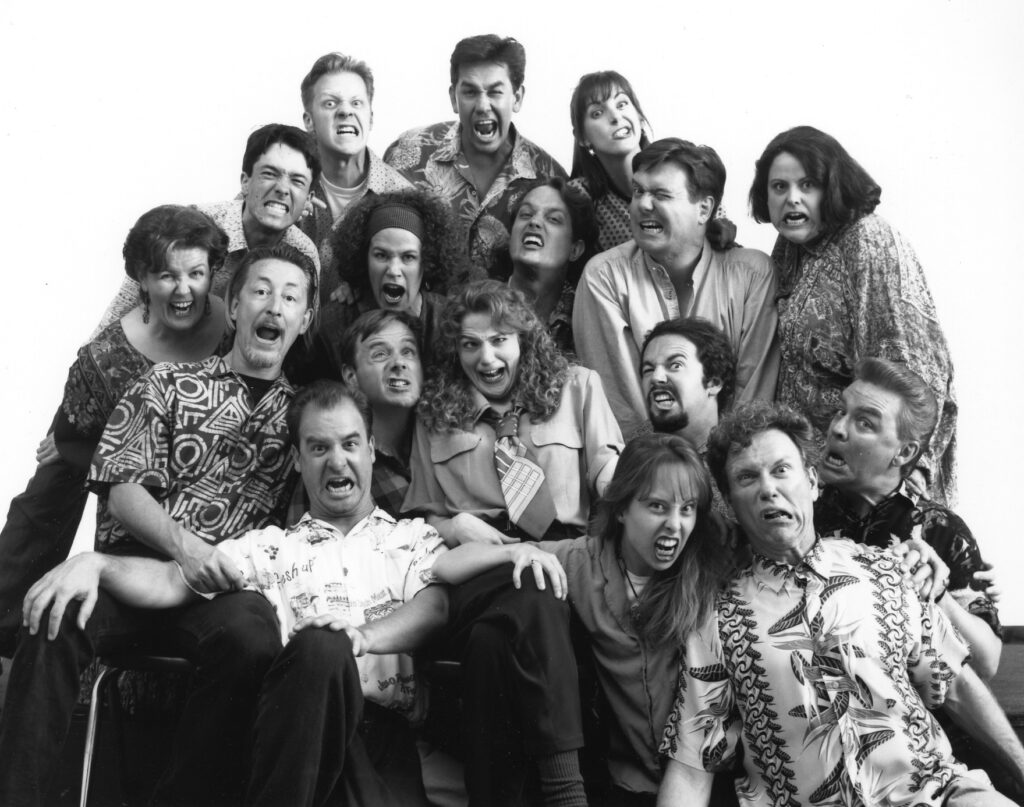
Founded in 1986, BATS Improv strove to cultivate and innovate the craft of improvisation through engaging, playful, and high-quality performance and training.
When Stockley joined in 1989, she brought her preferred Theatresports-style improv—created by British-Canadian educator and theatre director Keith Johnstone—from Seattle’s Unexpected Productions, where she got her start as a player, to BATS.
“When I introduced Theatresports to people in the Bay Area, it was because I loved it, and I thought they might love it, too,” says Stockley. “At the time, I just wanted more people to learn the format and have the fun I was having.” (“BATS” was originally an acronym for “Bay Area Theatresports.”)

Working with collaborators Zena Sylvia Tucker and Juliana Grenzeback, along with the local business theatre company Fratelli Bologna, she developed the first workshop centered on Johnstone’s theories of spontaneity, status, narrative, collaboration, and intentional performance.
To help the format catch fire, scripted actors, circus performers, and improvisers from across the Bay were invited to the first workshop.
While embracing Theatresports, BATS also helped popularize long-form improvisation in San Francisco. These approaches helped differentiate it from other improv centers at the time, including Faultline, Flash Family, and The Spaghetti Jam.
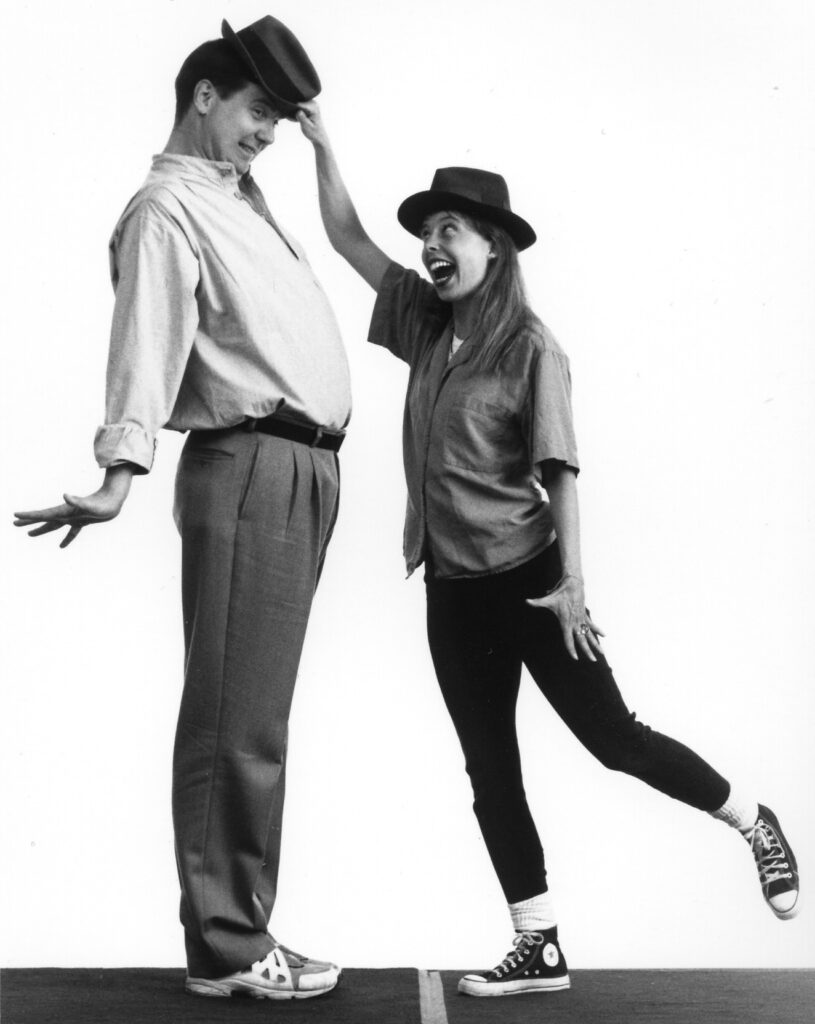
Long-form improvisation at BATS evolved gradually into a single-story, two-hour performance complete with an intermission.
By emphasizing storytelling and connection over punchlines, BATS has demonstrated time and again how improvisers can co-create deeply satisfying stories together.
“Story is one of the things that makes BATS different from other improv groups, even today,” Stockley says. “The long-form shows that we do today are astonishing.”
Stockley also credits the success of these shows to the like-minded people drawn to perform in them, who bring their curiosities and ideas together.
While other centers like Second City and UCB use improv as a vehicle for creating sketches and characters, Stockley views improv as both the vehicle and the destination.
Since BATS formed, there are now hundreds of improv groups, workshops, and styles of improv in the Bay Area. But it’s the organization’s hunger to create new forms and its fearlessness in experimenting that set BATS apart—along with notable alums like Stockley, Hall, Lohmann, Greg Proops, Masi Oka, and Gerri Lawlor.
In Stockley’s 11 years as Dean of the BATS School of Improv (1992-2003), she learned that being present and playful with others is a basic human need that surpasses childhood.
“When people explore improv, they’re being heard and seen,” she says. “They’re listening and sharing the present moment without judgment. Improv is a safe place for grown-ups to play.”
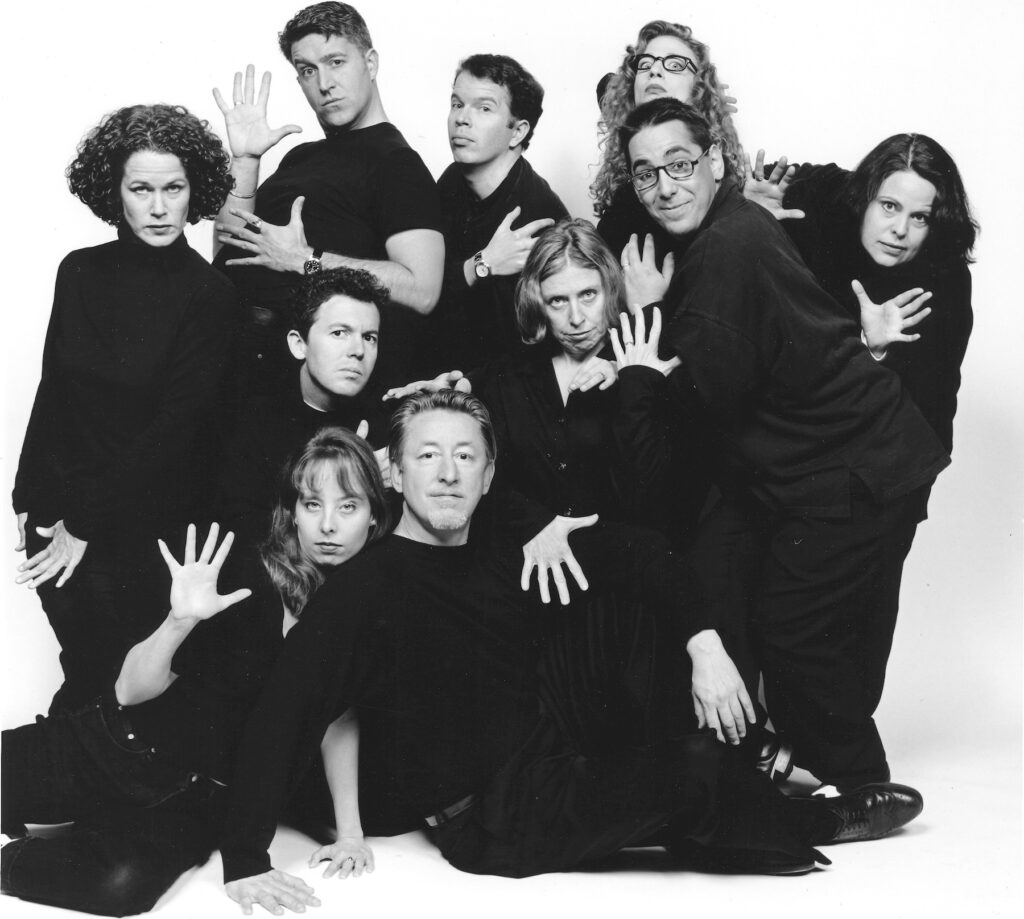
As Stockley often explains in her teaching, “The fundamental concepts of improvisation are based on an assumption that ideas are plentiful. Everyone is inspired and innovative. Everyone can access creative energy; it just takes practice. The practice of improvisation can help people become more attentive, playful, flexible, collaborative, imaginative, and courageous.”
No matter where she’s worked, creating and implementing improv programs for top institutions like the Oregon Shakespeare Festival, Berkeley Rep, and Stanford University, she’s found that skills like listening, accepting, and adapting are a universal imperative in collaboration.
Even offstage, she’s learned that some people need to listen more deeply to allow others to speak up and be heard. There is generosity in giving your attention to others and building on their ideas.
Among the milestones she’s most proud of is helping develop and perform in BATS’ first improvised Shakespeare long-form production in 1989, staged at a small theatre with a cast of four. Another was when a group of improvisers from Japan came to study at the BATS Summer Intensive with Keith Johnstone, accompanied by an interpreter.
“It was very exciting to have Japanese improvisers onstage, improvising in both English and Japanese,” says Stockley. “One improviser sang a solo in English; he cried with joy as he sang. I’ll never forget it.”
As BATS, now the largest and longest-running improvised theatre company in Northern California, enters its fifth decade, Stockley, who continues to perform on the BATS stage and teach BATS workshops, is excited about the company’s future and the next generation of culturally diverse improvisers coming through its doors.
She sees, among these new performers, a profound self-awareness, tolerance for ambiguity, acceptance of differences in self and others, and good self-care. Those qualities promise a form of improvisation that is more inclusive, safer, and more joyful for those onstage and off.
“We hoped to build something lasting,” Stockley says. “We had no idea it would last 40 years. But to this day, I dream that BATS lives on long after I’m gone.”
For upcoming programs and shows, visit www.improv.org.