Unlimited Miles: Miles Davis At 100—a mesmerizing, all-star 90-minute tribute on May 14 at Presidio Theatre, celebrating the musical giant’s centennial year—left no doubt that the impact of “the sorcerer” will last at least another 100, easy.
The music was up front: Talk is cheap if you can play Miles Davis, so pianist John Beasley didn’t introduce his band members until a good 15 minutes into the show. He also reminded the crowd of roughly 350 or so in the stylish venue who was really on stage that night.
“Miles influenced not just how we play jazz but how we listen to jazz,” Beasley said. 1959’s Kind of Blue album created modern jazz, still outselling contemporary jazz albums and inspiring legions of jazz players to innovate (including legends John Coltrane, Bill Evans, Cannonball Adderley, who all played on the record).
Dizzy Gillespie described why Miles stood out from the jump. His music “expressed less fire than we did, played less notes, less quickly, and used more open space… I liked to fill up a bar myself—the Charlie Parker school—to take advantage of every space that’s there instead of just leaving it to go over into the next bar. Miles had wide open spaces.”
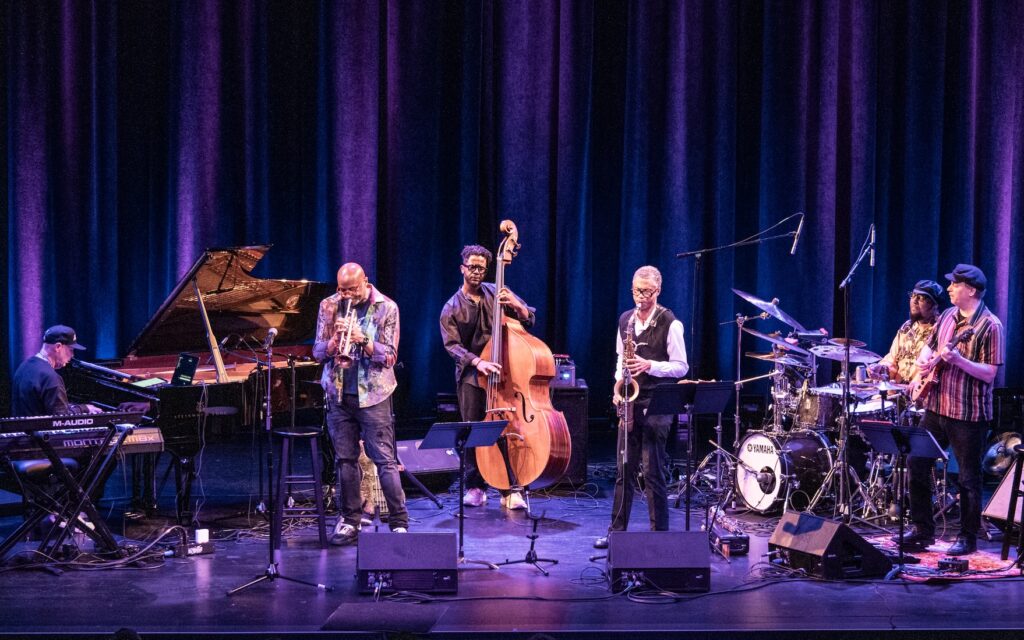
The performers on stage, who hold multiple Grammys between them, hopped among Davis’ decades and innovative styles, treating his music as an exploratory experience, not a musty museum. This was their last stop on a multi-city tour (unlimited miles, indeed), having just recorded a live album at Blue Note Tokyo. Beasley shares that he can’t think of a better city to end a tour than San Francisco. Then they all dove right in again, relishing the musical challenge famously laid down by Miles: “It’s not the note that you play that’s the wrong note—it’s the note you play afterwards that makes it right or wrong.”
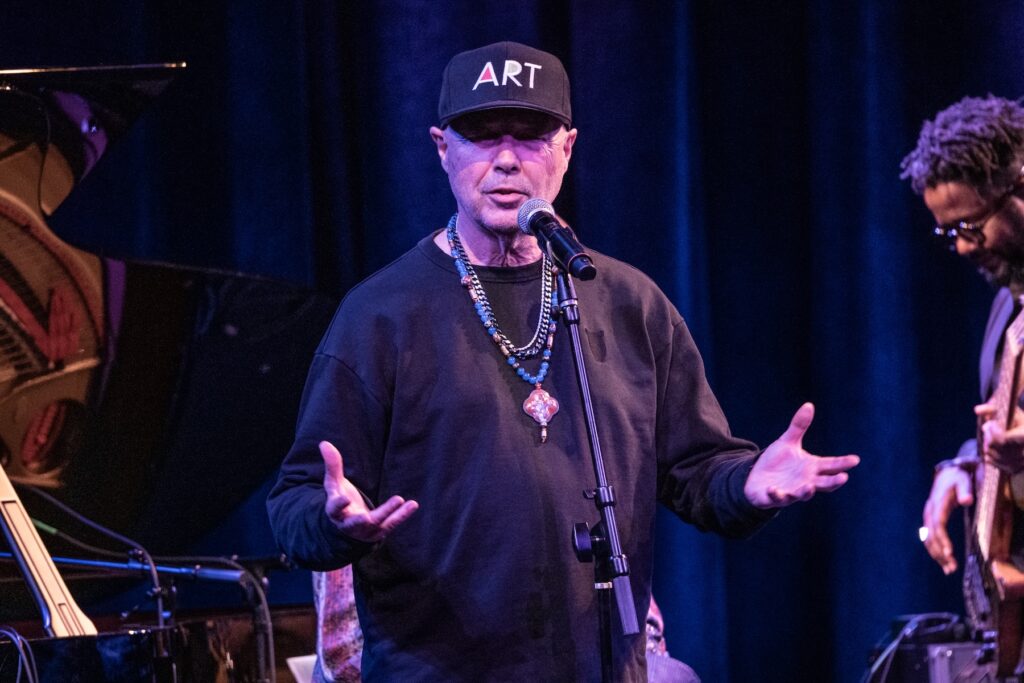
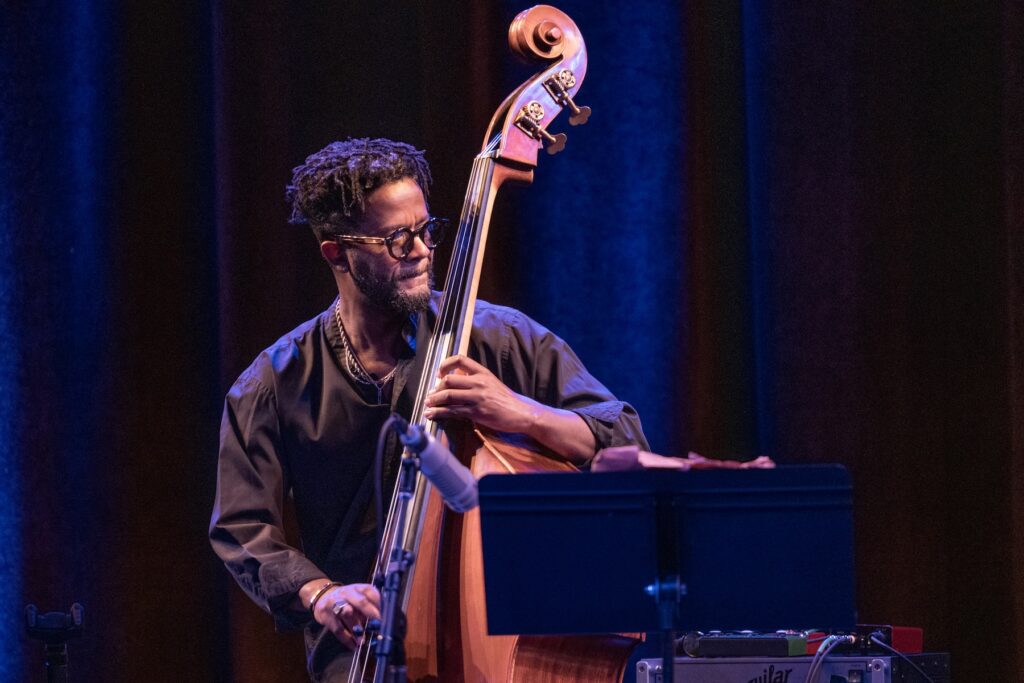
Next stop was 1949, with The Complete Birth of the Cool, then a trip to 1970 and Bitches Brew, and then off again into the 1980s, where Davis found inspiration from pop icons like Prince. The best indicator of where we were was whether bassist Ben Williams was on stand-up or electric. Familiar notes popped out from the improvisation from time to time, like a peppy riff of “Someday My Prince Will Come.” But that night, in the spirit of Miles, rules were made to be broken.
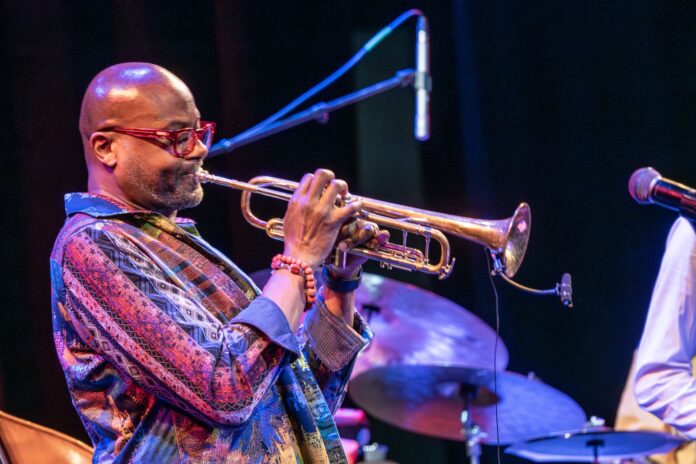
Heavy is the trumpet in a Miles Davis tribute band. Sean Jones pulled it off, walking offstage now and then to inspect what was happening from the periphery like searching for a new perspective on a painting. But no inspection could be as white-hot as a Miles Davis judgment, who famously kept his back to the audience in order to conduct his band.
From the 1980s we slipped back in time to 1965—what is time in a Miles Davis wormhole, anyway?—and explored a recording of Iris from ESP, a tribute to his wife. Beasley shared a quick anecdote of being in a Los Angeles studio in 1989 with Rickie Lee Jones and getting a call from Davis to join his band. Anyone else, and his fellow musicians would have made him stay.
The pace quickened with 1989’s “Catembe” from Amandla, an album that Jones’ sixth grade teacher slid across the desk to him when she saw how seriously he took music. (Eventually Jones was able to play “Catembe” for that teacher to return the favor.)
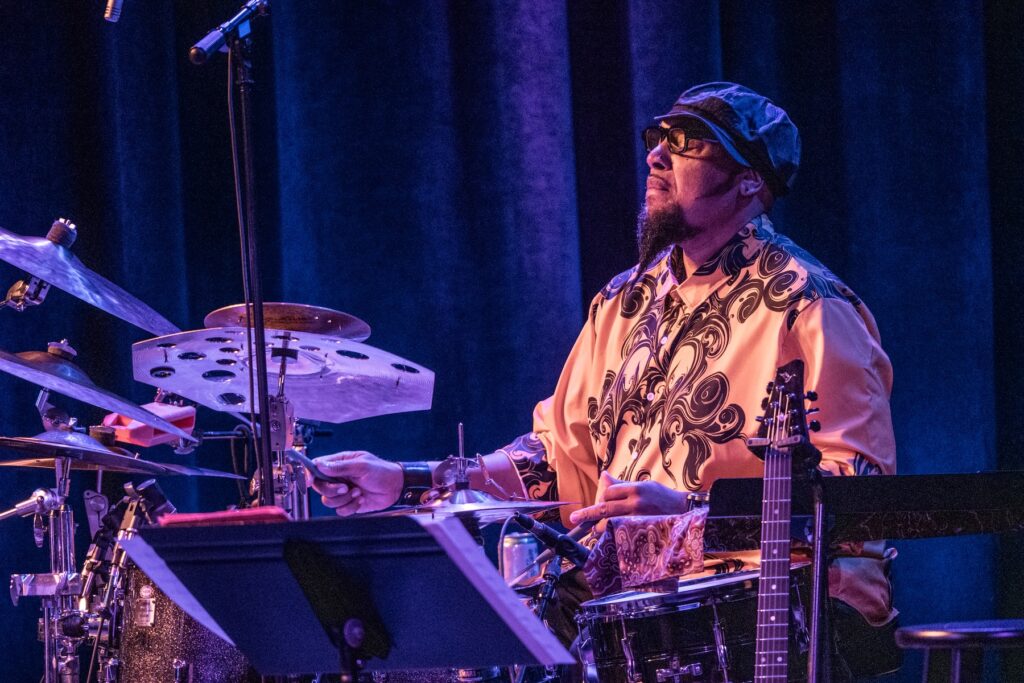
Another jump to 1968’s Paraphernelia, and then drummer Terreon Gully came from behind his kit to share his own thoughts on Davis. “Davis said ‘I want my trumpet to sound like Jimmy Hendrix’.” Gully, who had to catch a flight right after the show because he’s playing with Christian McBride, hails from East St. Louis, the same neighborhood as Miles Davis, and grew up one block from Miles Davis’ home. “Can’t be from East St Louis and not know Miles Davis.”
The band ended with Pinocchio off of 1967’s Nefertiti. Springy, elastic, going all places at once but somehow unified: The members each have their turn to pass or fail a fundamental musical test of Miles Davis. “The note is only 20 percent. The attitude of the motherfucker who plays it is 80 percent.” One hundred years later, the math still adds up: Miles Davis is 100% definitely still all that.