Elon Musk came back to the San Francisco Bay area recently to sue OpenAI’s Sam Altman. The jury in Oakland decided that the statute of limitations had been exceeded, and dismissed Musk’s case against Altman, but the owner of X and Tesla plans to appeal the ruling. The battle between tech moguls is not over.
I’d like to see Musk sue other high-tech moguls, too, including those who have moved to Florida to escape a wealth tax. Keeping them in court, preferably in a San Francisco building with lots of seats for spectators, could be the best advance in high-tech and AI programming we’ve seen in a while. It would entertain the public and bring revenue-starved cities such as Oakland and San Francisco new business by attracting media crews, TV anchors, large legal teams, and crowds of AI trial tourists, all of whom might give new business to local restaurants, shops and hotels, and maybe even have time for sightseeing while a jury deliberates.
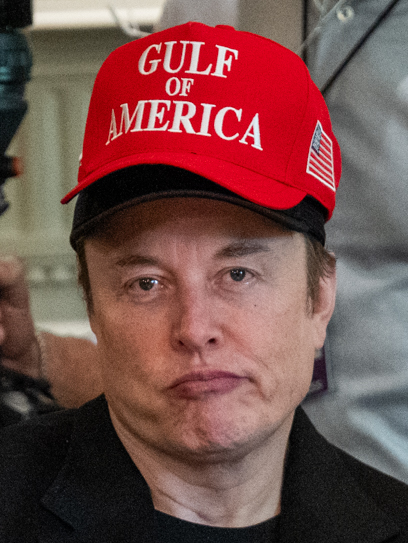
Musk sought $150 billion in damages from OpenAI and Microsoft in the case just dismissed. He didn’t need the money, and claimed to be defending the non-profit status OpenAI once had. During the trial, Musk was accused of “selective amnesia” in his testimony, and Altman was accused of lying. It’s not exactly a Homeric battle; no epic heroes like Ulysses or Thersites involved. But Oakland author Ishmael Reed is writing a play about these tech moguls, and who knows but that some A.I. chatbot won’t tell its side of the story and write a best-selling book titled “I was attacked by Elon Musk.”
Musk hasn’t always been accorded great respect by San Franciscans in the past, before he moved his X (formerly Twitter) headquarters to Texas. He couldn’t have been pleased by all the recent Tesla Takedowns on Van Ness, where protesters gathered every Saturday outside the Tesla showroom to say no to Musk’s alliance with Trump, and demonstrate against his overseeing of DOGE (Department of Government Efficiency) and its cuts in human services, science, education, medical care and the arts. I suspect he would have preferred to have his AI lawsuit tried in South Texas.
But Northern California is where AI and many of its innovators are based, and the OpenAI court case ended up in Oakland, after a random judge assignment moved the trial there.
In his lawsuit, Musk tried to take control—or at least reduce Altman’s control—of AI interests they once shared. It turns out neither Altman nor Musk could control the outcome; nine jurors and a judge were in charge. AI was subject to their decisions too. For a brief time, as the jurors deliberated and reached a verdict, ordinary men and women ruled over the future of AI and billionaires. That’s not an everyday occurrence.
We know Elon Musk is often ahead of other engineers in his innovations; and it may be that he has set a new precedent once again. His lawsuit against Altman could be the first of many that he, his former partners and backers bring against one another, as artificial intelligence industry profits pile up and the founders feud over the spoils.
San Francisco’s economy could benefit greatly from the influx of journalists, TV crews, celebrity billionaires and gawkers that AI trial tourism would bring to our city’s hotels, restaurants, and security firms.
The spectacle of wealthy men fighting one another in courtrooms, trying to prove that one of them is entitled to more AI-generated profit (or non-profit, according to Musk’s lawsuit) than another, could be seen as a new, modern variant of the battles Ned Ludd is said to have fought against machines in the 19th century.
Not that Musk and company are Luddites, but trials like the one just completed in Oakland enable these men (few women involved) to act extraordinarily human, as they display greed, distrust, lies, and other highly emotional human behavior that computers and AI machinery are not yet able to match.
The AI lawsuit in Oakland continues since the verdict has been appealed by Musk’s lawyers. Let’s hope the first round improved Oakland’s economy, and look forward to future court battles over AI that might convene in San Francisco.
Maybe a courthouse near Civic Center will host the next installment of Musk’s battle plan. Other lawsuits over artificial intelligence brought against Google, Amazon, Palentir, Meta, or OpenAI could also take place here in San Francisco, the center of high-tech innovation. Large teams of lawyers and their clients, AI billionaires in court for months, spending their days a block away from City Hall, tracked by journalists and tourists, could be the best gift AI can give our city’s economy.
Joel Schechter has written several books on satire