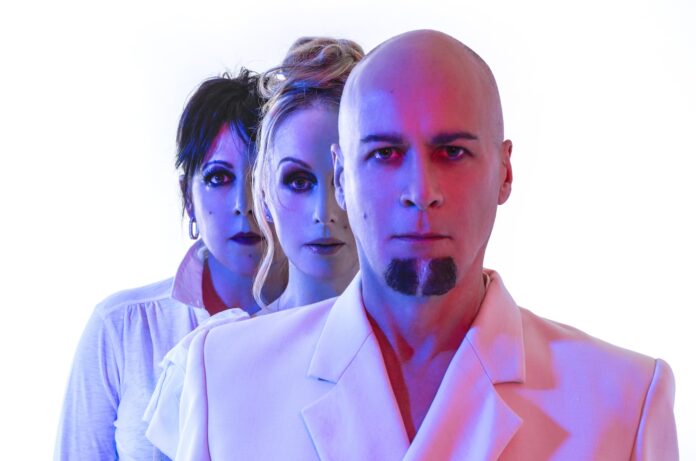
On June 5, The Human League returns to The Warfield—where it played its first San Francisco gig back in 1982—alongside Soft Cell and Alison Moyet for the “Generations Tour,” a lineup that feels less like a throwback than a continuation.
The reason became clear two decades later. On New Year’s Eve 2002, packed into the “Bubble Party” at the BACKFLIP/Phoenix Hotel, the throngs witnessed an epic Human League performance that opened with “The Sound of the Crowd,” a fan favorite from the synth-pop act’s 1981 LP Dare! The drum machine pulsed, the synths shimmered, and something collective snapped into place. Everyone was locked into the music, the crowd, and the moment.
It remains burned in memory as an extraordinary concert experience, not just because of the crowd’s ecstatic high, but because of how perfectly the music and the feeling aligned.
“I’m afraid it might have been 90 percent of what made it the best show,” frontman Philip Oakey jokes after hearing how many attendees were on ecstasy that night. He remembers the experience from a very different vantage point.
After the show, he wandered back to his hotel in search of a drink that never materialized. “I remember that so well,” he says. “After the show, I couldn’t find anyone who’d sell me a drink on New Year’s Eve!”
It’s a small, almost absurd—yet very typically San Franciscan—detail. Still, it speaks to something larger: the way the city has existed in the band’s orbit as a place they’ve returned to often enough for those kinds of memories to accumulate.
For a tour rooted in the early ’80s—Soft Cell’s Non-Stop Erotic Cabaret and Dare! were both issued in 1981, with Vince Clarke and Moyet’s Yazoo following a year later with Upstairs at Eric’s—what’s striking is how little any of it feels static, or even dated.
These are artists whose music never really disappeared, circulating through radio, club culture, film, and streaming, while their touring patterns have kept them coming back to San Francisco for more than four decades. Recent sold-out shows at The Regency Ballroom in 2018 and 2023 attest to this.

The Human League’s story begins in Sheffield, England, at the tail end of the ’70s, where a group of self-described outsiders began experimenting with synths at a moment when traditional musicianship still dominated. Their breakthrough came with Dare!, a record that not only produced monster hit “Don’t You Want Me” but also helped define that decade’s pop as sleek, electronic, and emotionally direct.
Even at the height of that success, when tunes like “Mirror Man,” “(Keep Feeling) Fascination,” and “Human” were climbing the charts, Oakey remembers something closer to uncertainty. “The ’80s are a little tiny bit of a blur, and not because of drugs,” says Oakey. “We were out of our comfort zone, and the fear that we would be found out to be not as good a group as we were pretending to be just made everything difficult.”
That tension between innovation and insecurity—partly driven by their emergence from the avant-garde post-punk scene into the shiny world of pop—was part of what made the band compelling. While the outside world saw confidence and style, doubt persisted internally. “We never felt very cool,” he says. “We felt like awkward northerners trying to build a fantasy world.”
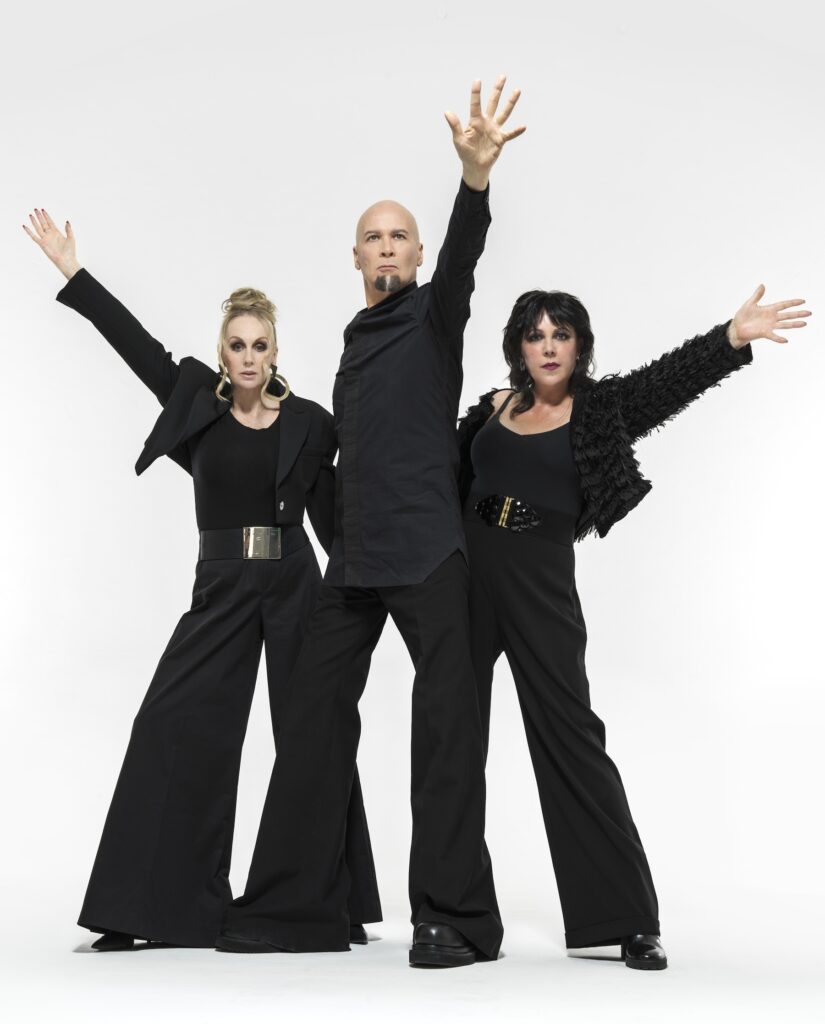
San Francisco turned out to be the perfect playground to explore that world, and over time, the city became less a stop and more a constant. “I feel like I’ve been there so many times that I’m familiar with it,” says Oakey. “I know where to go. I feel at home.”
The memories that surface are specific and grounded. Oakey recalls his keyboard player cycling across the Golden Gate Bridge and getting stranded—the band’s own polished lyrical fantasy, “Take a drive across the Golden Gate” from the track “Things That Dreams Are Made Of” nods to the minor indignity of being stuck mid-span.
Fans who first discovered The Human League in the early MTV era now stand alongside younger listeners who found the music decades later, creating a crowd that reflects the tour’s title in real time. “I think we have now lived through generations,” Oakey says. “We certainly have people who are the children of people who used to like us. Maybe even grandchildren.”
Soft Cell’s story runs alongside this one, though its emotional tone has always been different. Formed by Marc Almond and Dave Ball in 1979, the duo built a sound that was even more vulnerable, exposed, and daring in its intimacy. Its version of “Tainted Love” became one of the defining songs of the decade, embedding itself in San Francisco’s club culture and resurfacing across dance floors for years afterward. “Sex Dwarf” runs a close second.
Soft Cell’s presence on this tour arrives without Dave Ball, whose passing adds a quieter, more reflective layer to the occasion. “It is part of what happens when you get older,” says Oakey. “We knew that Dave wasn’t very well, but it was still horrible. He was a nice guy who really cared about music and made a big contribution.”
Moyet brings yet another dimension to the lineup. As one half of Yazoo, she helped create a sound that paired minimal electronic production with a voice of striking depth and power. Songs like “Situation” and “Don’t Go” didn’t just chart but also became fixtures in dance spaces, their immediacy translating effortlessly to the floor.
Her solo career expanded that foundation, but the voice remained the anchor. Like the others on this bill, she has consistently returned to San Francisco, maintaining a connection that feels lived-in rather than nostalgic. “Alison is the most wonderful singer,” Oakey says simply. “It’s just going to be fantastic.”
What ultimately connects all three artists is not just their shared era but the technological shift that made their work possible. The rise of synths and sequencing allowed a new kind of musician to emerge, one less tied to traditional training and more focused on ideas and atmosphere.
“We were amateurs compared to the generation before us of prog-rock artists like Yes and Genesis, where you had to be real musicians,” says Oakey. “We were one of the first, because of synths, where you didn’t actually have to learn to play as fast as it sounded on the record.”
That shift opened doors but also introduced doubt—a nagging sense that they might be exposed as less legitimate than their predecessors. Decades later, that doubt feels almost beside the point. The songs have endured, and so have their audiences.
“I look more at the survival of us,” Oakey says. “There were about four points when we could easily have blown it, but we managed to get through.”
The sense of survival runs quietly through everything about this tour. It’s not a celebration of a fixed past but of the fact that these artists are still here, performing and connecting.
“I hope we’re going to surprise people,” says Oakey. “Music can take you out of yourself … and for a few minutes … it can just be the joyful part of humanity.”
With a new Human League LP in the works, the first since 2011’s Credo, the June 5 show at The Warfield doesn’t feel like a closing statement. It feels like another chapter, one more night in a relationship between artists and a city that has been unfolding for decades.
When the lights go down, it won’t just be about revisiting what these songs once meant. It will be about hearing them again, in the same room, with a different crowd, and finding that they still bring people together 45 years later.
GENERATION US TOUR 2026: THE HUMAN LEAGUE WITH VERY SPECIAL GUESTS SOFT CELL & ALISON MOYET Fri/5. The Warfield, SF. Tickets and more info here.