The early part of the 20th century was a time of intense political tumult in Eastern Europe. In 1911, almost 50 years after Karl Marx published Das Kapital, workers and peasants in imperial Russia, Poland, and Ukraine were building what would in 1917 become the Russian Revolution. Lenin was in exile in Paris, organizing Bolshevik groups. Tsar Nicholas II was dealing with the fallout of Russia’s defeat in the Russo-Japanese War. And in Kiev, Jewish activists with the radical Bund were working underground to create a revolutionary society.
It’s the perfect setting for a wonderful novel of historical fiction by my old friend Elaine Elinson.
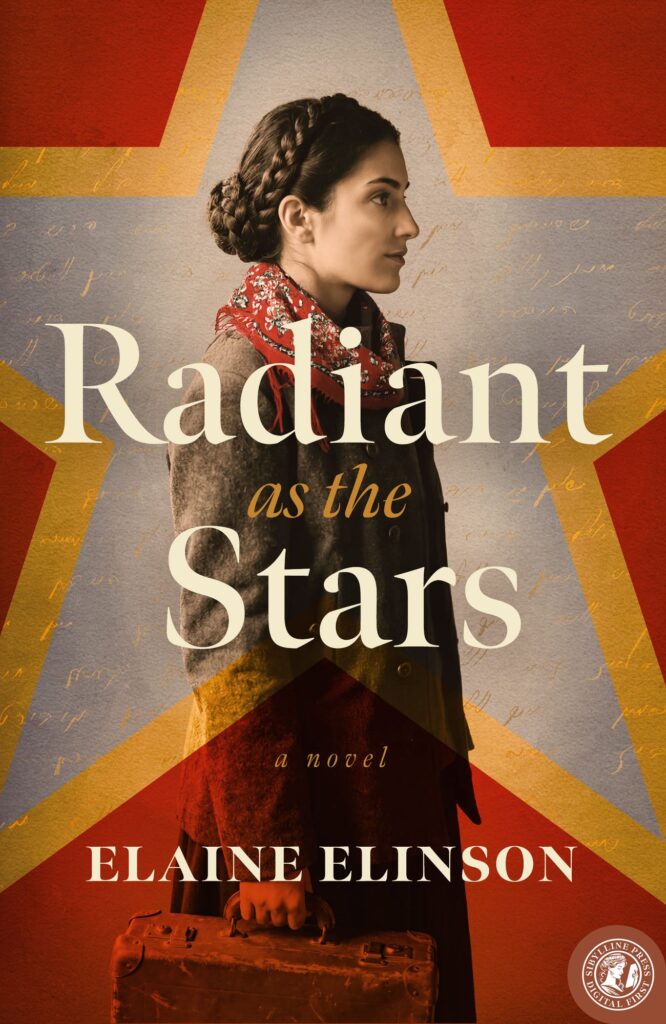
Radiant as the Stars (Sibylline Press) traces the journey of Anna Reader, who is doing the opposite of what many Jews were doing in that period. Her Ukrainian family has fled pogroms and settled in Chicago; at 20, sick of working in a sweatshop, she decides to return to Kiev and join the revolution.
It’s not easy: Her cousin Chava is a leader in the Bund, but the radicals are slow to accept and trust her. Then Chava gets arrested, and Anna defies the Bund leadership to try to save her, a plan that goes terribly wrong.
In the end, Anna has to flee to avoid her own imprisonment and possible death.
It’s a great read just as a thriller, with powerful characters and sparkling dialogue. But it’s also a look at that period in history—and it’s not all fiction.
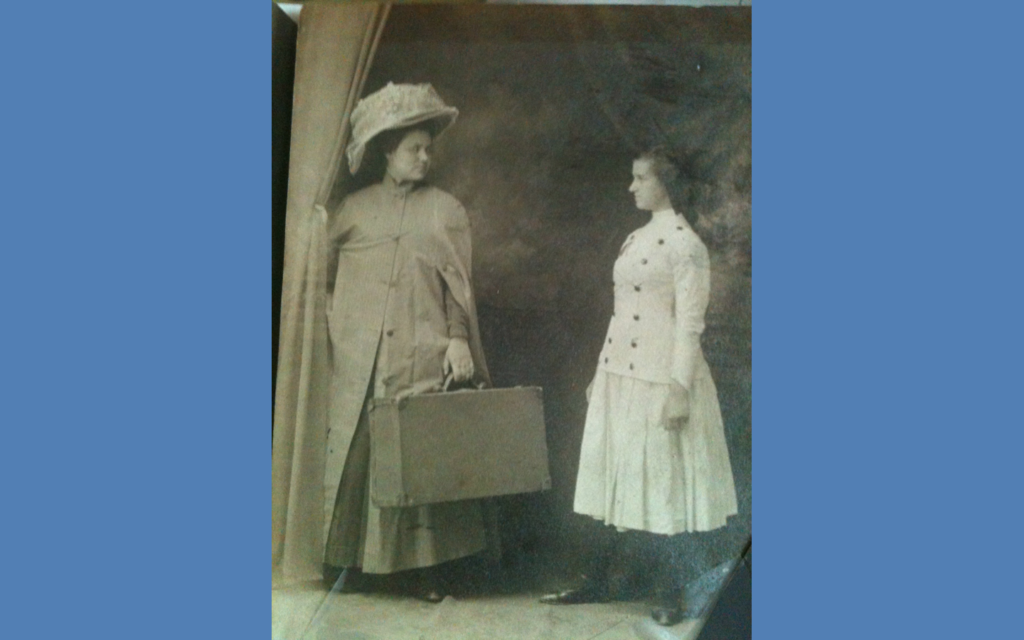
Elinson’s grandmother actually left Chicago in 1911 to return to Kiev to fight in the Russian Revolution. She kept detailed diaries, which survived her return to the United States and form the basis for this novel.
We caught up with Elinson this week; her thoughts follow.

48HILLS The book is loosely based on the life of your grandmother. Did you know your grandmother growing up?
ELAINE ELINSON When I knew her, we were living in Chicago. We saw her every weekend, basically.
She was like this just very, very warm, generous person. Then as I got older and got more involved in political stuff, she was very happy about that.
She and my grandfather moved to Miami Beach—with actually people from her shtl in Ukraine that had lived in the same apartment building with them in Chicago and then moved to this apartment hotel in Miami Beach.
She was always reading. And she was always reading The Forword, which was the socialist newspaper.
During the 1972 Republican national convention, their apartment hotel was very close. And she saw kids running down the street running from the police.
She motioned for them to come in, and they said, the police are after us. And she brings them into her apartment. And the police come in. And they knock on the door, and they say, you know, we’re after these kids. And she said, but these my guests having a cup of tea. And she sent the police away.
She wasn’t really very active politically when she came back to the states, but she always kept that in her heart.
48HILLS You based this in part on her diaries. Tell me about finding the diaries and the challenge it must have been to translate them.
ELAINE ELINSON We didn’t know anything about the diaries. I had heard a few stories. She told me hardly anything about her early life.
When my mom died, my brother was a mathematician, so we decided he was the one to go through my mom’s papers. He finds the diaries, and they’re all in Yiddish. They’re on this crumbly yellow paper that is inside sort of faux leather brown notebooks. There’s five of them. And my mom had kept them.
So my brother Mitch and I decided we had to get them translated.
My father was still alive, and he could read Yiddish, but he couldn’t read this. It was it was in pencil. She wasn’t very well educated. The paper was crumbly.
So my three brothers and my two cousins pooled some resources to get translators. And little by little, they started coming back and people said, you know, I can’t read this. And these were professional translators.
So we had to find people who were called decipherists. This is a trade that grew up after World War II because during the war, the Jews wrote these yizkor books. Basically, the rabbis asked everybody to write what their life was like, and then they buried them because they knew they feared nobody was coming back. So those were books that were also written by not well-educated people or some educated people. So we found these folks who could decipher it and turn it into a readable print.
Then we started getting back pages from the translators.
It was just fascinating because basically her diaries were very internal, on a feeling level. Not like how much did she earn or how much was a loaf of bread or what was the fare on the El train. So the context was not there. I had to do a lot of reading and research on the context.
48HILLS But she did actually leave Chicago and go back to Ukraine in 1911 on the eve of the Russian Revolution and work for the revolution.
ELAINE ELINSON: Yes, she did.
48HILLS Your descriptions of the scene, obviously, a lot of that’s your own research. Did she actually end up going to jail?
ELAINE ELINSON I don’t know. Likely that could have happened. But it could have or it could not have. She definitely did go back. She told us she did. And we actually have a copy of her US passport, and the ship that she went on and the ship that she came back on.
She was a member of the Bund in Chicago. And the Bund in the United States was very labor union based. But the Bund in Eastern Europe and in Russian Empire and Poland was a revolutionary organization. So they were the same organization, but very different perspectives.
So the whole thing about whether she was she was trusted and did she know how to act there was my speculation.
48HILLS One of the things that is interesting that you talk about in the book that is the scene with the informer. Anna was not originally trusted, but they got to trust her more. But then there’s a scene where a guy who everybody trusted and was like the fixer who got the Jews permits. Everybody loved him. He was actually an informer in the prisons and he fingered her.
And then when she got out, there’s the scene where she basically goes to the people that says he’s an informer, knowing that that meant he was going to die.
ELAINE ELINSON Or something horrible.
48HILLS When we talk about revolutionary organizations in that period of time, trust was everything. And informers could not be tolerated at all. Because that was people’s lives.
And I think you do a really good job kind of playing that balance and explaining that it was hard for her to gain trust. She made a mistake that undermined her trust. I won’t spoil the book for people, but she made a bad mistake that undermined her trust for good reasons. She was trying to help save her cousin. She did something that she basically violated what the Bund had told her to do, which is to just stand by and let us handle this. Which they actually were able to do. Instead, she went off on her own and tried to solve the situation and made it worse.
But I think you portray what that moment was like for people, that this was a real revolutionary movement that six years later became part of the Russian Revolution.
I wanted to ask you about that. Because the Bunds, Jewish people, were very involved in the early days of the Russian Revolution. And in fact, in the. Correct me if I’m wrong, but I believe that in the early days under Lenin, 1917, 1918, Jewish people were very much accepted. And were looked at as part of the revolutionary country.
And then after World War II, the Soviet Union became not a very safe place for Jews. What happened?
ELAINE ELINSON I don’t know as much about the period after the Revolution or the inter-war years; the book focuses on the time that Anna was there and so hopeful for the future.
Ever since the rule of Catherine the Great who determined that Jews could only live and work inside a prescribed area—the Pale of Settlement—there has been an uneasy relationship, sometimes breaking out in outright hostility.
In 1911, the Bund was a big part of the Social Democratic Revolutionary Party, brought in by Lenin. And Trotsky was a Jew, and he was made head of the Red Army. But it did go back and forth.
There were times, even leading up to 1917, when Jews were excluded from the revolutionary groups—and then there were times they were welcomed back in. It was a pretty fluid situation.
During WWII, Jews were very much in the forefront of the anti-fascist movement. After the war, however, under Stalin, there was a breaking point, where he accused the Jews of counter-revolution. This was by way of mass arrests and exile of Jewish leaders and intellectuals. epitomized in the most horrible way by the 1952 Night of the Murdered Poets.
And the thing is, in the beginning, really, the promise was so strong that that’s why so many Jews were involved in the revolution. Because the promise that they could be part of a new society was beginning to come true. The nightmares would come later—Anna was already back in Chicago. Maybe that’s a very different chapter.
RADIANT AS THE STARS publishes next week. You can pre-order here.
Elaine Elinson will be speaking at Bernal Library on Saturday, September 12 at 3:00 PM.Free but please RSVP (space is limited) : call (415) 355-2810, email bhemgr@sfpl.org or sign-up at the reference desk. and Monday, Sept. 28 at City Lights Bookstore 7 – 8:30 PM
.