Discerning magic fans entered San Francisco Magic Show‘s Secret Magic on August 21 through one “Joe’s Clock Shop” before descending to the lush Palace Theater. If ever there was the perfect date night venue, this may have been it, with sultry lighting, sumptuous decor, and superlative staff. The time-based entryway underlined that here, the unexpected would be right around the corner—and that paying attention to small details was all part of the show. Indeed, upon one’s installation in the luxe setting, it became clear that 10 mesmerizing magicians were set to enchant—here, there, and everywhere.

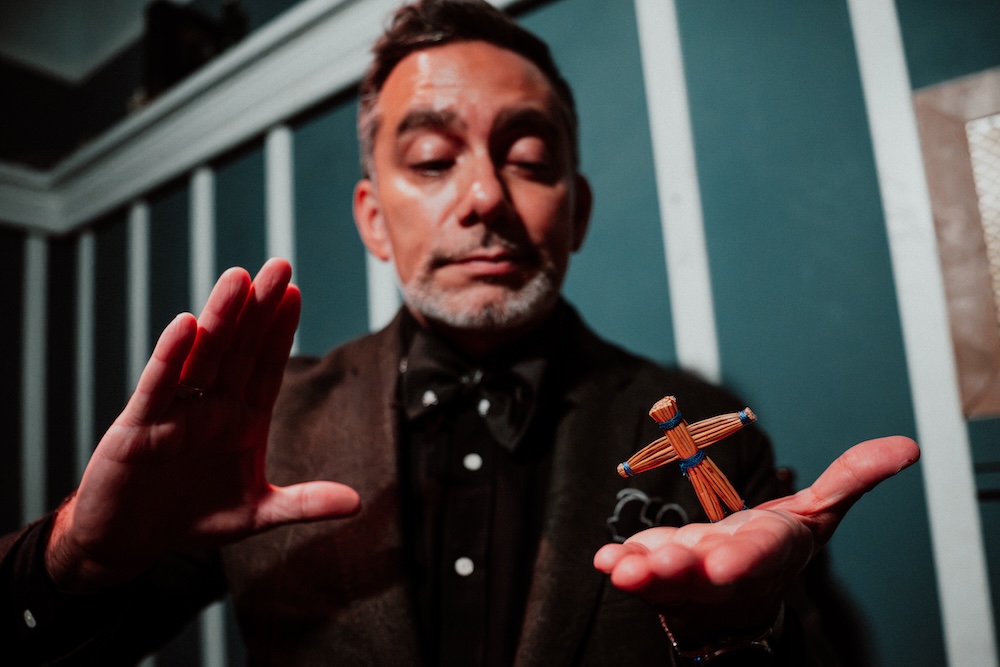
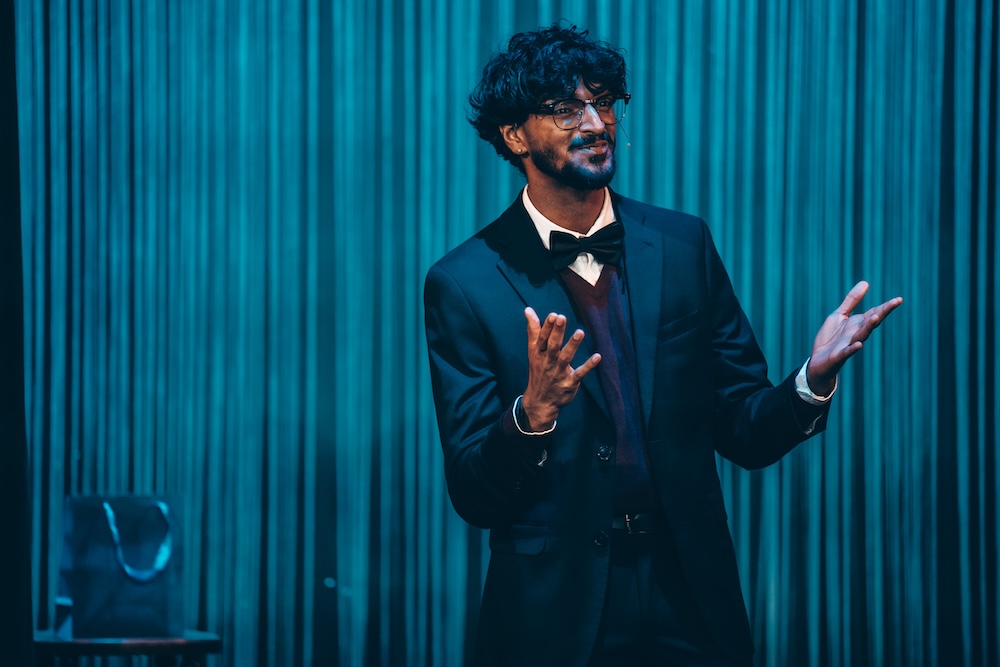
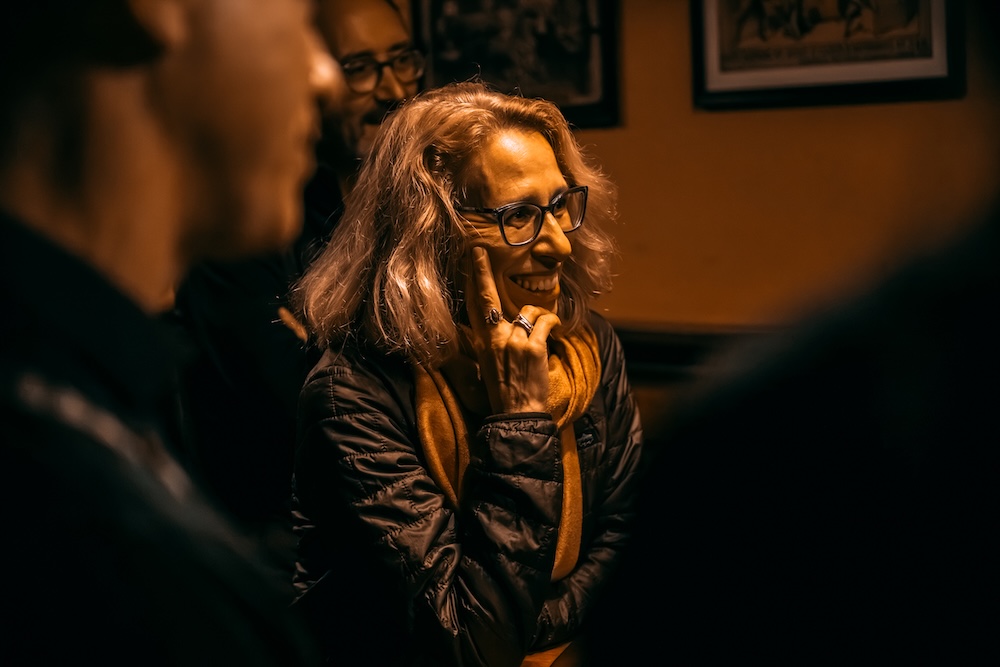
The evening centered on the “The Big Show” hosted by San Francisco Magic Show’s Kevin Blake, aka the Illusionist, who kicked off the evening’s performances with his version of one-card poker. Next up was Sanjeev Vinodh, who was 19 when he became the youngest person to dupe Penn and Teller on “Fool Us.” He shared the love of linguistics that led to that very same, tricksy “Queue” routine, in addition to his “Legend of Sleepy Hollow” act. Vinodh encouraged an audience member to choose a page that seemed to disappear and re-appear.
Blake had five audience members throw darts at a spinning dartboard, where the numbers they hit became part of the big finale of the show, before he introduced Brad Barton, aka the Reality Thief. Barton’s assistant Katie held a mysterious object that magically played a song corresponding to a number she selected. Barton’s “Dream Job” skit played on the “catch the liar” motif, and gave him the chance to blow bubbles with interesting properties.
Blake, Vinodh, and Barton were all funny, and compelling, easefully engaging audience in their exploits. “The Big Show” offered levity, laughter—and of course, sleight of hand.
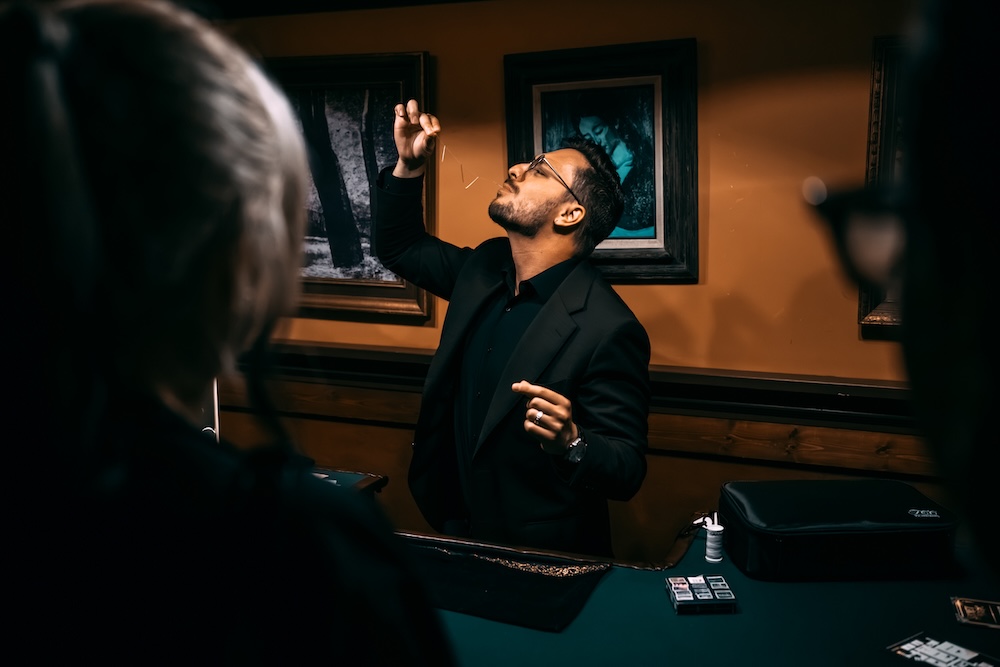
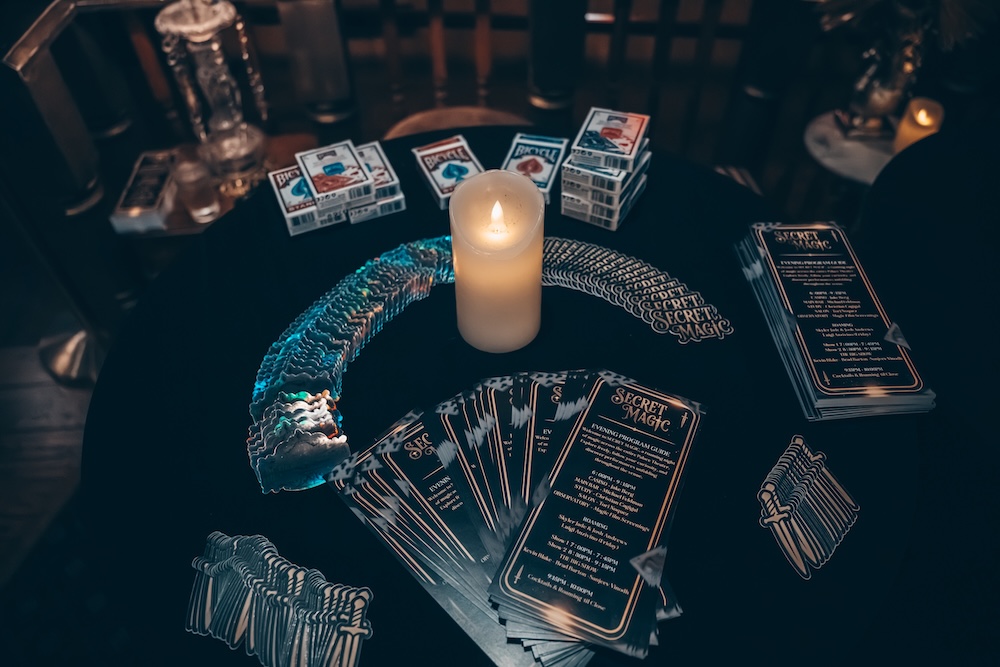
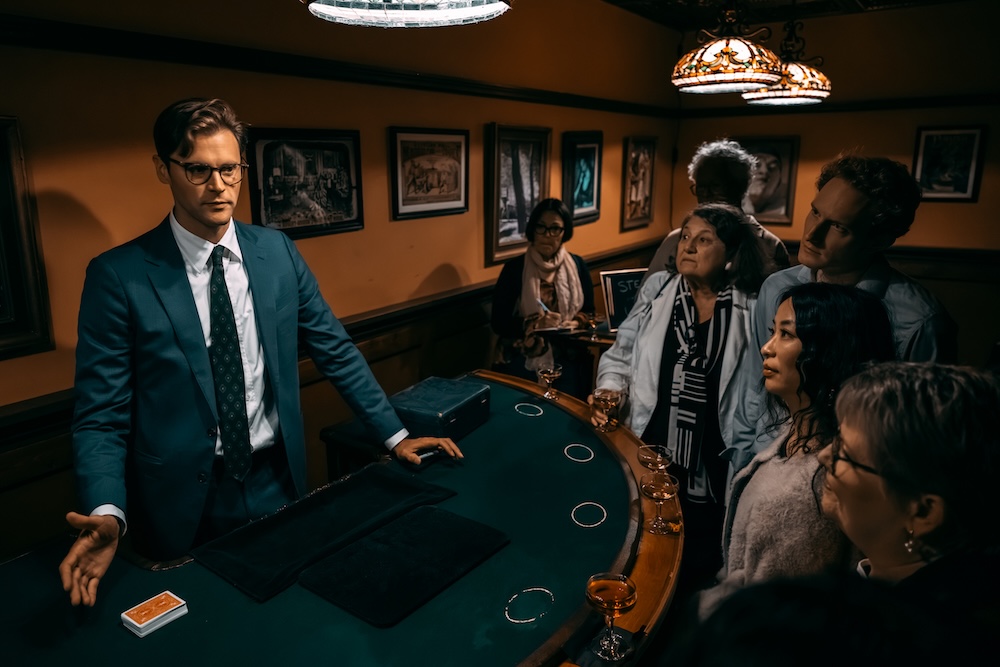
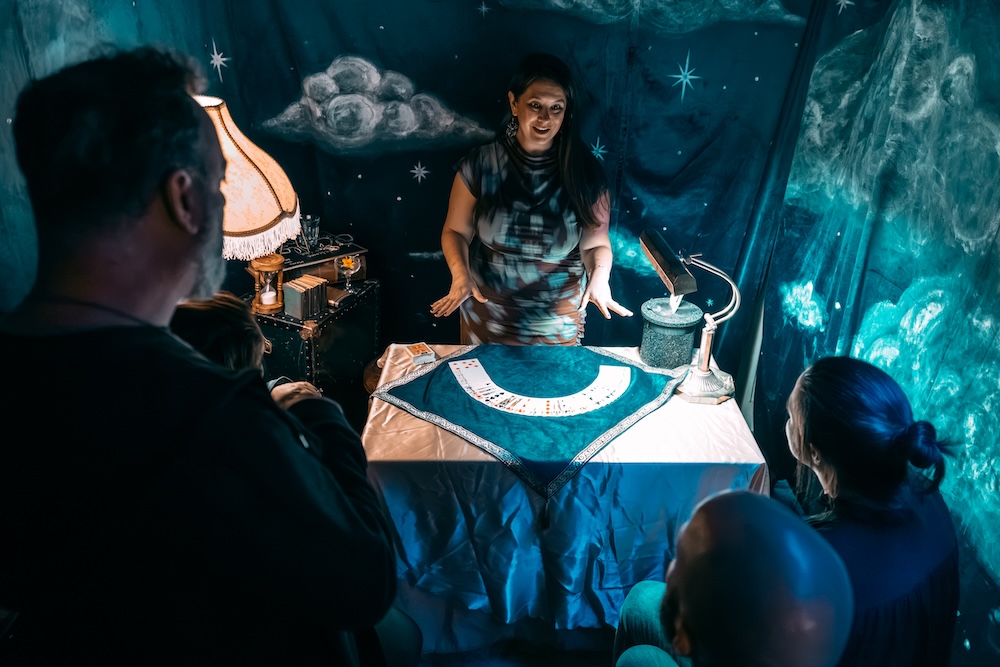
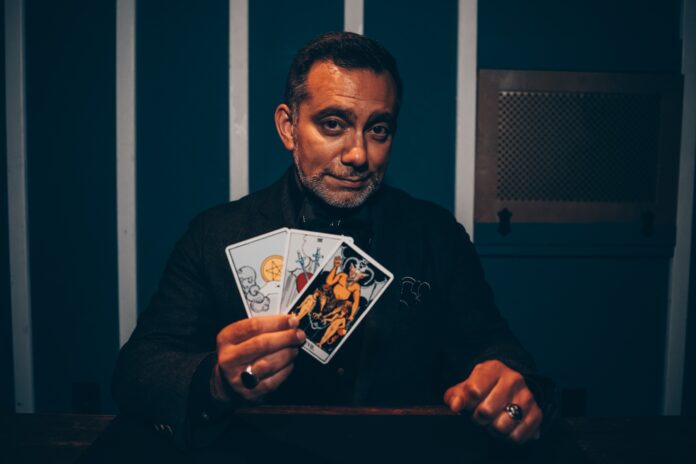
Part of the fun of Secret Magic is the close-up views of tricks that could be experienced throughout the venue. There was a perennial queue for Best of the Bay winner Christian Cagigal’s shows in the study, and those lucky enough to get in were treated to stories about his Salvadoran aunt, who “ran straight to church” after seeing his “Satan Krewe” coin trick. His card doppelganger and tarot card story added to the occult vibe.
Math professor by day Tori Noquez applied the abstract nature of math to cards in the salon. Jake Berg swallowed needles in the casino, Michael Feldman played Rock Paper Scissors in the main bar. Joshua Andrews magicked in a hidden wardrobe. Skyler Jade (who, at 14, was one of the youngest members of LA’s Magic Castle clubhouse) melded magic, technology, and music as she roamed the audience, bringing magic to small groups of people.
At one point, Luigi Anzivino explained the concept of cognitive overload, or when the magician gives your brain too much to take in at once, allowing the sleight of hand to go undetected. He demystified a trick, then offered to do it again under extra scrutiny, only to fool the audience with it yet again.
Those who purchased the evening’s VIP package were treated to a small prestidigitation presentation by Blake early in the evening. After performing feats of magic and memory, he taught the audience the “cross-cut force” trick.
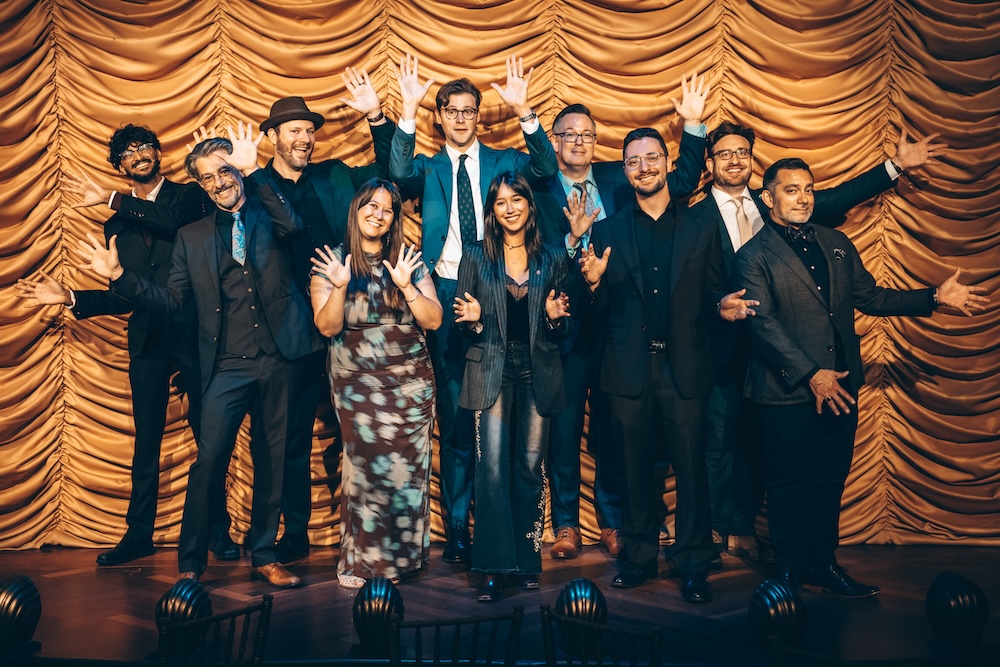
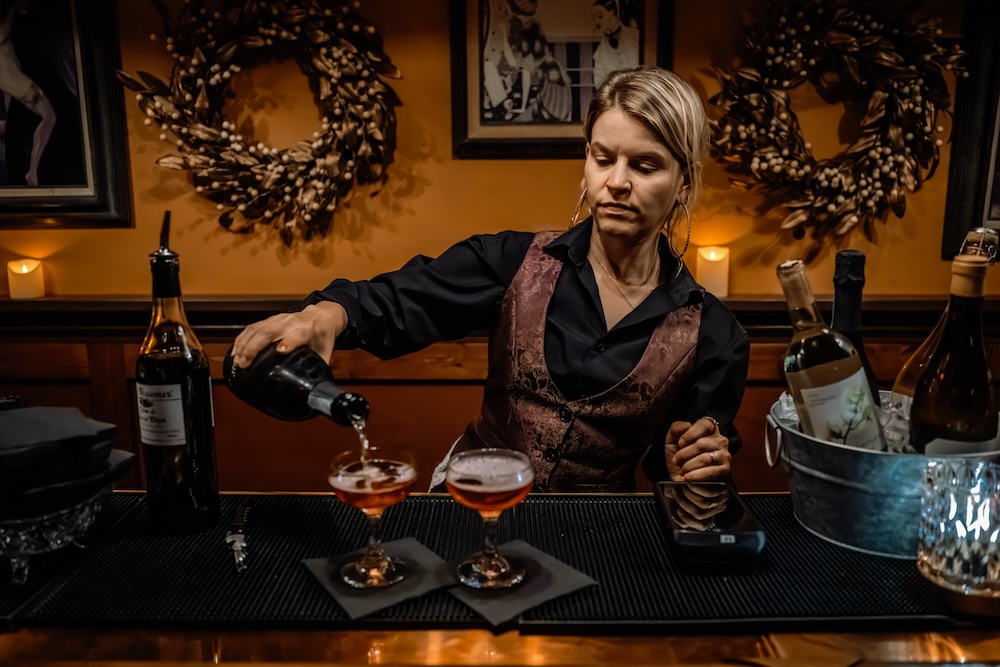
If all of that magic was not enough, there was also a small observatory with short films about magic, two bars churning out specialty cocktails, and the ever-helpful Palace staff (some of whom are novice magicians themselves).
As the crowd started to file out at the end of the evening, Blake wasn’t quite ready to quit. He demonstrated his adaptations of Del Ray’s craps illusions, employed ichthyomancy with the help of his top quality fortune-telling fish, and put to the test his version of the “pea shell game.” He, too, offered a behind-the-scenes look at his tricks’ inner workings—but far from ruining the conjuring’s effects, this seemed to make the audience appreciate his machinations even more.
After all, who doesn’t want to believe in magic?