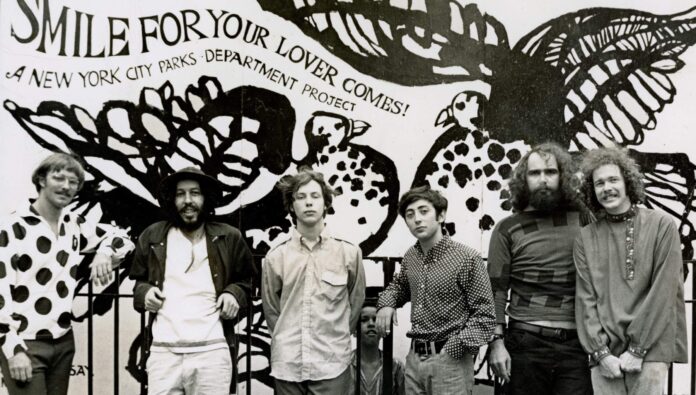
In November of 2026, some of the most radical speakers and writers in American political history were given a new platform. I’m not referring to candidates who won midterm elections, but leftists like Emma Goldman, Abbie Hoffman, Paul Robeson, and the Fugs, who are all now part of the free, online third edition of The Encyclopedia of the American Left, which was released by Verso Books on November 10.
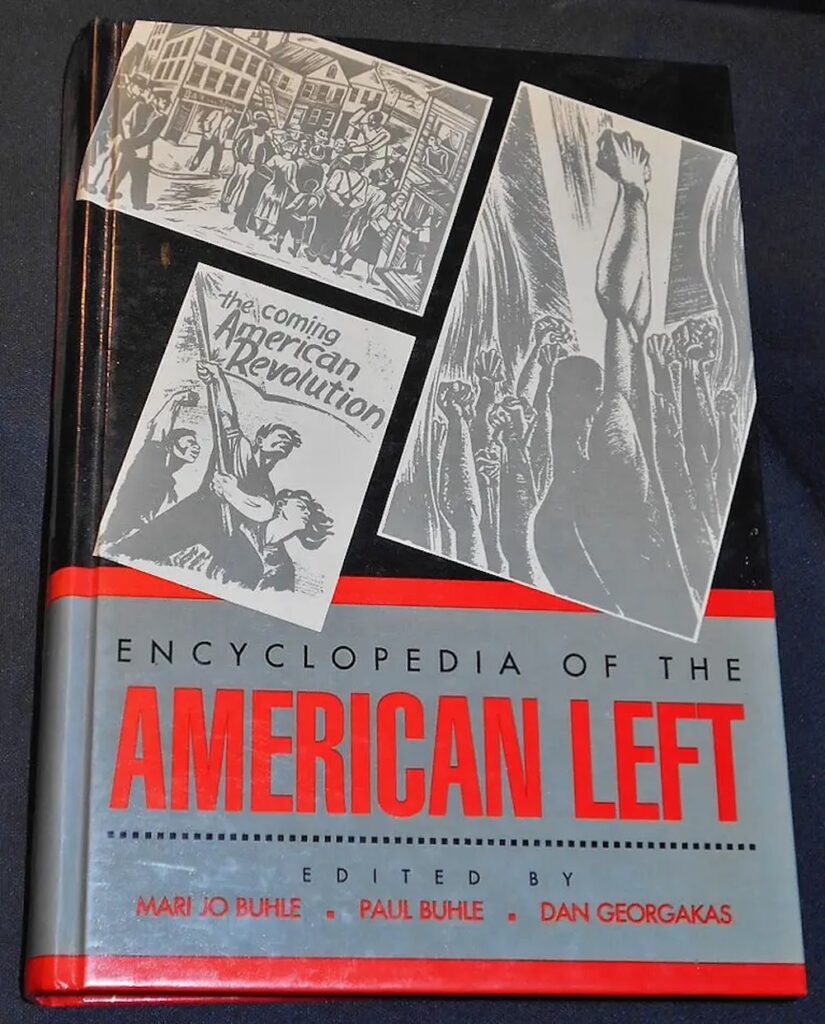
This highly commendable reference resource was edited by Mary Jo Buhle, Paul Buhle, and the late Dan Georgakas, and offers hundreds of entries on the history of left movements—socialist, communist, anarchist, and New Left—in the United States from the 1860s to the present. Special attention is given to many of the left’s most innovative and influential activists, authors, and artists.
Access to the encyclopedia, thanks to funding provided by the Rosa Luxemburg Foundation and a grant from the Democratic Socialists of America Fund.
I recommend that you consult its index first. Survey the encyclopedia’s list of names, and select a few you want to read—one at a time. It’s not to be read in one sitting.
You might, for example, begin with…
Gregory, Dick (1932-2017)
“Arguably the most politically-active comedian of his day, often putting aside his career to join causes, Gregory never disappeared entirely from sight during a long run as humorist and militant,” writes one of the encyclopedia’s prolific contributors, Paul Buhle, in this entry. “At a moment when prominent Black comedians created a new kind of humor, playing upon the dilemmas of African American life but breaking with minstrelsy, Gregory impressed Hugh Hefner, who invited him in 1961 to do stand-up at the Playboy Club. He happened to replace another comic long known to be on the Left: ‘Professor’ Irwin Corey.
Or you could turn to…
Woman Rebel
“The short-lived anarchist journal Woman Rebel is notable because of the editorship of birth-control advocate Margaret Sanger,” writes Mary Jo Buhle in the encyclopedia. “Produced monthly from March through October 1914, this eight-page newspaper addressed working-class women in the name of labor militancy, free love, and anticlericalism. In Sanger’s opinion, Woman Rebel was ‘red and flaming,’ and its motto, No Gods, No Masters, complemented its advocacy of direct action. Sanger argued that each woman had the right to be ‘absolute mistress of her own body,’ a right enhanced by legal and ready access to contraception. She explained that she published the Woman Rebel: ‘Because I believe that woman is enslaved by the world machine, by sex conventions, by motherhood and its present necessary child-rearing, by wage-slavery, by middle-class morality, by customs, laws and superstitions. Because I believe that these things which enslave woman must be fought openly, fearlessly, consciously.’”
The collected entries are quite informative and offer a succinct introduction to complicated lives and events, most of them involving struggles for peace, justice, and a more diverse, equitable, and inclusive society (before DEI was denounced by the current president.) Many contributors deserve a full entry themselves; although few receive that, they all are given brief bios.
I have to confess, I have not yet read everything in this encyclopedia. The e-book is, after all, a reference, not a page-turner, although some of the summaries could serve as the starting point for thrilling novels, films, and graphic history books. (Indeed, Buhle has already edited a number of notable graphic history books. including beautifully illustrated studies of Che Guevera, Emma Goldman, Herbert Marcuse, Rosa Luxemburg, William Morris, SDS, the Wobblies, and the Jewish Labor Bund.)
Just as the 2026 Encyclopedia of the American Left is a digitalized version of earlier print editions, there will eventually be a need in the future for it to be enlarged. We’ll need new entries introducing the next generation of activists, artists, visionaries, Democratic Socialist mayors, and other radicals who will advance America from Trump-era plutocracy to Mamdani-era democracy.
After that happens, perhaps most of the public won’t need to read the entry Dan Georgakas wrote about Henry David Thoreau, because they will already be familiar with the Thoreauvian philosophy that, “A genuine citizen was required to oppose the accumulation of power by government and the stifling of individual freedom. In that context, a citizen must oppose any political institution that supported an unjust moral order or legislation that supported injustice,” as Georgakas of Thoreau writes.
I myself co-authored one of the encyclopedia’s entries, and am not an entirely disinterested party in my praise of this laudable compendium. But I won’t ask you to buy a copy, because it’s not for sale! And no salesperson is going door-to-door hawking The Encyclopedia of the American Left.
I suppose that means it will never be a bestseller. But it could be widely read, and it could promote more radical activity around the country. Community organizers and soapbox orators will find many quotable lines, and I’d like to see history teachers recommend this resource to their students—and students recommend it to their teachers.
Read Encyclopedia of the American Left here.