
A San Francisco jury convicted local journalist and film maker Kevin Epps of voluntary manslaughter Monday, setting up a potential appeal that will challenge the tactics (and potentially the ethics) of the District Attorney’s Office.
Epps was acquitted of the more serious charges of murder in a nine-year-old case.
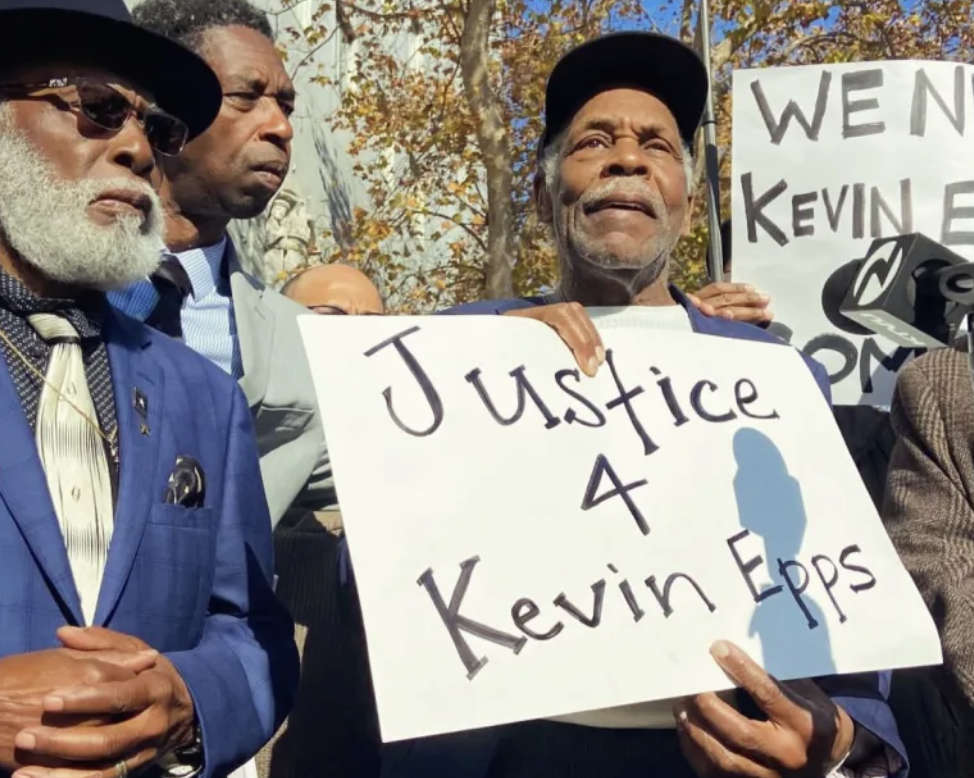
DA Brooke Jenkins took what was at best a circumstantial case to trial, claiming that Epps shot and killed Marcus Polk, in 2016.
Everyone agrees that Polk was a career violent criminal and meth addict who was in the Glen Park house where Epps lived at the time of the shooting. The prosecution said that Polk was a frequent visitor; the defense argued that Epps and the family tried to keep him out of the house that day, and that he tried to attack Epps.
The judge, Brian Farrell, kept much of Polk’s criminal history out of the evidence presented at the trial, and allowed the prosecutor, Jonathan Schmidt, to portray him as a welcome guest.
Epps had a long list of prominent community supporters, including Rev. Amos Brown and movie start Danny Glover. At times during the court hearing, according to news reports, supporters shouted about “prosecutorial misconduct.”
From a press statement by the Epps allies:
This prosecution never should have happened. In 2016, after a violent intruder, Marcus Polk, forced entry into Epps’s residence, police and prosecutors declined to charge him—consistent with California’s Castle Doctrine, which presumes a resident’s reasonable fear of imminent death or great bodily harm when confronting an intruder. Three years later, the District Attorney’s office revived the case without new evidence, relying instead on computer-generated 3-D animations so unreliable they were later ruled inadmissible by the court. For over six years, this unethical prosecution has hung over Epps and his family, finding no new evidence—only more time to construct a false narrative.
During trial, the state built its case on false and shifting testimony from its key witnesses, whose accounts changed dramatically since 2016, and on a misleading prosecution narrative that erased Polk’s well-documented history of violence, domestic abuse, daily methamphetamine use, and a conviction for lewd acts against a child. Judge Brian Ferrall compounded the injustice by limiting the defense’s ability to present this evidence, even barring Polk’s parole officer from testifying.
The prosecution’s closing arguments sank still lower. Assistant District Attorney Jonathan Schmidt—the same federal prosecutor whose misconduct in United States v. Blueford (9th Cir. 2002) helped define the law of prosecutorial misconduct—urged jurors to view Polk as a calm and peaceable man, directly contradicting evidence known to him. Schmidt’s closing also contradicted evidence presented at trial claiming that there was quiet before the shooting, that Polk was shot in the back, and that there was “no evidence Polk came at Epps.” These are serious misrepresentations and plainly inconsistent with forensic evidence of Polk’s wounds as well as witness testimony about commotion before the shooting and statements by Epps immediately afterwards: “He came at me. He came at me.” “
Allowing evidence of a victim’s past criminal record is always a tough call for judges, lawyers I’ve talked to say (although if a police officer shot Polk, I suspect all of Polk’s criminal history would have been allowed into evidence).

I can personally state, having been called for jury duty twice in the past three years, that Jenkins’ office pushes cases on what is very dubious evidence (I served on a jury that took less than ten minutes to find a defendant not guilty in a case we all agreed should never have gone to trial).
Epps is free pending sentencing, which will happen in about six weeks. The judge could consider his current life, the circumstances, and the reality of the case and choose probation—or he could send Epps to prison for as long as 12 years.
If that happens, Epps’ supporters say he will appeal—at which point, the state Appeals Court will have a chance to look at the decisions the judge made—and the way the DA handled the case.
Jenkins isn’t looking that great these days in terms of legal ethics. An Appeals Court ruling that her office manipulated evidence in the Epps case would only make things worse.
I’m sure Jenkins will oppose probation, or another option Epps could accept. I’m not sure that’s the smartest move.