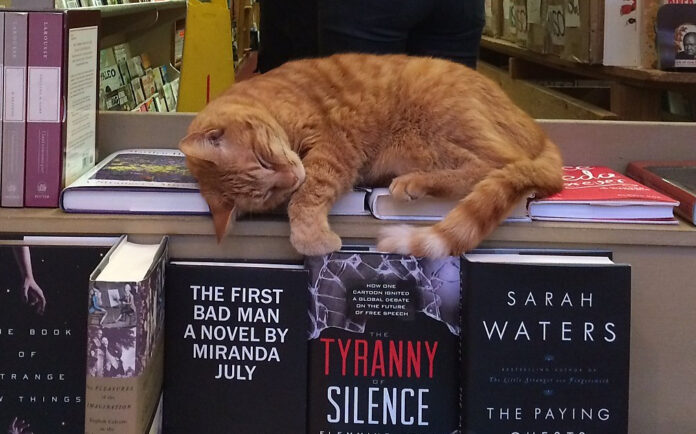
Finding great books to read and give this year was nothing like playing Pin the Tail on the Donkey. You may recall how the old-time children’s party game offers tails and a rump on which to pin them while blindfolded and dizzy from spinning. In contrast, there was no uncertainty when it came to selecting notable books released in 2025. Eyes open, steady-as-steady-goes, even during this spin-weird year. Terrific “rumps” were everywhere.
As with last year’s list, this is not a hubris-style directive of Best Books; the kind of list that so often appears this time of year from every news outlet, #booktok profile, YouTube influencer, chat room, and so on. Instead, it’s a hefty sample of particular treats that are intriguing, rewarding, surprising, and potentially satisfying to readers with wide-ranging preferences and interests. We shall leave the pinning of the tail to you: Happy reading!
COOKBOOKS
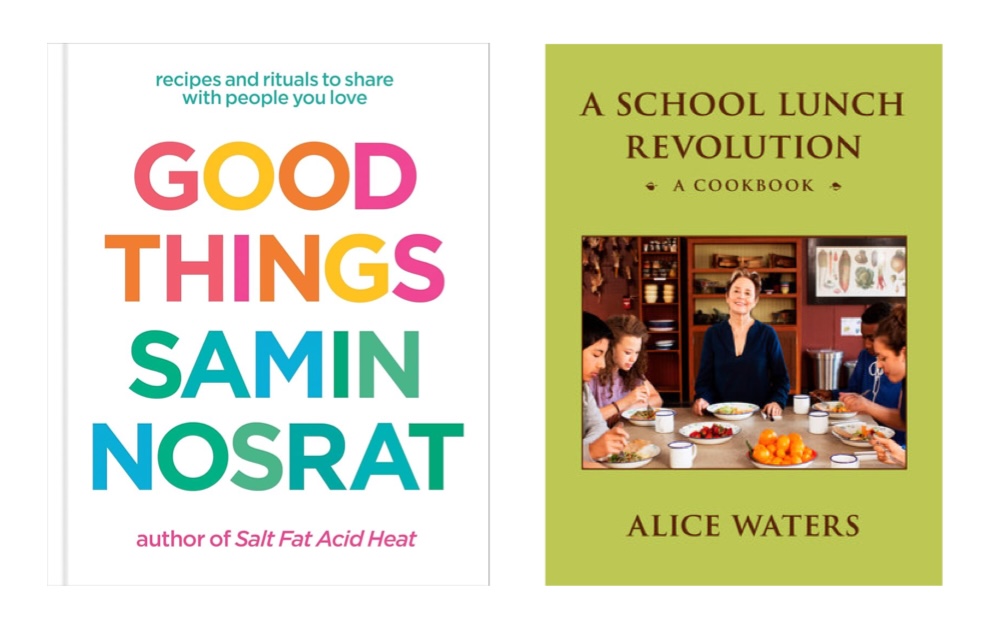
Good Things: Recipes and Rituals to Share with People You Love by Samir Nosrat (Random House)
When is a collection of 125 recipes in a 484-page book so much more than a cookbook? When it’s this long-awaited book from the author of Salt Fat Acid Heat. Cooking in this second book is community. And joyful.
A School Lunch Revolution by Alice Waters (Penguin Press)
The chef and Chez Panisse founder-owner continues her award-winning quest to nourish future generations with nutritious, delicious food. Based on things you can grow yourself or source from local farmers’ ingredients, every recipe contains the unlisted directive of educating the next generation about food. Let the revolution commence!
My Cambodia by Nite Yun with Tien Nguyen (4 Color Books)

Award-winning Bay Area Cambodian chef and restaurateur Nite Yun, owner of Lunette, offers over 100 recipes for her favorite dishes. Published by 4 Color, an imprint of Bryant Terry, Ten Speed Press, and Penguin Random House, in this book Yun chronicles the treacherous journey she and her family undertook that led to becoming one of the country’s most celebrated chefs. Even if not for the food, her storytelling makes this a standout book for every bookshelf.
MEMOIR/BIOGRAPHY
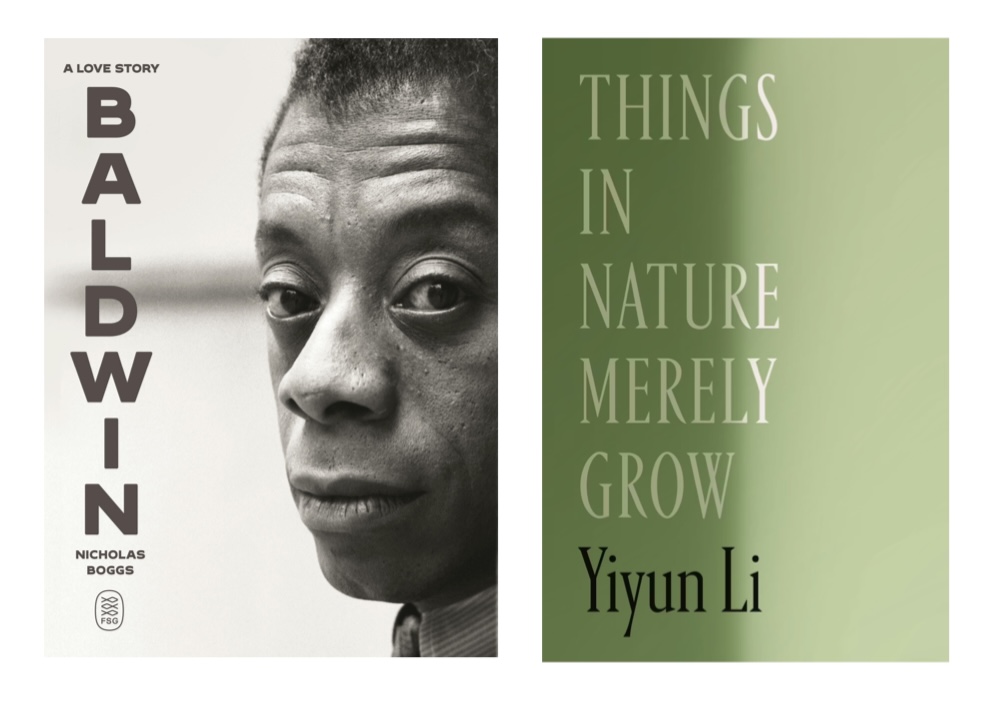
Things in Nature Merely Grow by Yiyun Li (Farrar, Straus and Giroux)
There were at least a dozen unforgettable memoirs or biographies this year that dug to the core of a life or lives. Top of the list for many readers was Yi’s searing book, written following the loss of her and her husband’s two sons in 2017 and 2024—both deaths by suicide. Arriving at place without a “now and later,” but only a “now and now and now and now,” Yi establishes how a heart slayed can rise and merely keep growing.
Book of Lives: A Memoir of Sorts by Margaret Atwood (Doubleday)
Thank the great goddesses of the universe for finally compelling this decorated Canadian author to write a memoir consisting of an idea that recently “acquired a lurid phosphorescent glow.” Expectedly, Atwood’s tale is funny, wicked, sly, rebellious, bold, and crammed with inside information about everything from her family’s life, books, and encounters involving peers, readers, editors, scientists, bears, bunnies, ghosts, outhouses, and more. Read it before or after her many novels—doesn’t matter, it’s worth it any time.
Baldwin: A Love Story by Nicholas Boggs (Farrar, Straus and Giroux)
Boggs’ hefty biography tells not only of the mighty James Baldwin, but includes for the first time his subject’s never or rarely seen archived letters and poems, interviews, and photos. Told with extraordinary wisdom and meticulously researched, the pages unfold the life of one of America’s greatest writers and thinkers to reveal Baldwin’s brilliant complexity and everlasting legacy.
Five more after attempt to pick only three in this category failed:
Love Will Save Us by Suzette Partido (City Lights Books), Water Mirror Echo: Bruce Lee and the Making of Asian America by Jeff Chang (Mariner Books), Coming Up Short, A Memoir of My America by Robert B. Reich (Knopf), Joyride by Susan Orlean (Avid Reader Press), Mother Mary Comes to Me by Arundhati Roy (Simon & Schuster)
ART/CULTURE
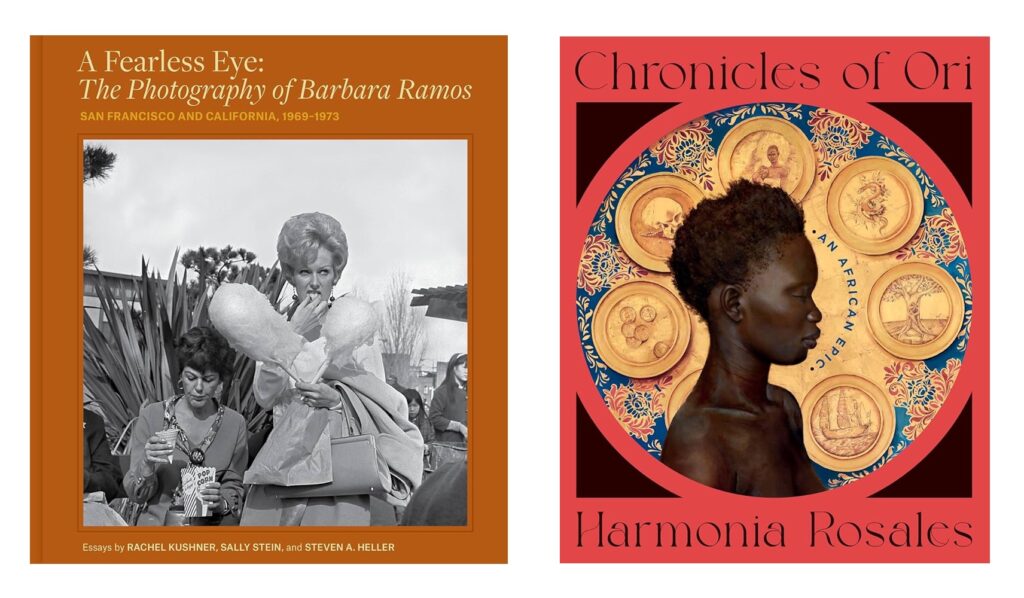
Chronicles of Ori: An African Epic by Harmonia Rosales (W. W. Norton & Company)
A complete knockout of a book that astonishes, and exceeds every expectation, lands on lucky readers’ lap with images and tales from Chicago-based Rosales. Honestly, African myths and the diaspora never had their stores told with such brilliance and beauty. Lay your hands on a copy and never, ever, let it go.
Alphabet in Motion: How Letters Get Their Shape by Kelli Anderson (Katherine Small Gallery)
Lovers of letter forms rejoice. Anderson’s third book following the award-winning This Book Is a Camera (MoMA, 2015) and This Book Is a Planetarium (Chronicle, 2017) serves up equal pleasure. Typography’s treasures come to light through an interactive cover, 17 pop-ups, hands-on activities, and a 128-page companion essay. Get up to speed on ABC and beyond.
Life-Changing Homes: Our Search for Meaning Through Shelter by Kirsten Dirksen and Nicolás Boullosa (Abrams Books)
The Berkeley-based Dirksen and Boullosa have remarkable track records as cinematographer and journalist, respectively. Combining their forcefield as co-founders of fair companies, their YouTube channel racked up 2.08 million subscribers and 1,200 30-minute videos profiling the incredible stories of people committed to simple living and their unconventional homes. Now they’ve pooled the wisdom and weird, wonderful stories of 80-or-so revolutionary folk into their first book. Images and narratives will delight most readers, and lead anyone to think about the meaning of home.
A Fearless Eye: The Photography of Barbara Ramos by Barbara Ramos and Steven A. Heller (Chronicle Books)
Essays by Rachel Kushner, Sally Stein, and Steven A. Heller illuminate the black-and-white street photographs Ramos made between 1969 and 1973. Mostly taken in San Francisco, the photos—which had been archived for 50 years until recently being made available—emerge with stunning expression. Nostalgic as if a time capsule has been busted open, the shots teach about Ramos’ history, and provide thrilling moments of discovery.
Peace in the West: The Rustic Luxury Interiors of William Peace by William Peace with Suzanna C. Hamilton (Gibbs Smith)
200 photographs tell the story of the interior designer’s career and projects in this oversized, 272-page book. Prolific in his range, Peace has put his touch over the last 30 years on traditional log cabins; sprawling multigenerational ranch homes; a modern steel, stone, and glass house overlooking a lake. Recognized for a “rustic luxury style that celebrates life in the American West,” he displays a sensitivity to the land that runs like a river through every project.
FICTION
Flashlight by Susan Choi (Farrar, Straus and Giroux)
So trustworthy is Choi as a writer that this narrative with multiple strands spanning decades braids itself as easy as breathing. Central characters cast this-way-then-that through the loss and reclamation of family, memory, history, identity, and more. They had me mesmerized. Reflecting on the book later proved just as rich as thoughts turned personal, but continued to stretch to the universal.
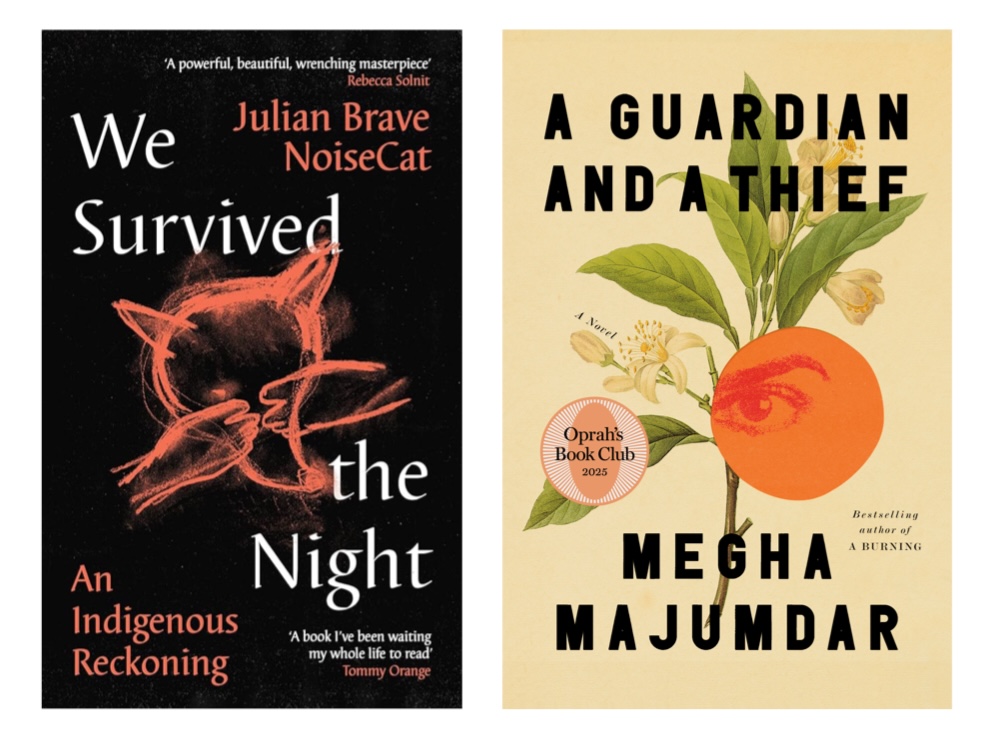
A Guardian and a Thief by Masha Majumdar (Knopf)
Majumar’s second novel following A Burning (2020) is thrilling. Over the course of seven days, two characters enact desperation as climate change and economic inequity ravage their families’ chances of survival and their children’s future. Questions of morality, criminality, dignity surface and boil and on every page, Majumdar’s deft handling of plot, pace, and language reigning supreme.
The Wayfinder by Adam Johnson (MCD Books)
Pulitzer Prize-winning writer Adam Johnson is never hesitant to go big. Even in his short stories, an epic tone sweeps the story into full velocity. That makes his attention to tiny details related to characters and the 13th-century Tu’i Tonga empire in which the Wayfinder takes place a special delight in this 700-plus page book. Lovers of Johnson’s The Orphan Master’s Son will find equal pleasure following the exploits of the young Tongan island girl named Kōrero in this testimony to the power and importance of preserving oral histories.
The Emperor of Gladness by Ocean Vuong (Penguin Press)
Set in the fictional small town of East Gladness, Connecticut, Vuong’s second novel begins with a 19-year-old college dropout named Hai about to commit suicide by plunging off the town bridge. Instead of diving to his death, Hai’s life intersects with that of a Lithuanian woman with mid‑stage prefrontal lobe dementia, who lives alone in a house abutting the river. Hai become her caregiver and the novel becomes a testimony to hard work, found family, overcoming trauma, and discovering a unity that lessens isolation and leads to hope.
We Survived the Night by Julian Brave Noisecat (Knopf)
First novels often have an urgency that lends virtuosity, rawness, and originality to the author’s narrative voice. Such is the case with Noisecat’s story of growing up in a Native community in Oakland and with family in Canim Lake Indian Reserve in British Columbia. The book is robustly researched but primarily, it is a father-son journey, a memoir, a chronicle of contemporary and historical Indigenous life. Interesting factoid: The book’s title is a loose translation of “tscwinúcw-k,” one of several traditional morning greetings in his Native language. Amid the thick layers of strong reporting, Noisecat never loses his way, and the writing is soulful throughout.
Four honorable mentions after another attempt to limit the picks failed:
The Great Mann by Kyra Davis Lurie (Crown), The Wilderness by Angela Flournoy (Mariner), Zeal by Morgan Jerkins (HarperCollins), Dream Count by Chimamanda Ngozi Adichie (Knopf)
NON-FICTION/SCIENCE
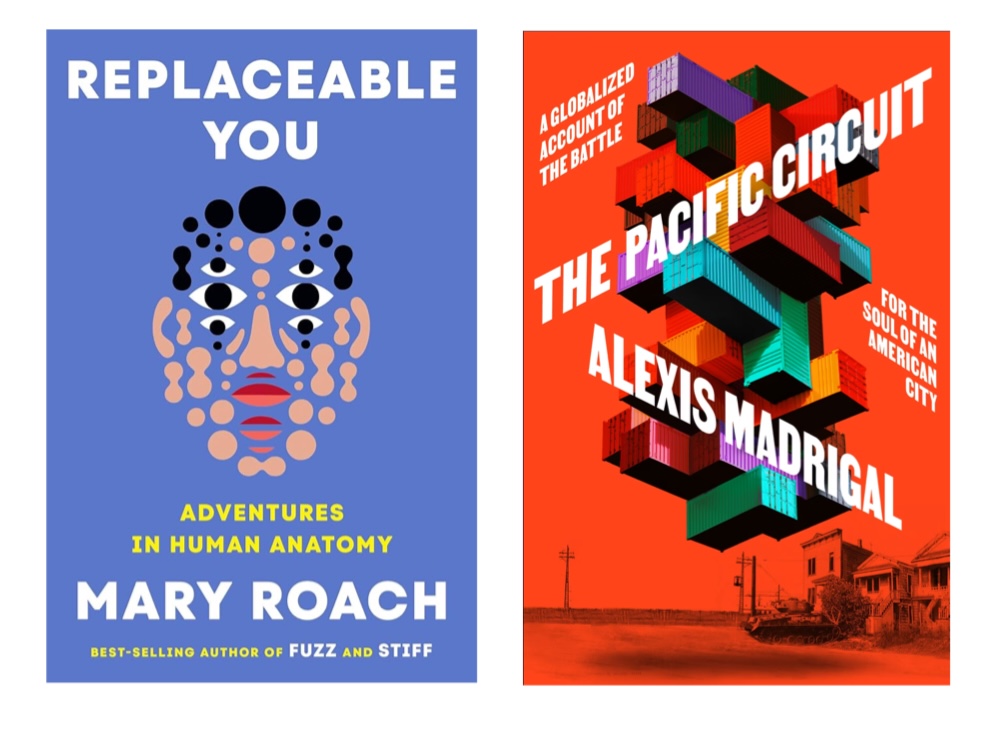
Replaceable You: Adventures in Human Anatomy by Mary Roach (W. W. Norton & Company)
Once again, East Bay-based, New York Times best-selling author Roach turns science writing into something simultaneously intriguing, prophetic, hilarious, horrifying, dramatic, serious, silly, exuberant, tender, and more. Having applied her meticulous research, blazing sense of humor, fondness for puns and language peculiarities, and countless interviews with patients, physicals, scientists, and pathologists to previous books about the human body (Stiff [2003] and Fuzz [2021]), investigating body replacement parts provides a fun house in her latest book. From noses to vaginas to eye parts, internal organs, hair implants, breasts, penises, prosthetic limbs, and more, Roach leads the way into new territory. Readers emerge from the journey with newfound respect for original body parts and deep thoughts about how far replacement science has come and how far it has yet to go.
What We Value: The Neuroscience of Choice and Change by Emily Falk (W. W. Norton & Company)
Falk is a professor of communication, psychology, and marketing at the University of Pennsylvania, vice dean of its Annenberg School for Communication and directs its Communication Neuroscience Lab and the Climate Communication Division of the Annenberg Public Policy Center. Her tsunami of knowledge, combined with personal anecdotes, results in a compelling guidebook for understanding why we do what we do. Most importantly, understanding this science of choice opens up paths for change. Better alignment between what we value and how we live in our own truths means actions and intentions in the workplace, communities, and relationships originate from a place of awareness and authenticity—and who doesn’t love that?
The Pacific Circuit: A Globalized Account of the Battle for the Soul of an American City by Alexis Madrigal (Farrar, Straus, & Giroux)
Oakland-based Madrigal is a journalist, co-host of KQED’s Forum, and a contributing writer at The Atlantic. His latest book employs Oakland as a template for investigating the forces that impact and shape America’s cities and municipalities. Politics, society, technology, culture, environment, economic expansion, and reductions—no category is left behind as Madrigal spins out the complex web of how our communities evolve. What we desire of the city in the 21st century and beyond?
Is a River Alive? by Robert Macfarlane (W. W. Norton & Company)
The best-selling author of Underland streams in (forgive the watery pun) with another book that sparkles. Masterful travel writing, natural history animated to highest energy, deep reportage, and the stories and input of perky, peculiar, persuasive people he encounters make for a terrific journey. The fate of rivers is perilous, but this fascinating book was a reminder that they are among Earth’s most precious resources.