When news came last month that the 119-year-old California College of the Arts has been bought by Tennessee-based Vanderbilt University, SF’s art scene was understandably shocked. But now the uncertainty has set in. Vanderbilt has committed to preserving some of CCA’s terrific arts programs when it officially swallows the school in 2027—but which ones? And how do professors and students plan their immediate future, in one of the most expensive places to live on Earth, when they don’t yet know which classes will be offered, or which degrees?
“It all feels very up in the air right now,” said cartoonist, historian, and documentarian Justin Hall. Hall is also a CCA comics professor and former chair of the Comics MFA program, which he helped develop with fellow artist Matt Silady, who established the Comics curriculum at the college back in 2008. “And with everything that’s going on these days in higher education… The Comics program is very radical and queer by nature which, let’s just say, doesn’t seem to be very valued at the moment.”
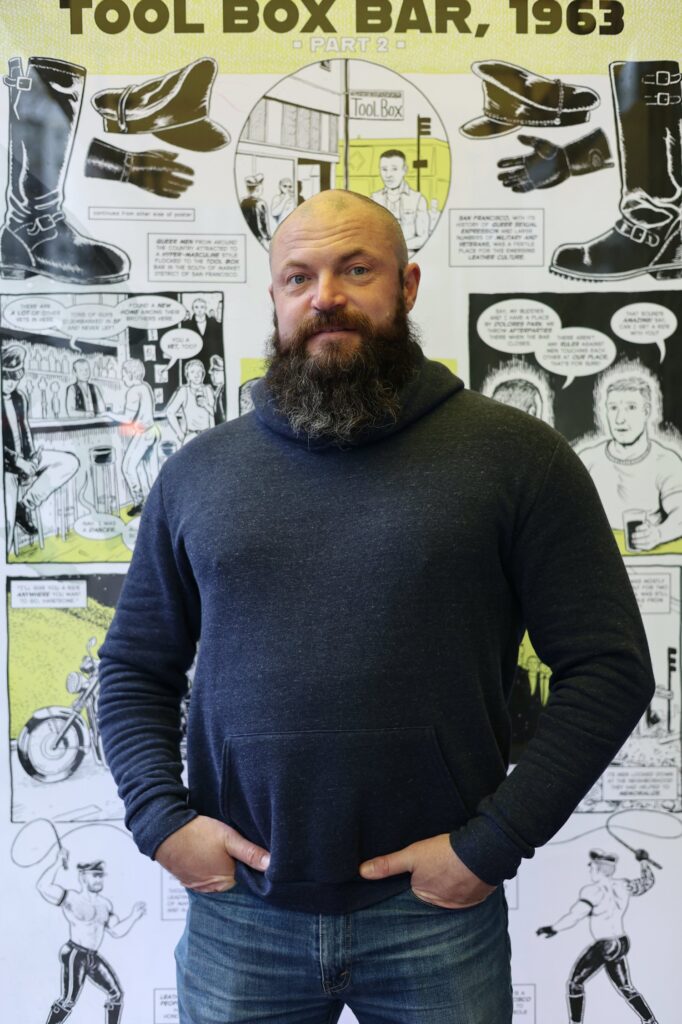
CCA Comics offers both a MFA and the newer BFA, along with core curriculum classes that introduce students to the art form and its history, which is deeply rooted in the Bay Area. It’s one of only a couple such accredited offerings in the country, despite comics’ exploding popularity (see: all those dang Marvel movies and anime films). Lately, the growing program has been establishing international ties—manga study in Japan, for instance. “The dream is that Vanderbilt recognizes how important this program is, and maintains all that we and the students have built together,” said Hall.
And to paraphrase a certain superhero: Never fear, the queers are here! Hall is hoping that the upcoming free Pride in Panels San Francisco Queer Comics Festival (Sun/15) will raise any drooping local spirits, filling SF Public Library Main Branch with the work of more than 100 comics creators, plus panels, workshops, movies, and a plethora of satellite events happening all weekend. Needless to say, the promotional artwork is fabulous.
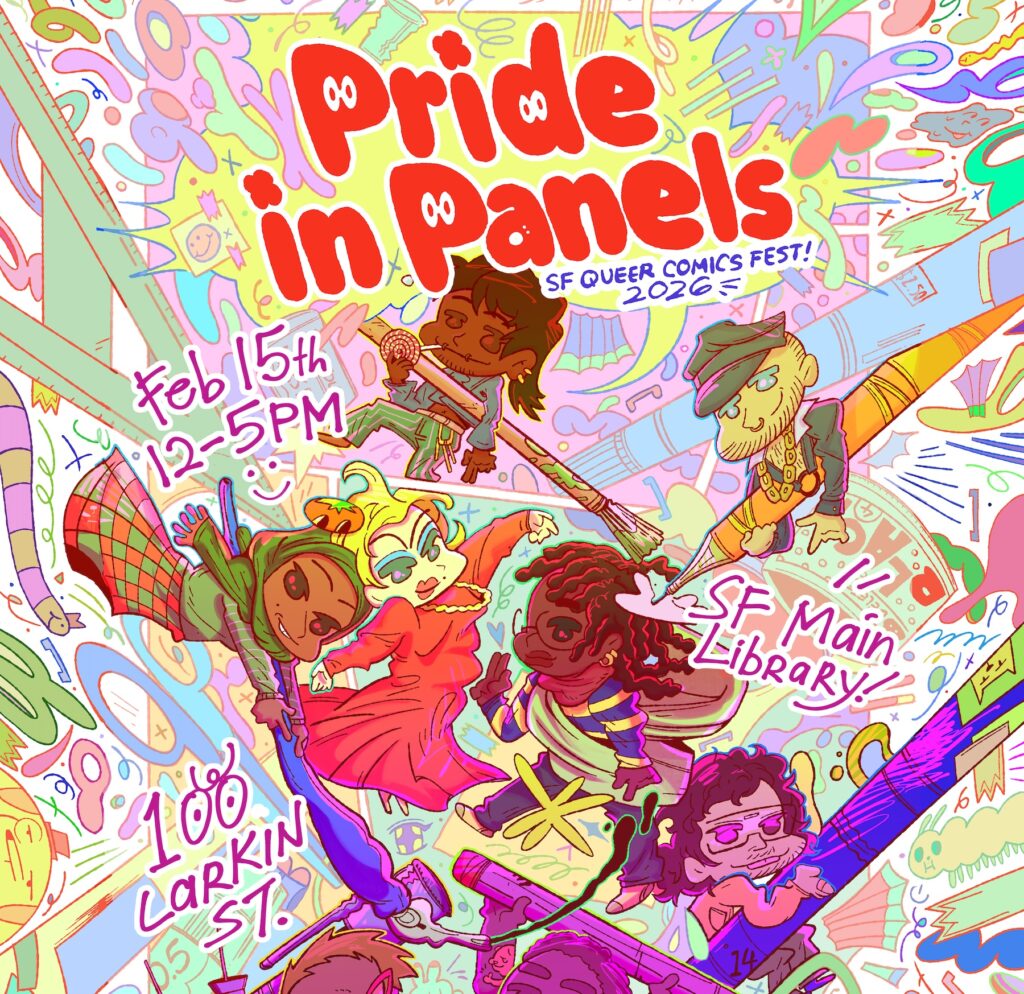
Hall heads up the Pride in Panels planning with fellow authors Malcolm Johnson and Laura Gao, as well as the lovely Avi Ehrlich, founder of Best of the Bay winner Silver Sprocket Comix, and the SF Public Library team. “Our first installment, in 2024, we didn’t know what to expect—but it was actually bonkers,” he said with a laugh. “It was the weekend of the atmospheric river, just rain pouring down, and we seriously thought no one would show up!” Instead, more than 2000 queer comics lovers packed in, and the library approached the organizers to make it a biennial event, expanding to two floors and taking over other sections of the building.
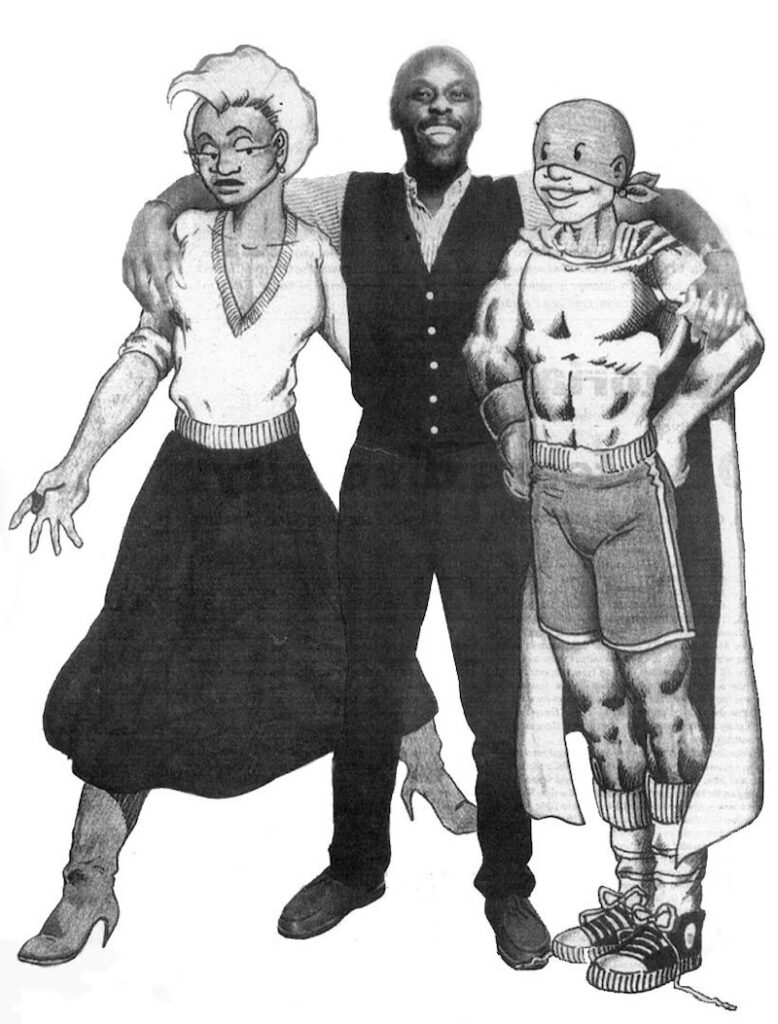
“The folks at the library have been super-generous, and this year we have enough money to bring in two special guests. Rupert Kinnard, who created the first queer Black characters in comics, will be in the African American Center of the library. And Lee Lai, a remarkable young trans cartoonist from Melbourne, Australia, will be in the Chinese Center. our panel of underground queer comics pioneers includes Dylan Edwards, who created the first ongoing transmasculine comics, Robin Adams, who created some of the first transfeminine comics, and Lee Mars, who created the first bisexual comics back in the ’70s. It’s really, like wow.”
Attendees can also partake in workshops like “From BL to Bara: Queer Manga” and “Gay Goblins and Non-Binary Robots.” A Fri/13 movie night at Balboa Theater features Long Live My Happy Head: “Gordon is a gay, Scottish comic book artist with a big bushy beard, very expressive eyebrows—oh, and an inoperable, incurable brain tumor. By making autobiographical comics about his experience, he is able to communicate his thoughts and reactions to cancer in a medium and a language that is disarming, accessible, and inviting.”
Hall says the expansion of queer comics to recognize so many different types of creators form so many different places has given him hope about how the art form—and its education—will survive. “When I first got into comics 25 years ago, I was an anomaly—it felt like an anomaly being gay. There was this whole separate world of queer cartooning that existed in a parallel universe the rest of the comics world. It thrived through the ecosystem of queer newspapers and publishers, and queer and feminist bookstores, but there weren’t big conventions that featured or even included it in the ‘straight’ comics world.

“But now queer comics are very much at the center of the cartooning world. Alison Bechdel’s Fun Home in 2006 really helped breach the gates, and great artists like Mariko Tamaki win Eisner Awards. They thing about comics is that the material barrier is so low for telling stories, including your own. It’s a difficult art form, but it’s DYI: All you need to start is a ballpoint pen, a sheet of typing paper, and a photocopier, or access to a basic computer design program,” Hall said.
“So all kinds of queer people have been able to talk about their lives, and read about their lives, through comics much easier than many other media. And that’s so important right now, with attacks on our right to exist coming daily, and all the efforts to silence us. We need to talk back. I’m hoping Pride in Panels will give us all a few extra shots of queer energy to keep doing that.”
PRIDE IN PANELS SAN FRANCISCO QUEER COMICS FESTIVAL Sun/15, San Francisco Public Library Main Branch. More info here.