
To the surprise of nobody, the Board of Supes Tuesday rejected an attempt to delay or undermine an affordable housing project for seniors at the foot of Bernal Hill. The vote was unanimous.
A few neighbors on Coleridge street complained that the project would reduce the size of an existing park that has been closed for years and was hardly ever used when it was open. It’s a private park, not a city park, and it sits on top of a pedestal with a garage underneath, which makes it unstable anyway.
The project would include a new park that would be much more accessible.
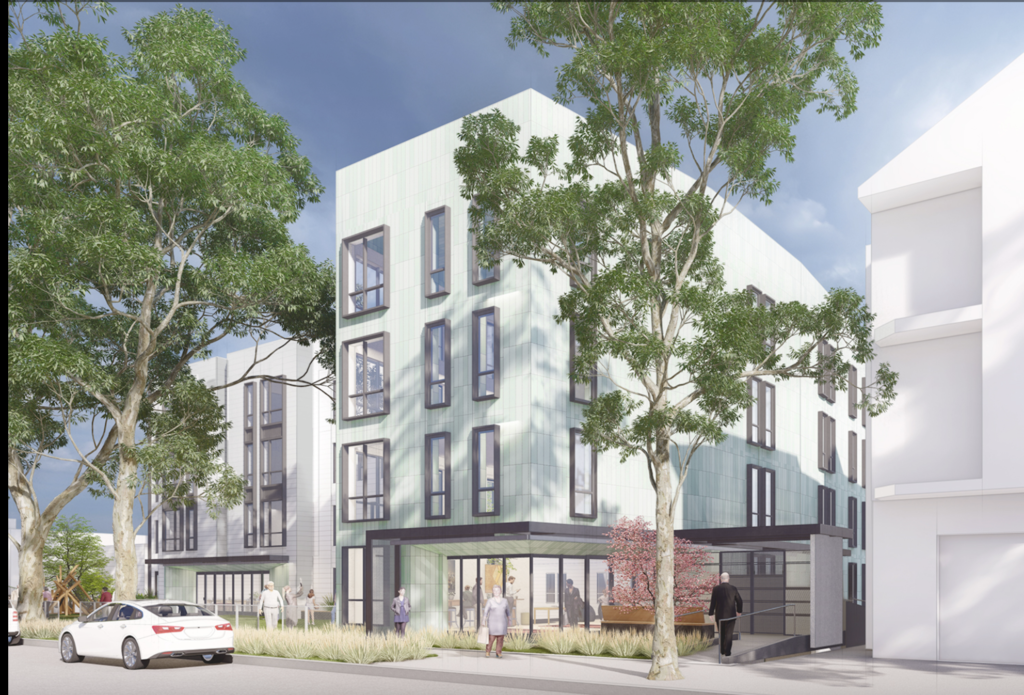
The developer, Bernal Heights Neighborhood Center, did what all affordable housers in the city do: The staff reached out to the neighbors, held meetings and took feedback, and as a result made some changes that lowered the height of the new buildings.
That, in a reasonable world, is how this should work: The developer meets with the neighbors, the neighbors explain their concerns, the developer does the best it can to meet those concerns, and you get a better project.
In this case, Gina Daucus, the CEO of BHNC, told the supes, no matter what the developer offered, the opponents wouldn’t back down; they told her they didn’t want the project and to “look for sites downtown.”
So the supes quickly rejected the appeal, which addressed a minor technical issue with the lot subdivision, and the project will go forward, as it should.
But there was a moment during the discussion that should give us all pause.

Sup. Jackie Fielder, who supported the affordable senior housing, asked Planning Department staffer Audrey Maloney a pretty basic question. Under current state law, where are people supposed to go to raise questions about a new development in their neighborhood?
Maloney: Under SB 35 (a bill by state Sen. Scott Wiener), the city has no role in this project. The public has no right to a hearing. If it’s compliant with the local zoning, there’s nowhere to raise any questions. It’s approved by right.
This is something the Yimbys have been demanding for years, and they have won. And when it’s a project that’s 100 percent affordable housing, I get it: Appeals are costly, and there is no such thing as a nonprofit affordable houser who doesn’t go to great lengths to get neighborhood input. There is always an opportunity for community comments, and often, that leads to changes. When the neighbors just want to kill the project, city officials should reject those complaints. As they did this week.
But SB 35, and its unholy progeny SB 423, doesn’t just apply to affordable housing projects. It also applies to a huge number of potential market-rate projects in much of San Francisco.
That means if a for-profit developer wants to build a 12-story luxury condo building on Clement Street, risking the displacement of neighborhood-serving small businesses and ultimately of rent-controlled tenants, there is absolutely nothing anyone can do even to suggest modifications or community amenities.
As Maloney put it, the community has no forum, nowhere to go.
Affordable housers are almost always good neighbors; market-rate developers often are not. Wiener’s legislation treats them as the same: If a building is code-compliant, there are no public hearings, no discussion, no need to reach out to the community.
Just for the record, that’s the world Wiener and the Yimbys have created in San Francisco.