Pierre Constant was arrested in September 2024 for an assault in the Tenderloin that he did not commit. On April 10, 2026, a San Francisco jury acquitted him of all charges. He had spent 18 months in jail—in large part, his public defender says, because the police and district attorney’s office failed to turn over in a timely fashion evidence that exonerated him.
The case is yet another example of District Attorney Brooke Jenkins taking to trial cases that made no sense, overcrowding the jails and driving up the cost of handling public safety.
The PD’s Office said in a Tuesday press release that Constant’s arrest and prosecution were wrongful from the start. Deputy Public Defender Jared Rudolph, Constant’s lawyer, described “unreliable eyewitnesses, brazen police misconduct, and the District Attorney’s Office withholding and redacting exonerating evidence.”
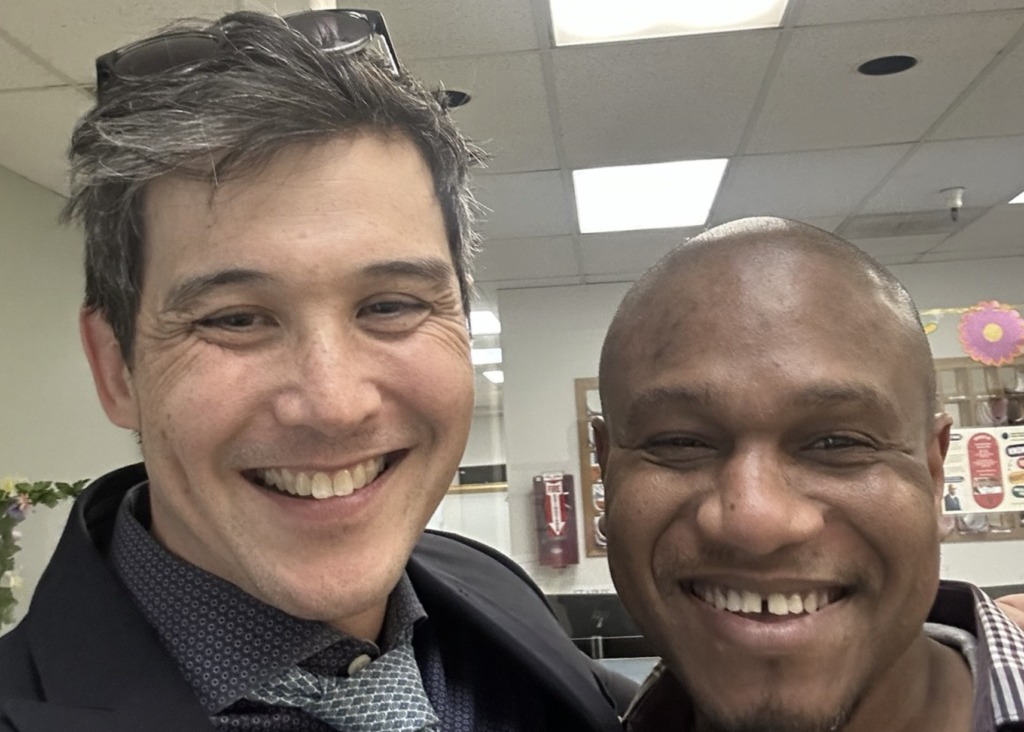
The Sept. 16, 2024 incident involved an argument between two men on Ellis St. that became violent when a third man tried to intervene. One of the men attacked the intervenor with a knife.
The victim fled, dropping his phone. The assailant picked up the phone and later discarded it. It contained DNA that would play a crucial role in the case.
Constant was arrested eight days after the assault. According to evidence presented in court, the two arresting officers were heard on their body-worn cameras saying, “He looks close enough.” When Sgt. William Elieff arrived, an investigator with the SFPD, he instructed the other officers to turn off their body cameras. When they were turned back on, evidence showed, the recordings show an officer asking Elieff, “How do you want me to write it?”
The Public Defenders’ Office says this “[S]uggests officers were constructing a narrative rather than honestly reporting their actions when writing their police reports.”
The SFPD allegedly proceeded to mishandle the police photo lineup shown to the victim. Elieff, according to evidence Rudolph presented in court, chose a lineup based on Constant’s appearance instead of the suspect’s appearance in the security footage of the assault. SFPD protocol says photo lineups should be conducted only by an officer who does not know which person is the suspect.

Constant’s defense says prosecutors then violated Brady v. Maryland(1963), a landmark Supreme Court case establishing prosecutors’ disclosure of all exculpatory material to the defense as due process. The San Francisco District Attorney’s Office did not provide Constant’s defense with several pieces of evidence they were required to provide. These include unredacted medical records of the victim—and DNA test results that exonerated Constant.
According to court documents, the DNA report was produced by SFPD Criminalistics Laboratory on November 5, 2024. Elieff said in testimony that multiple emails with urgent information about the exonerating DNA evidence went unanswered in his inbox for months, during which Constant sat in jail. The DA’s office says Elieff was out on medical leave, but nobody else apparently was covering for him.
Just shortly before trial, the PD’s Office got the DNA tests. The DNA on the phone did not belong to Constant, who had already been in jail for more than a year.
The DA’s Office also redacted from discovery material turned over to the defense medical evidence showing the victim had psychoactive drugs in his system at the time of the assault, which would render his identification of an attacker less reliable.
In court documents, Constant’s defense says these omissions were intentional: “The justification claimed by the prosecution—that this was ‘privileged information’—does not overcome its exculpatory character and need for disclosure and instead demonstrates that this violation was deliberate. Indeed, these records were not reviewed and redacted by a court, but instead it was the prosecution unilaterally electing to redact information they knew to be exculpatory.”
The District Attorney’s office tells us the claim the DNA report was exonerating is “absurd,” saying the phone was traded between at least five people before it was turned over to the SFPD after the crime. They also denied not providing unreacted medical records of the victim, claiming to have provided them to the defense three months before trial.
But medical records produced in court showed extensive redactions, including the positive drug test results for the victim. Again, by the time the defense had the records that helped exonerate their client, he’d been sitting in jail a long time.
“I think this represents the District Attorney not being able to prosecute all their cases,” Rudolph told us. He says this is a broader problem.
San Francisco public defenders carry the largest workload in the Bay Area.
As it turns out, once the evidence was in, a jury took only four hours to find Constant innocent.