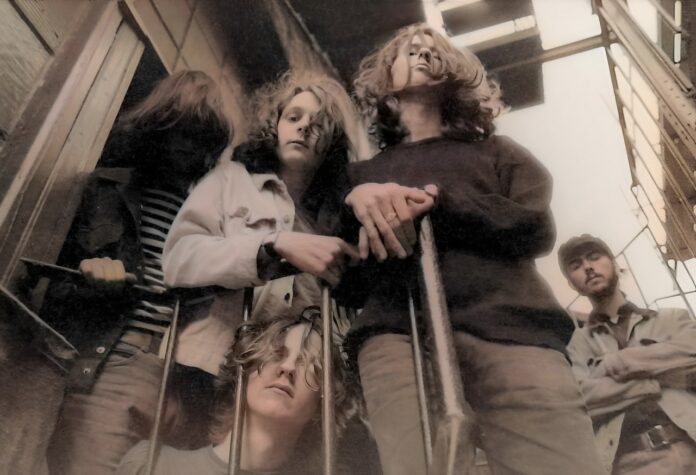
If My Bloody Valentine wrote the opening chapter of shoegaze, then Chapterhouse expanded the story into stranger territory.
The UK band emerged during the early wave of dreamy, distortion-heavy guitar groups, though it rarely fit neatly within the scene. Beneath its blurred guitars and ethereal melodies were dance rhythms, noise experiments, and pop structures masked by layers of distortion. That’s why its 1991 debut, Whirlpool, still feels like an important album that helped push shoegaze and alternative music in new directions.
Thirty-five years later, Chapterhouse is returning to San Francisco (Thu/28; August Hall) to revisit its defining record at a moment when the genre’s influence feels larger than ever.
Even the band’s name suggests something larger and more layered. A chapterhouse is traditionally a meeting room attached to a cathedral or monastery, a place for reflection, discussion, and gathering. The name came from Aldous Huxley’s The Doors of Perception, the psychedelic essay collection that also inspired the name of—you guessed it—The Doors.
Founding member Andrew Sherriff told 48 Hills that the group discovered the term while searching for an alternative to their original name, Incest, which they quickly realized was a terrible idea.
“It had nothing to do with family,” says the vocalist-guitarist. “It was that everybody in the local scene kept dating each other. It felt incestuous in that sense.”
The replacement felt far more fitting. In Huxley’s writing, the Southwell Minster chapter house is described as so ornate and overwhelming that it produces an almost psychedelic experience on its own. For a band obsessed with texture, atmosphere, and sensory overload, the image made immediate sense.
“That’ll do for us,” Sherriff recalls thinking.
For the musician, San Francisco has remained one of the group’s strongest connections to its original American touring years. He still remembers arriving there in 1991 for Chapterhouse’s first US run.
“I’ve always loved San Francisco,” he says. “Flying to San Francisco, it’s nice and sunny, and we were just enjoying ourselves touring.”
The city’s psychedelic history also makes Chapterhouse feel strangely at home here. Listening back to the band now, it becomes easier to hear connections not only to shoegaze peers like Slowdive, Ride, and Spacemen 3, but also to San Francisco’s long lineage of psych and experimental rock. Groups like The Brian Jonestown Massacre carry some of that same psychedelic DNA.
Like many shoegaze bands of the era, Chapterhouse often rejected the traditional idea of rock-star performance altogether.
“We didn’t see ourselves as entertainers or performers,” says Sherriff. “We wanted people to appreciate the sonic elements and the sound.”
The group could sound massive and intimate, layering noisy guitars around melodies that revealed themselves slowly rather than immediately—a balance between beauty and disorientation that became central to Chapterhouse’s sound.
Sherriff described it as a love for “pop music that is really messed about with,” songs where listeners have to work their way through the noise to discover the emotional core underneath.
Chapterhouse formed in Reading in 1987, bonding over records by The Beatles, The Velvet Underground, The Byrds, The Stooges, and The Doors before eventually becoming associated with the shoegaze explosion.
Still, Sherriff never fully viewed the group as a straightforward shoegaze band. “We also had that rock, psychedelic, and dance element all blending in at the same time,” he says.
Sherriff also remembers how quickly the musical landscape was shifting around the group during those years. Chapterhouse shared bills with Nirvana several times before the release of Nevermind, including a joint appearance at Reading Festival.
Watching the band live before its commercial breakthrough, Sherriff immediately sensed something enormous was about to happen.
“There were these incredible pop tunes hidden away in all that noise,” he recalls.
That mix became most apparent on “Pearl,” the single that helped define the group’s sound. Featuring vocals from Rachel Goswell of Slowdive, the track merged hypnotic guitar textures with rhythms inspired as much by dance music and hip-hop as indie rock.
When Whirlpool arrived in 1991, it captured a band still writing itself in real time. Produced in part by Ralph Jezzard (EMF) and featuring mixes by producer Stephen Hague (best known for breaking OMD and Pet Shop Boys in the US), the album stretched shoegaze outward, with songs drifting between noise and melody without fully settling into either.
Decades later, Sherriff says enough time has passed that the songs almost feel independent from the group that created them. “It almost feels like they don’t belong to us anymore,” he says.
Revisiting the album has also changed the band’s relationship to performing it. Chapterhouse now rehearses with a level of discipline they never had during the chaos of their early twenties.
“We sound better than before,” says Sherriff.
The current performances open with ‘Breather,’ one of Whirlpool’s most explosive tracks—an ironic title for a song that immediately throws the audience into the deep end.
“It warms the band up, but also warms the audience up,” he says.
The group has also started reshaping parts of the material live, blending different versions of songs like “Something More” into longer, evolving arrangements that gradually build across the set.
That new perspective extends beyond nostalgia. The current shows also include material from Blood Music, the group’s more divisive second album, whose fusion of electronic music and guitar psychedelia has aged into something surprisingly influential.
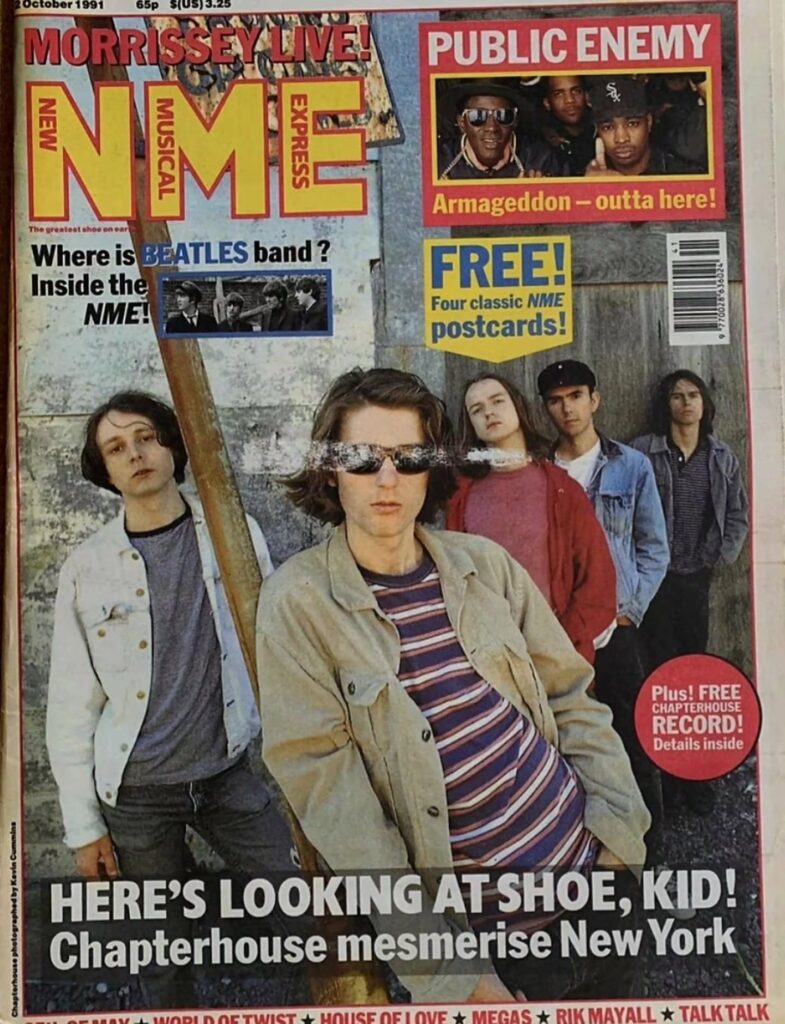
The album arrived at a time when shoegaze itself was beginning to fracture amid shifting musical trends. Grunge and Britpop quickly reshaped the musical landscape in the UK, while sections of the British music press aggressively turned against shoegaze bands altogether.
Sherriff remembers that era as one dominated by weekly music papers eager to build up new scenes while dismissing older ones.
But in hindsight, he believes the genre’s emotional openness and lack of rock-star posturing helped it endure in ways few expected.
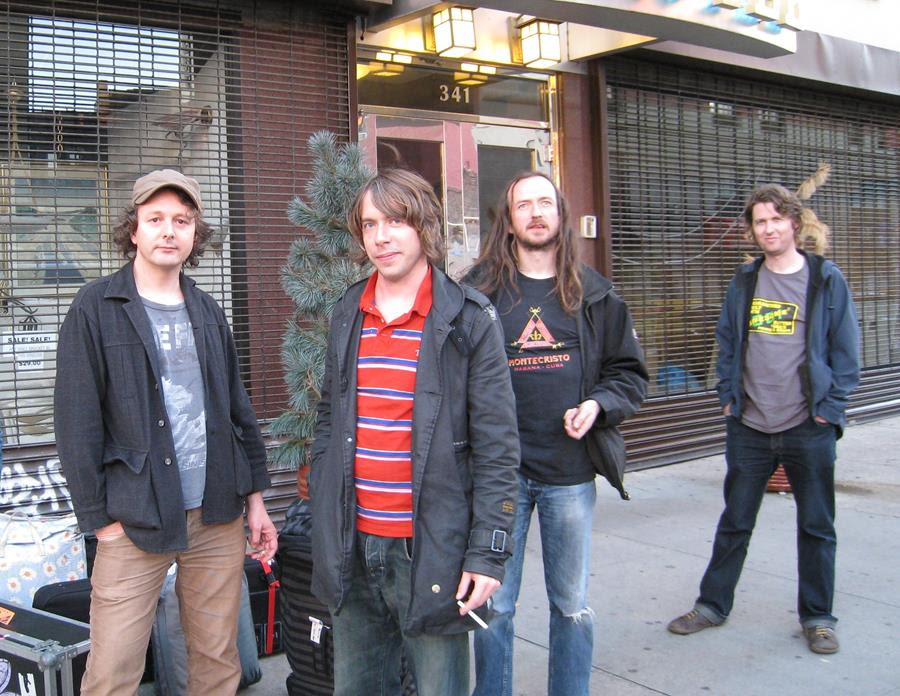
And Chapterhouse may not be finished writing new chapters yet.
Sherriff says the group has already discussed recording new material after the anniversary tours conclude, potentially beginning with a four-song EP before eventually building toward another album.
“We always loved EPs,” he says. “The idea is to have four great tracks bundled together and see where that leads.”
Shoegaze itself has long since escaped the narrow definitions that once boxed it in. The sound Chapterhouse helped shape now echoes through modern indie rock, dream pop, ambient music, and contemporary psychedelia.
Thirty-five years after Whirlpool, the story Chapterhouse helped write is still unfolding.
CHAPTERHOUSE: WHIRLPOOL 35 Thu/28, 8pm, August Hall, SF. Tickets and more info here.