Has there ever been a year in which the San Francisco Jewish Film Festival (Thu/16-August 2) has not both weathered and resisted external political storms? Certainly this current moment in time won’t be an exception. Nonetheless, JFF’s 46th year finds perhaps a surprising abundance of works programmed that aren’t about the expected historical or current events topics, instead underlining how much Jewish experience is also often universal experience.
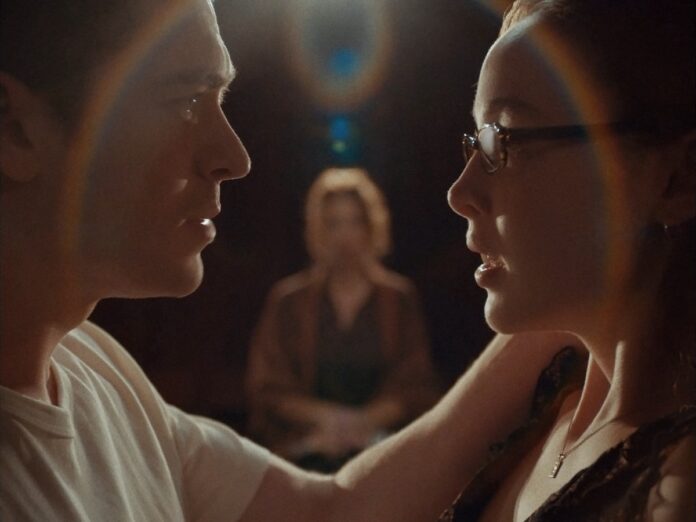
That means there’s plenty of room for such not-conspicuously Jewish enterprises as the ’80s-set high school comedy The Legend of San Jose Mundo, surreal “visual album” (from indie rock duo Magdalena Bay) Imaginal Disk, Human Theories’ roundup of diverse dramatic vignettes, Girl Dad‘s look at complex family dynamics, “cringe” Gen Z slacker sendup The Hedonist, or mdbr mdgr, a live multimedia collaboration between visual artist Annie Albagli and Yeah Yeah Yeahs drummer Brian Chase.
On the other hand, cultural specificity is very much foregrounded in the likes of Jenny Lester’s Our Bodies and Other Shames, a tale of female friendship within a Brooklyn Modern Orthodox community, as well as Assaf Machnes’ Centerpiece Narrative selection Where To?, about a Palestinian immigrant who’s a rideshare driver in Berlin.
As ever, there are numerous local (or formerly local) talents represented in the program, including Sam Green’s self-explanatory latest title The Oldest Person in the World. Two more Bay Area-tied documentaries are about music: Marc Smolowitz’s The Lonely Child the history and impact of a Yiddish lullaby written in the Nazi-controlled Vilna Ghetto, while Steven Pressman’s Dustbowls and Jewish Souls probes “another side” of legendary activist folkie Woody Guthrie.
The festival opens this Thu/16 at Herbst Theatre in SF with Tell Me Everything, a seriocomedy set in 1987 Tel Aviv by Moshe Rosenthal, whose Karaoke opened SFJFF four years ago. While that film found a retired couple shaken out of their rut—for better and for worse—this latest focuses on a 12-year-old protagonist who finds out more than he wanted to know about the messy adult world.
This year’s Director Spotlight falls on Netalie Braun, who will be present for screenings of her intense drama Oxygen, about a Haifa schoolteacher (Dana Ivgy) extremely anxious about her only child’s Ido (Ben Sultan) imminent discharge from the army as the Third Lebanon War breaks out; and her prior nonfiction Shooting: A Trilogy, which damningly dissects three illustrations of governmental propaganda.
Farther afield, international features include Frank Van Passel’s Belgian The Sound Man, a plush period piece set in Brussels during Nazi occupation, and Dina Zvi Riklis’ Blue Marks, whose heroine travels from Israel to Paris to pursue fashion design, but finds disillusionment instead.
The trouble she finds herself in has some overlap with “Take Action Spotlight” feature Hollywood Does Abortion, a survey of that perpetually-divisive topic’s highly variable, often disingenuous portrayal in popular media. Its executive producer, comedian-actress Rachel Bloom, will receive the Freedom of Expression Award at the Castro Theater on Sat/18—followed by a screening of Amy Heckerling’s 1982 hit Fast Times at Ridgemont High, an ostensible teen comedy that also remains one of the most intelligently common-sensical portraits of adolescent sexual activity and consequence.
Among previewed titles, here are some recommended highlights—excluding the excellent documentaries Amazing Live Sea Monkeys (which we reviewed here) and American Doctor (which we reviewed here)—we wrote about both previously when they played SF Docfest and SFFilm, respectively. (Doctor will also be opening in local theaters late August.)
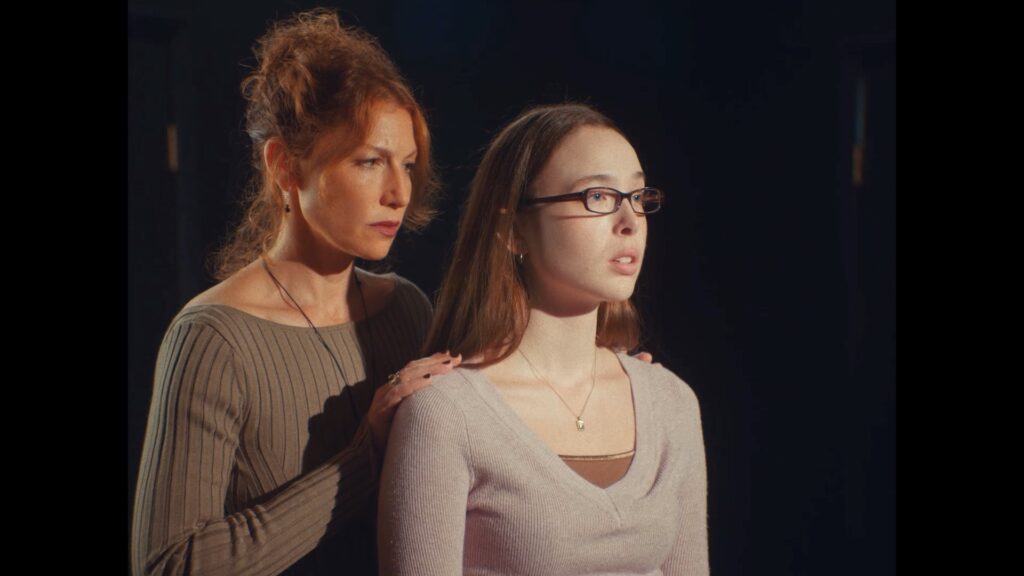
Actress turned writer-director Sophie Takal’s latest effort behind the camera is not exactly a love letter to the acting profession. Hannah (Ella Beatty) is a suburban teen who wants nothing more than a career on the stage, a dream her constantly-quarreling parents don’t support in the least. She’s thrilled to be taken seriously in an adult acting workshop led by the theatrically maternal if tough-loving Melanie (Ari Graynor).
But this new alliance turns out to have its manipulative and undermining sides as well, eventually wreaking havoc on Hannah’s school and home life. While the script eventually goes a bit overboard into psychological thriller territory, most of Act One is a powerfully nuanced portrait of adolescent naivete and neediness exploited by irresponsible, even predatory adults.
Using nothing but excerpts from a huge range of film and TV representations—dating back as far as 1938—Polish-born, Germany-based Michal Kosakowski creates a sort of supercut of the Holocaust narrative in popular media. As opening text notes, no historical event has inspired more dramatic features than WWII and its most infamous atrocity. Through sheer repetition, we see how earnest portrayals can nonetheless fossilize into tropes, as dozens of clips go through near-identical paces: Idyllic family life, early signs of bigotry, overt persecution, public violence, seizing of valuables, arrests, beatings, “transport,” mass murder.
Presented in bulk this way, the details can feel reductive, even cliched. Yet whatever their flaws, these movies—which have primarily shaped many people’s view of that history—still have moral and emotional power. Its vast jigsaw lent additional coherence by Paolo Marzocchi’s impressive original score, Holofiction is at its most playfully perverse when showing those actors (including Klaus Kinski, Rutger Hauer, Willem Dafoe, Donald Sutherland and Ralph Fiennes) who’ve played “both sides,” edited so that they interact with themselves as Nazi and victim. Other films in the festival that likewise deal with Holocaust remembrance include the documentaries I Don’t Know What I’m Doing Here, Landscape of Memory and The Mad Dog of Europe.
The gold standard amongst Catskills resorts was set by Grossinger’s, an eventually vast, luxe compound that was founded humbly in 1919 because there were so few places for Jews to vacation—many establishments back then were quite open about having a “Gentiles Only” guest policy. By mid-century it was “the classiest place you could possibly be,” attracting patrons and performers from Sinatra to Rockefeller to (Eleanor) Roosevelt, as well as African-American baseball legend Jackie Robinson. Practically the entire world of Jewish comedians got their start there, and singer Eddie Fisher brought both Debbie Reynolds and Elizabeth Taylor—his first wife, and the one he jilted her for.
Ironically, the civil rights movements that helped end segregation also put an end to the need for places like Grossinger’s. But the plentiful archival footage in Paul Eiselt’s documentary will make you wish the institution were still around. It provides the festival’s official closing night selection at Oakland’s Piedmont Theater on Sat/1. Of related interest is another nonfiction feature, Tim Travers Hawkins’ American Zoo, which examines the considerably more problematic legacy of another “Jewish Alps” attraction, the Catskill Game Farm.
A Palestine emigre, Odeh was a husband, father, educator, poet, and West Coast director of the American-Arab Anti-Discrimination Committee. When PLO representatives hijacked the Achille Lauro ocean liner in late 1985, holding Jewish passengers hostage while demanding Israel release political prisoners, he was interviewed by American TV news personnel. He spoke to them for 45 minutes—which got edited down to a few inflammatory sound bytes in which he seemed to be justifying terroristic acts. Within days, he was dead, killed by a bomb planted in his Santa Ana office.
Those and other attacks around the country were swiftly traced to Meir Kahane’s “militant anti-Arab organization” the Jewish Defense League. Yet the three perps were allowed to flee to Israel, only one ever facing serious consequences (and that was for different crimes). This potent documentary by Jason Osder and William Lafi Youmans finds Odeh’s surviving family still awaiting justice 40 years later. Meanwhile, investigative journalist David Sheen uncovers some pretty shocking truths about international collusion and coverup between governmental agencies—the same agencies that should have arrested these men decades ago.
In a similar vein, Roy Cohen’s Far From Maine looks into the case of a Palestinian childhood friend who was killed by Israeli police a quarter-century ago. A work-in-progress screening of Aziz Abu Sarah and Yuval Orr’s The Day After follows a Israelis and Palestinians as they seek advice on deep-rooted conflict resolution from survivors of “The Troubles” in Belfast.
SFJFF46 sports more features, shorts programs, panels and parties at various venues in SF and the East Bay, Thursday July16 through Sunday, August 2. For full program, schedule, ticket and location info, go to www.sfjff.org