It is a long-running principle of showbiz that most viewers want a happy ending—any entertainment that’s too much of a downer is unlikely to be embraced by the widest possible audience. Of course, that doesn’t mean there isn’t a significant minority of people who feel otherwise. Personally, I’m largely allergic to the “inspirational” and have a high tolerance for (to use an overused term I rather despise) “dark” material, so long as it’s not just a pretentious posture, or a masochistic wallow in gratuitous suffering.
This was underlined some years back when I watched Bertolucci’s adaptation of The Sheltering Sky—a movie I like a great deal—with a relative, who during the prolonged death throes of John Malkovich’s character shrugged “This is depressing” and left the room. It didn’t seem depressing to me, but rather cathartic and very moving. Then again, it surely says something about a person’s tolerance for the grimmer colors on the emotional palette when their favorite painter is Anselm Kiefer (guilty) and their immediate response to COVID lockdown was “Now I finally have time to watch Hungarian minimalist Bela Tarr’s 7.5 hour miserabilist epic Satantango!”
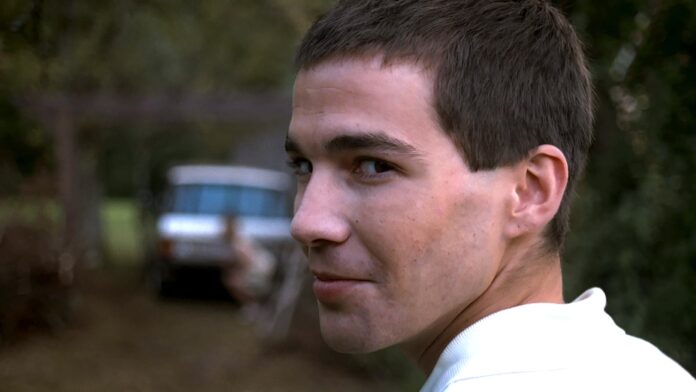
Similar thoughts were probably on the minds of the American Cinematheque in the still-fresh COVID aftermath of mid-2022 when it staged an inaugural Bleak Week at two Los Angeles venues. The 33 films crammed into those seven June days spanned 18 countries and eight decades, its “Cinema of Despair” naturally featuring the 1994 Satantango. There was also 1984 BBC nuclear-disaster imagining Threads, Bresson’s 1966 shouldn’t-happen-to-a-donkey tale 1966 Au Hasard Balthasar, plus such notoriously punishing experiences as Pasolini’s Salo, von Trier’s Breaking the Waves, Michael Haneke’s original 1997 Funny Games, and Elem Klimov’s Russian antiwar challenge Come and See.
This fare was never going to appeal to everyone’s taste—but it definitely appealed to somebody’s, such that Bleak Week is now on its fifth year. One that sees it expanding to nearly a hundred theaters in seventy-three theaters as a “global film festival,” with dates in Canada, Latin America and the UK Here in the Bay Area it’s SF’s Roxie doing the hosting honors, with seven movies that run a typically diverse gamut. Kicking things off on Fri/5 is Karel Kachyna’s long-suppressed 1970 The Ear, one of the swan songs of the Czech New Wave. Its black-comedy portrait of a well-connected couple dissolving into paranoid nightmare, as the authoritarian state they’ve propped up seems to turn on them, was banned from exhibition until the Soviet bloc’s collapse.
Chantal Akerman’s 1975 Jeanne Dielman, 23, quai du Commerce, 1080 Bruxelles and Ousmane Sembene’s 1966 Black Girl are both microcosmic studies of female servitude: Scrutinizing the dreary daily lot of a widowed Belgian housewife and a Senegalese woman doing domestic work in France, respectively. Man’s inhumanity even to other species is the subject of 1982’s The Plague Dogs, from the director (Martin Rosen) and author (Richard Adams) of the prior Watership Down. It’s an even bleaker tale of two canines who escape a medical testing laboratory, but are doomed nonetheless.
The undisputed bleakness champion here, however, must be 2011’s Hungarian The Turin Horse—the final narrative directorial feature from Satantango’s Tarr (though he only passed away this last January), and which I like to think of as Boiled Potatoes: The Movie. Inspired by a supposed incident in the life of Nietzsche, this 155-minute B&W study of a rural man and daughter’s cheerless existence is so studiously oppressive that after a certain point 14 years ago I began wondering if it was actually a parody of arthouse affectation… which question triggered a heretical case of the giggles.
The remaining two films are highly worthy, even if they don’t fit very comfortably under the “bleak” umbrella. Almodovar’s 2004 Bad Education is one of his absolute best, a very dark but also blackly humorous labyrinth of transgressions involving Catholic priests (and Gael Garcia Bernal) over some years’ course. Fruit Chan’s 1997 Made in Hong Kong, an independent production conceived after he’d had some frustrating initial experiences in the commercial mainstream, is a youth melodrama about the bond between three less-than-privileged teens: Dropout turned triad debt collector Moon (Sam Lee), the mentally disabled boy he protects from bullies (Wenders Li-Ah-Hung’s Sylvester) and Ping (Neiky Yim-Hui-Chi), the girl they both like who turns out to be terminally ill.
Superficially familiar in its juvenile crime action and sentimental aspects, Chan’s vision transcends formula—taking its characters all the way to the afterlife, it provides both gutter realism and perhaps more ultimate hope than you’d expect from a Bleak Week title. For full info on the Roxie series, which runs Fri/5-Thu/11, go here.
That is not the only look backward arriving on screens this week, though others run in directions perhaps less bleak than variously barbed, anarchic or ebullient. Several are conveniently timed for Pride Month, including SF Cinematheque’s co-presentation at SFMOMA Thurs/4 of “Andy Warhol Exposed: Newly Processed Films from the 1960s.” That program will only be the second public showing ever of materials shot at “the Factory” over sixty years ago, but previously left undeveloped. They include footage cut from released titles like Sleep and Kiss, as well as “Screen Tests” and Velvet Underground clips that also have gone unseen. Details are here.
Without the precedent of Warhol’s “superstars,” it’s hard to imagine the subsequent phenomenon of The Rocky Horror Picture Show, though of course that deathless cult favorite pays tribute to many a cultural forerunner. Having bypassed Bay Area theaters, Strange Journey: The Story of Rocky Horror arrived on VOD platforms June 2. It provides an overview of the musical’s voyage from fringe London stage hit to mainstream theater, then on to a film incarnation that preserved much of the work’s existing character (and cast) simply because it was too low-budget for any Hollywood executives to bother meddling with.
Then came the bad news: A Broadway mounting flopped just months before bewildered 20th Century-Fox dumped the completed movie in a handful of 1975 theaters, where it was ignored. Then a bit down the road, somebody had the bright idea of trying to build a following with weekly midnight showings…and we all know where that led.
This straightforward (ahem) documentary by Linus O’Brien, son of the show’s creator Richard O’Brien, charts how RHPS evolved into a distinctive audience-participation ritual, with shout-outs, costume, props and “shadow casts” growing organically from viewers. That experience proved liberating for generations of devotees, particularly gay youths looking for affirmation, as well as anyone seeking permission to be “crazy and wild and sexy.”
Among fans here who had their lives changed by early exposure are Jack Black and Drag Race veteran Trixie Mattel. Other interviewees include most of the surviving film principals, including Tim Curry, O’Brien, Nell Campbell, Patricia Dunn, Barry Bostwick, Peter Hinwood and Susan Sarandon, who pegs its appeal when saying “I think the movie’s about saying yes to life, to everything.” (Maybe her comments seem fresher than others because she’s one alum who has not spent the last 50 years talking about Rocky Horror.) Revelations are few, and you might wish for a deeper dig than 90 brisk minutes afford. But Journey is a solid memento for past and present aficionados, and a good introduction for newbies.
If Rocky Horror personified and expanded the hedonistic horizons of the 1970s, it also became a form of safer sex—and resistance—during the next decade’s AIDS epidemic. Next Wed/10 the SFPL Main Library will host a free screening of David Weissman and Bill Weber’s 2011 We Were Here, a strong candidate (alongside 1993’s Silverlake Life) for the best amongst many, many documentaries to date about that cataclysm. It focuses on those within and without the SF gay community who rose to the challenges of research, caregiving, activism and mourning, with such effectiveness that the Bay Area was in many respects a much better place for AIDS patients than other metropolises, including NYC. Weissman and guests will be present for a discussion after the 5pm screening, which is free—but an early arrival is advised. More info here.
AIDS made unexpected allies-in-need of gay men and heroin users, the two highest at-risk demographics. The second population has had more than its share of bleak screen portraits, fictive and non- (a personal favorite is the 2006 Australian Candy, one of Heath Ledger’s last films), but certainly none was more beloved—yes, that is the word—than Trainspotting, based on Irving Welsh’s cult novel. Getting a 30th-anniversary re-release nationwide as of this Fri/5, it remains probably Danny Boyle’s best film, despite bigger subsequent hits like 127 Hours and the 28 Days Later films, not to mention a shelf of Oscars for Slumdog Millionaire.
Ewan McGregor is chief amongst a memorably gamey, closeknit group of Edinburgh addicts. Boyle actually improved on his source material, as later Welsh adaptors seldom managed. What sometimes seems too effortfully “shocking” on the printed here acquires a giddy, often exhilarating energy that does not shortchange on moments of abruptly sobering cruelty and horror. Watch out for that baby—I still cringe at the memory of obliviously lending this film on VHS to friends who were expecting their first. Yikes.
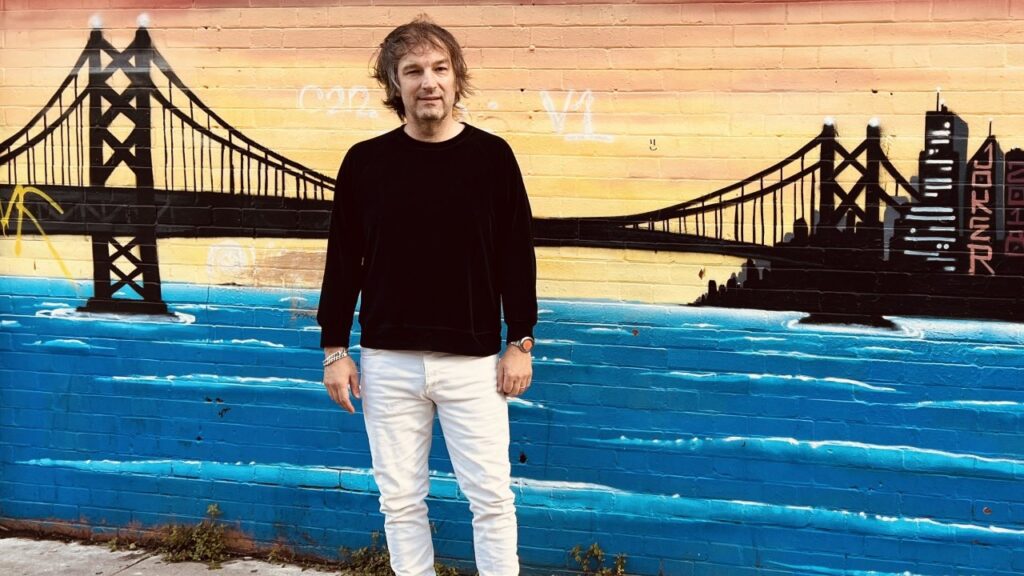
Lastly, nostalgia of an equally heterosexual if more campily imagined nature—think high Swinger Culture circa 1972, with mutton chops, naugahyde and Eve cigarettes—is on lavish display in Programme 4. This singular ongoing project for writer-director-editor Rachel Lichtman is making its Bay Area debut at the 4-Star Theater on Thurs/4. What is it? Well, it’s a semi-live event with different guest stars onstage at each outing; the SF edition will feature musician Marc Cappelle, MC Kelley Stoltz, and author Paul Myers doing an in-person retro “talk show.”
But the main element is an elaborate feature-length mockup of an average night’s “community television” programming in the fictitious “Golden Sands” area, which seems to be a Reno-esque vortex of Me Decade sleaze. There are trailers and opening credit sequences for nonexistent films starring the likes of Robert Reed and Dick Gautier, as well as never-was sitcoms and action series; commercials for local live entertainments (“‘Shampoo’ On Ice,” The Miss Dri-Foam Pageant), businesses like Caftan City, Harpsichord Liquidators, omnipresent clothing retailer Shayles (“Raylon maxis!”) and gourmand destination Ramon’s Venetian Room (do try the pickled butter). Not to mention tampons endorsed by an oversharing Marianne Faithfull. Plus very groovy station-identification graphics by Lichtman herself.
Whether parodying the condescending let’s-milk-this-Women’s-Lib-thing tone of early 1970s ads targeting female consumers, broadcasters’ weird attempts to be musically hip (there’s a plug for The Scott Walker Christmas Album), the child-psych feeliness of retro children’s programming (one show is called Me, Myself & I), or yesteryear’s hipster European variety-format strangeness (Plastic Fantastic), this is TV that almost could have existed—it’s at its least funny when the typically sneaky comedy is most overt. Adding to the coolness factor are a lineup of incognito musical and performing contributors including Mitch Easter, Dana Gould, Juliana Hatfield, Ted Leo, Aimee Mann, Michael Penn and Joe Pernice. This should be a fun night. More info here.
A couple new regular theatrical releases of note this weekend:
Carolina Caroline
After a couple rather less-prepossessing initial features, Adam Carter Rehmeier had one of those happy Sundance Festival breakthroughs with Dinner in America, the rare snarky black comedy in the mode of Repo Man that was just about as cool as it meant to be—largely thanks to a terrific lead performance by Kyle Gellner. Unfortunately, that was the Sundance right before COVID. So Dinner sat on the shelf for a long time, had an underwhelming belated release, and might’ve been forgotten had not a slow groundswell of fandom gradually buoyed it up. Eventually something happened that almost never does these days: It got a second theatrical release, starting late 2024, driven solely by word-of-mouth and online buzz.
After a retro teen-comedy followup (Snack Shack) I wanted to like more than I did, the writer-director has reunited with his prior star for this less-antic new film, which starts out rather a modern-day Paper Moon meets sexed-up Wanda. Caroline (Samara Weaving from the Ready or Not series) is a bored young woman in a Texas small town no one would choose to live in if they weren’t dependent on oil-industry jobs. Ergo her eye is immediately caught by slick, sly Oliver (Kyle Gallner), a stranger with a muscle car who clearly doesn’t belong. She’s even more intrigued to catch him pulling a classic confusion-at-the-cash-register con on her boss at a gas station convenience store. Curiosity leads to carnality, then the two driving off together—to the unspoken anxiety of her father (Jon Gries). Fully justified, it turns out.
Oliver teaches quick-study Caroline the tricks of his grifting trade, which consist mostly of petty theft schemes, but occasionally veer into armed robbery. While she’s not a bad person (arguably neither is he), she is starved for excitement, and he provides it. Of course this joyride is bound to go sour eventually, a turn first signaled by Caroline tracking down the mother who abandoned her—an excoriatingly trashy Kyra Sedgwick in a sequence more potent than anything else here. It’s a sharp downhill from there, with the po-lice in hot pursuit.
Carolina Caroline is very well-done, but there’s not a lot to it in the end—good as the performers are, these characters don’t have much depth to them. (It’s a testimony to the familiarity of the basic Bonnie & Clyde-like concept here that just one day later, I happened to see another new movie with the same basic premise.) Certainly not enough to make her evolution, his sacrifice, or their love terribly believable, though we’re asked to take it all seriously. Still, as lover-crims-on-the-lam exercises go, this is a decent one. Its soundtrack is packed with rural-highway-ready oldies by the likes of Loretta Lynn, Sarah Shook, Kitty Wells, Steve Earle, Lucinda Williams, Emmylou Harris, Townes Van Zandt and (surprise!) Captain Beefheart. The film opens Fri/5 in Bay Area theaters.
Time and Water
A contrastingly lyrical experience is this National Geographic documentary from Sara Dosa (Fire of Love), which is basically a highly worked audiovisual letter to people of the future from Icelandic poet and sci-fi novelist Andri Snaer Magnason. “I can’t send you a glacier, but I can send you this” he says in voiceover, commencing a lengthy, monologuing lament as to why very soon there will be no glaciers left, period.
Of course in the biggest possible picture, there is nothing more pressing than climate change—and this beautifully produced plea would make a very good case-plead for anyone who might find their skepticism melted by its tasteful “family values” emphasis. Because there are generations of home movies on hand to underline that Magnuson’s family has always loved its homeland, especially the glaciers. A simple connection is made: While human mortality is inevitable, glacier mortality is something humans are causing, and could possibly stop.
Iceland is gorgeous, as is Pablo Alvarez-Mesa’s cinematography. As eye candy, Time and Water is bliss. But for those already converted to the cause, the points made may seem rather pedestrian. And the film is awfully self-conscious about its melancholy poetic significance, in a sort of chicken-soup-for-the-soul way—it’s the kind of movie that seems to be simultaneously begging for a hug and providing one. I guess my taste runs more towards Bleak Week. The film opens Fri/5 at SF’s Roxie and Marin’s Smith Rafael Center, expanding to Berkeley and Sebastopol venues the next week.