If you thought Pitchfork (and music criticism in general) didn’t have any legs in the year 2026, the hype around Nirosta Steel proves otherwise. Shortly before departing from the role of reviews editor and chief numerologist, Jeremy D. Larson declared Nirosta Steel’s archival compilation My Skyscraper a “masterpiece.” The reaction was immediate: Get on the bandwagon. You could practically hear the scraping of chairs on Music Twitter and Music Discord as everyone rushed to listen in the brief window of time between Larson’s endorsement and the time his site would inevitably affirm My Skyscraper as a hot indie commodity with a rave 9.0+ review. In a Yogi Berran paradox, 99.9% of the world has never heard of Nirosta Steel, and yet everyone’s talking about him.
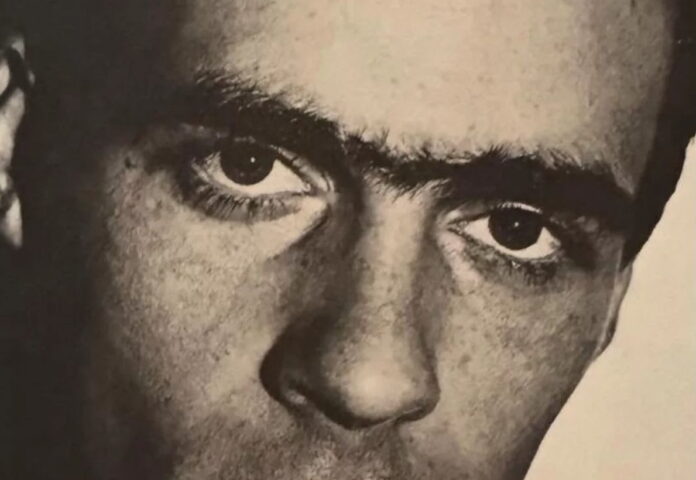
Nirosta Steel is far from your typical buzzband. It’s the project of Steven Hall, a 69-year-old gay man rooted in the downtown New York scene of the 1980s, who’s lived in various parts of Asia throughout his life and made no secret of his sexual exploits with Asian men. (The back cover includes a picture of Hall balls-deep in one of them.) Hall’s main link to the broader narrative of music history is his connection to Arthur Russell, the late NYC polymath every serious music fan eventually discovers, who appears on a few tracks. Hall’s music got a boost when Shane Lavers of the buzzy New York cloud-rock outfit Chanel Beads pushed a copy of his Cool Fire live album into the hands of Ulyssa Records boss Eric Deines, who sorted through Hall’s vast archives and culled 17 tracks just surpassing the 80-minute capacity of a single CD.
It’s interesting that Pitchfork would choose to honor My Skyscraper over Chanel Beads’ recent record Your Day Will Come, exactly the kind of beneficiary of snowballing hype the site would’ve smacked with its Best New Music award in the past. Some of the music here is so confounding that some commentators felt the advocacy of the crit-verse must have been a joke. There’s a nine-minute track that’s mostly just acoustic guitar and drum machine, followed by a 13-minute track that’s also mostly acoustic guitar and drum machine and sounds almost exactly like the last one. The timing of the guitars is sometimes a little off, and Hall sings the entirety of “Y.H.E.M.A.” in a deranged Mickey Mouse voice (a cartoon character that meant a lot more to Hall’s generation than to a lot of the people discovering his music right now). There’s a fully fleshed-out version of “Greyboy” somewhere, but the mix included here is stripped down to just his vocals.
At the same time, there’s something kind of undeniable about this music. I’m delighted by how “Boss Trix (Benny’s Song),” which Hall wrote about a man he knew who could shoot a load clear over his own head, has ended up on the Instagram feeds of a lot of my very straight friends. Then again, who could resist it—the faint pulse of French house, the delightfully muddy lo-fi filters, the perfectly timed orchestral stabs? I’d be gobstopped if this wasn’t a relatively new recording, so much does it sound like something that would’ve been made in Obama’s first term, when indie producers were learning how to gauze up their dance beats. I don’t think music taste is objective, but it seems there is a science to the left-field phenomena a lot of people end up liking. Whatever Madvillainy had that made people who didn’t like rap love it so much, whatever Tampopo had that attracted people who’d never watch a noodle Western: maybe My Skyscraper has it, too.
A lot of people have been comparing My Skyscraper to other weird underground projects to receive out-of-nowhere Pitchfork buzz recently—the switched-on Andean folk of Los Thuthanaka, the warped girl-group fantasias of Cindy Lee’s Diamond Jubilee. I see the logic to the Jubilee comparison; Thuthanaka is in another universe. But if My Skyscraper is kin to any recent critical hit, it’s Madonna’s Confessions II. Skyscraper opener “English Party” was written for the Queen of Pop, and if the timing had been a little different, it might’ve ended up on that album; it conjures exactly the same woozy VIP atmosphere as Confessions II tracks like “I Feel So Free” and “Danceteria,” and both artists are okay with reminding you that they were actually at those ‘80s NYC parties that subsequent generations of hipsters can only dream of. It’s good to see these two freaky relics of the mutant disco era still making great music, albeit on drastically different sides of the commercial stratum..
As for Arthur Russell—did you know he lived in San Francisco for a while in the late ‘60s and early ‘70s, shored up in a Buddhist commune on Pine Street under the name Jigme? The building is still there. I like to imagine the echoes of Jigme’s cello still collect in the corner, vibrating the dust and scattering the light.