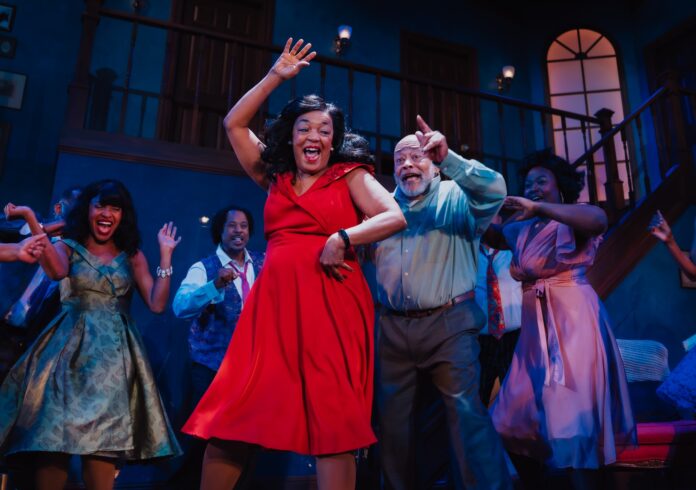
This is Drama Masks, a Bay Area performing arts column from a born San Franciscan and longtime theatre artist in an N95 mask. I talk venue safety and dramatic substance, or the lack thereof.
It was just last year that another musical with a Black cast world premiered at the ACT Strand. That one also focused on the Bay Area’s rich history of attracting talent, and how most of that talent has either died off or been gentrified out of their longtime homes.
Both shows have pretty catchy songs steeped in genres created by Black artists. The main difference between the two is that last year’s show had the characters refusing to take any real shots at the oligarchs responsible for their frustration. That show all but had its characters surrender to the idea that the ethnically diverse and artistically eclectic Bay Area has lost a lot of that magic due to corporate interests that have watered down the very fire that made this place so appealing.
The new show, SF BATCO’s Every Saturday Night (world premiere through November 1 at the ACT Strand, SF), shows no such mercy. It punches upward at heartless City Hall supes who have repeatedly sold out our city to corporate interests, as well as the Oprah-esque bougie Black folks who may just have more disdain for lower-income Black than whites do. Above all, it’s a celebration of the ability to find a place where one can be oneself without having to code-switch or assimilate.
(Incidentally, this new show opened just as Bilal Mahmood secured modest funding to start his plan to “Manhattanize” the Tenderloin; a plan this column has dissected before, and the plan’s just gotten dumber since.)
Time-hopping Every Saturday Night drops us inside a classic SF Victorian (designed by Sarah Phykitt) during the Eisenhower era. It’s a period of contradictions: a nation returning from WWII was overcome with Cold War paranoia; titans of industry ruled, even as the titans and their companies paid 91% in taxes; and Black Americans who had served in one war had to prepare for the fight of their lives in the upcoming Civil Rights Movement.
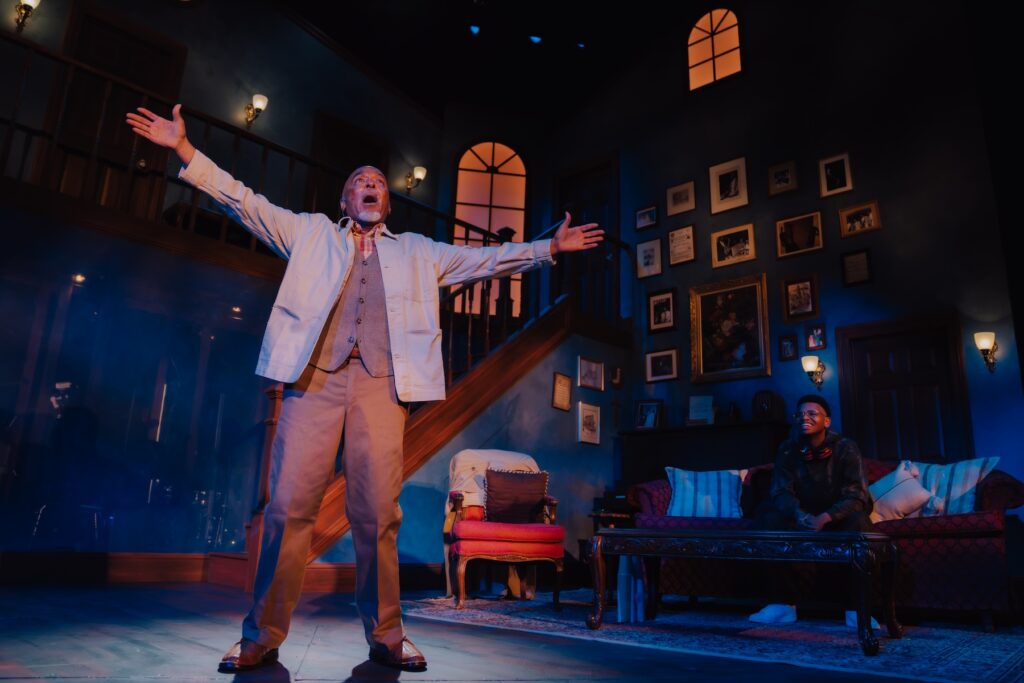
In the middle of all of this is Ardella (Cathleen Ridley), a Black single mother who runs herself ragged during her 9-to-5, but seems to work twice as hard come Saturday night. That’s when her house becomes Black SF’s most popular after-hours joint for everyone leaving the clubs in the “Harlem of the West.” She serves hot plates, the guests bring hot tempers, and the music does the rest. Despite frequent SFPD raids, she dreams of getting a license to make the place legit, creating a legacy for her teenage son Donte (Jacob Henrie-Naffa). She figures that all she needs to do is keep her head down and not make any waves.
Fast forward to present day and adult Donte (Darryl V. Jones) is one of the few Black home-owners left in the Fillmore, let alone greater SF. Today, he’s opening his house to potential buyers, DC transplants Samuel (Jon-David Randle), Joanelle (Janelle LaSalle), and their smart-ass teen son Adarè (Trevor Miller). Donte claims he’s comfortable selling, but he’s haunted by the ghosts of his mother and her patrons, reminding him of what he’ll lose if and when he turns over the keys.

If that weren’t enough, the house has also caught the eye of Christine LaFontaine (Velina Brown) of the “Western Addition Housing Association.” She’s less interested in the historical significance of the house so much as making sure its next occupants are, in her words, “the right kind of Black people.” Not all gentrifiers look like the Brady Bunch.
During the opening-night intermission, a 70-something white man sitting in the row behind me loudly and profanely complained about the character of LaFontaine, saying that it didn’t make sense for her to not be white. This guy insisted that the playwrights (one of whom is Brown’s husband and SF Mime Troupe comrade Michael G. Sullivan) knew nothing about the erasure of Black San Franciscans. Speaking as both a theatre critic and born-and-raised Black San Franciscan, it took a great deal of self-restraint not to tell this guy to shut up.
I’m sure he frequently pats himself on the back for his insight, no doubt picked up from watching Raisin in the Sun and Clybourne Park, but the very thing that made his comments so asinine is the very thing that made Every Saturday Night so resonant: the fact that there are a great many Black gentrifiers taking part in the Black erasure, and that it hurts all the more to see them do that.
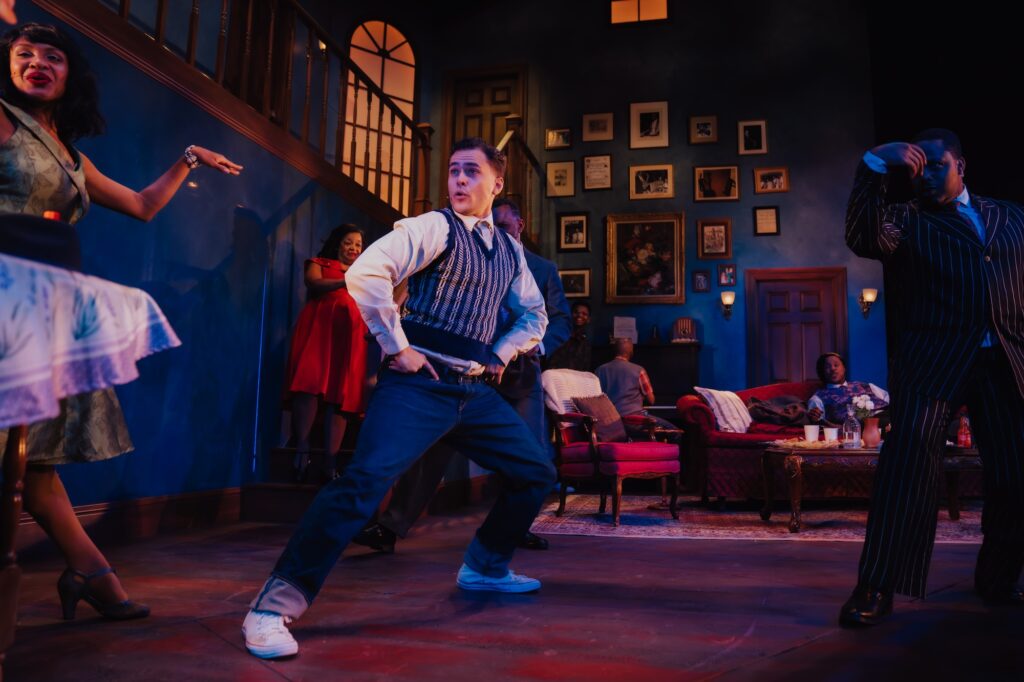
It’s the whole reason why Donte immediately calls LaFontaine out on her internalized racism, despite her believing she’s in the right. It cuts deeper to see your own people taking part in the oppression against you, whether it’s someone Latiné working for ICE or someone queer actively erasing queer history. It’s always worse when it’s one of your own.
More to the point, the contemporary LaFontaine both reflects and contrasts with Ardella: Both believe it’s in Black people’s best interests not to agitate white people, despite those same white people using any excuse to consider Black people threatening or forcibly relocating them from their long-time homes. (This point is personified by Ardella’s tenant Doris [Imri M. Tate], who becomes more politically radicalized as the story goes on.)
The difference between the two is that the latter has no real sense of community, something that seems to drive Ardella’s every action. One wants the house for its lucrative resale value; the other wants to see every room filled with people free of worry. That’s the heart of the entire play. To miss that point is insulting to the memory of the real Black San Franciscans who did gather every Saturday night.
Despite a near-full house, opening-night CO² levels barely topped the 800s. My Aranet4’s reading peaked at 1,241ppm at the final bow, which was as high as it got all night.
At curtain call, the real-life basis for Donte was brought onstage to stand with the cast. He thanked them and the creators for this preservation of his memories of a San Francisco long gone. It was an emotional speech following an emotional production. The show (directed by composer and co-writer Danny Duncan) is a well-acted, politically-charged, unexpectedly-funny tribute to Black art and community bonding.
What’s more, it’s a love letter to the beating artistic heart of San Francisco. The theatre is blocks away from where Bilal Mahmood made his LaFontaine-esque Instagram video promising to make the area accessible to rich tourists. I’m willing to bet neither he nor Mayor Bluejeans has seen the show. I’d like to think it would enlighten them about what they’re trying to erase with their elitist plans of “urban renewal.” I’d like to think that, but I know better. Nevertheless, Every Saturday Night is a great show.
EVERY SATURDAY NIGHT’s world premiere runs through November 1 at the ACT Strand, SF. Tickets and further info here.