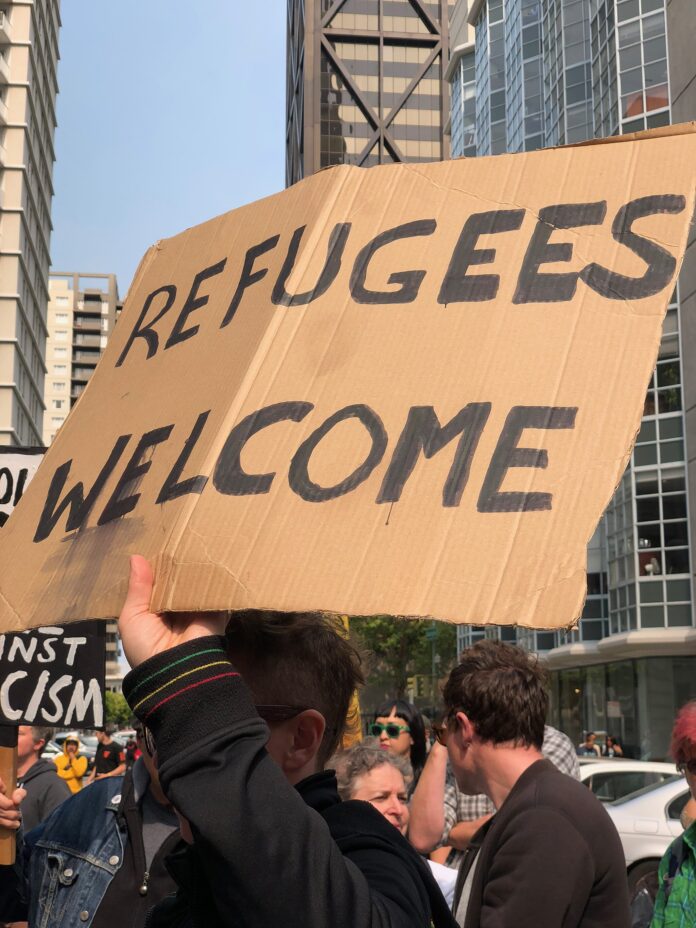
When I moved to San Francisco more than 16 years ago as a young professional, I arrived on a one-year fellowship to help build a new Office of Immigrant Affairs. I could not have imagined how deeply this city, and its vibrant immigrant communities, would shape my life, and how much lessons learned over the years apply to these dark and perilous times in our country and city.
I was newly out, queer, and from Utah, still learning how to claim space in rooms not designed for people like me. San Francisco became my teacher. What I learned about belonging and dignity matters now, as democratic institutions weaken and authoritarianism gains traction. Local government is not powerless in moments like these, and it must choose courage over caution.
My first project at what is now the Office of Civic Engagement and Immigrant Affairs was the 2010 Census, a process that determines who counts. Counting is never neutral. Who is included? Whose households matter? Which identities are named, and which are erased? San Francisco chose to be bold—challenging the federal government and insisting that everyone in our communities mattered. That moral and principled conviction stayed with me over the next 15 years of my public service.
After my fellowship, I stayed on to help build programs responding to real community needs. We sustained funding for day laborers and domestic workers, strengthened language access efforts, and launched grants for immigration legal services, fee assistance, and community-led civic engagement.
In response to violence and neglect in the Bayview and Visitacion Valley neighborhoods, we helped establish the Community Ambassadors Program. For 15 years, CAP hired diverse, multilingual neighborhood residents into stabilizing city jobs, empowering them to bring safety, dignity, and connection where local government had failed to show up. More than 500 low-income San Franciscans served as ambassadors—saving lives, protecting community programs, and building trust. Though recently eliminated by the city’s budget process, CAP inspired similar efforts nationwide, building safer communities across the country.
We also partnered with philanthropy and community organizations to create a national model for free naturalization workshops, helping more than 12,000 San Franciscans become US citizens through the SF Pathways to Citizenship Initiative. We led the nation in building inclusive professional pathways through the DreamSF Fellows Program and immigrant-owned cooperatives, initiatives designed and led by directly impacted people. And most recently, we led critical efforts to respond to federal attacks on immigrants through trainings, community coordination efforts and immigration capacity building through group processing clinics.
Last November, after 16 years of service, my employment with the city was abruptly terminated without notice or explanation.
I’m confused and still processing that loss. But I remain deeply grateful. This work shaped me, not just as a public servant, but as a human being. I found belonging weaving through Stockton Street in Chinatown; helping Mission District families fight—and win—against predatory evictions; sitting with a Central American mother navigating resources for her family; and breaking bread with African immigrant families in Golden Gate Park. I worked alongside immigrant colleagues who were among the city’s most dedicated public servants.

Again and again, I come back to this powerful lesson: People did not wait for permission to belong. They did not wait for institutions to save them or to feel comfortable taking up space. They held fast to their worth and power, even in the darkest and most inconvenient moments.
As we’ve all seen in recent weeks, violence at the hands of federal agents is increasing, and lawless behavior has been emboldened and is putting our communities at severe risk. During these times, the city needs to be sending a bold, unified message regarding its commitment to immigrant rights and willingness to stand against these federal actions and protect our immigrant community. San Francisco now faces a choice: Will we push our city and institutions to be radically inclusive, equitable, and safe? Or will fear, silence, and political expediency dictate the pace of justice and the positions we take? Will we welcome criticism as essential to democracy, or mirror authoritarian impulses that punish dissent and silence those who demand better?
Good governance is not passive; it is responsive and proactive. It recognizes that all residents belong and matter, especially those furthest from power. It understands that being full of care is just as important as being careful.
I urge San Francisco’s leaders and residents alike to draw strength from the boldness of our immigrant siblings. Be loud and unyielding in defense of our long-held values. Proactively strengthen our systems and protect the people who make this city what it is.
In times like these, it’s hard to believe the moral arc of the universe bends toward justice. It is only with collective pressure that it will bend. And we all have an obligation to push.