I started high school in 1961. Already a rebel, I dropped out of Oakland Tech, and then went over to Berkeley High in 1963-64. We could feel the times a-changing.
In 1960 young people, not much older than we were, began sitting in at lunch counters in the South. The next year the Freedom Rides, and the horrific beatings of the riders, were like electric shocks felt by high school youth everywhere. Some of us began helping on the picket lines at Mel’s Drive In, where we were told that we had to put on ties and sport coats to show that we were serious.
As high school students, we took ourselves very seriously. At Berkeley, we started a Socialist Club, sponsored by teacher Ying Lee, later elected to the City Council. We gave rapt attention to Mike Myerson, just out of college, when he came to urge us to go south for the next Freedom Summer. Then the fight at the Sheraton Palace Hotel overshadowed everything, and we got mobilized by Tracy Sims.
The picket lines there were so huge they stretched all around one of the biggest blocks in downtown San Francisco. In those years the hotel thought Black people were only good for sweeping floors or washing dishes, jobs invisible to hotel guests. The desk at check-in, the concierge station by the front door, the restaurant maître d’ who showed wealthy patrons to their tables—these jobs were for whites only. They paid better, of course, and some got tips. But of 550 people working at the Sheraton, only 19 were Black.
Tracy had helped organize the picketing at Mel’s and Lucky Stores even before she graduated from Berkeley High, so she knew we were serious too. We came to a founding meeting of the DuBois clubs because we knew she’d be there. And when we heard that protesters were sitting in beneath the vaulted ceilings of the Sheraton Palace lobby, and that she was leading them, it was natural that we identified. She was our lightning bolt, and we watched in awe from across the bay, as she and Myerson led the negotiations that tore down the color line at the Palace and the city’s 32 other big hotels.
That December I’d been arrested, the youngest of more than 800 students taken from Sproul Hall to jail (or in my case, juvenile hall) in the Free Speech Movement. For me and everyone else, there was no separation between the civil rights demonstrations at hotels and restaurants and sitting in for student rights. The right to have an opinion as a student, and then to fight for it, was indispensable if we were going to be able to organize to challenge a racist world.
San Francisco should erect a monument at the corner of Market and New Montgomery, where thousands came together to tear down the Sheraton’s racist wall. It was one of the two most important anti-racist movements in the city’s history. If the city does this, though, it should put up another statue, or paint another mural, at the first place where a similar wall came down, with consequences and repercussions that shook the world just as strongly, even if fewer people know about it today.
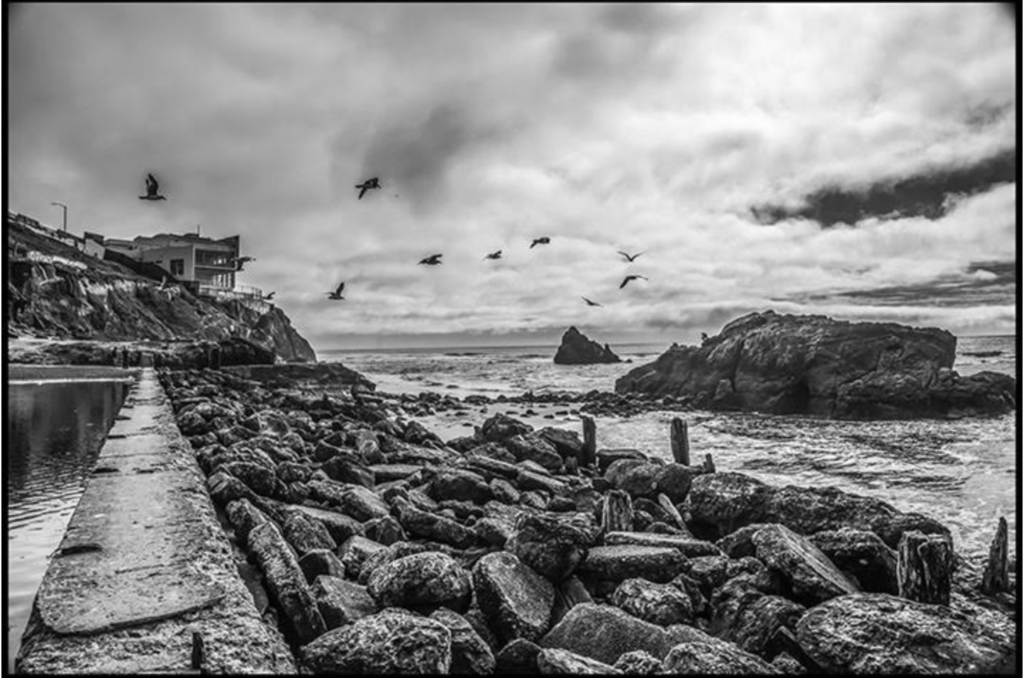
At the other end of the city, Adolph Sutro, a former mayor, built an ornate public bathhouse beneath the vertiginous bluffs that look out over the Golden Gate and the Pacific Ocean. The great view was a spectacular attraction when it opened in 1897, and people came from far beyond the city to sweat in the steam rooms and plunge into the salt-water pools.

Well, not everyone. John Harris was turned away when he tried to go in, as Elaine Elinson, an activist with the ACLU for many years, recounts in a 2012 article for SF Gate. Black people were allowed to enter, but couldn’t actually go in the water, Sutro’s son Edgar explained. “It would be ruinous to allow negroes in the baths, because the white people would be unwilling to mingle with them.”
Harris sued and won, an unusual victory given the racist hysteria of the time. The suit was heard the same year that the US Supreme Court upheld racial segregation in Plessy v, Ferguson. Harris and his supporters, however, forced California’s state courts to enforce its first law prohibiting discrimination in public accommodations, the Dibble Civil Rights Act, passed and signed in 1896.
Harris’s suit against former mayor Sutro was the law’s first test case. While the Dibble Act languished on the books for decades afterwards, largely unenforced, the Unruh Civil Rights Act of 1959 was an amendment to it.
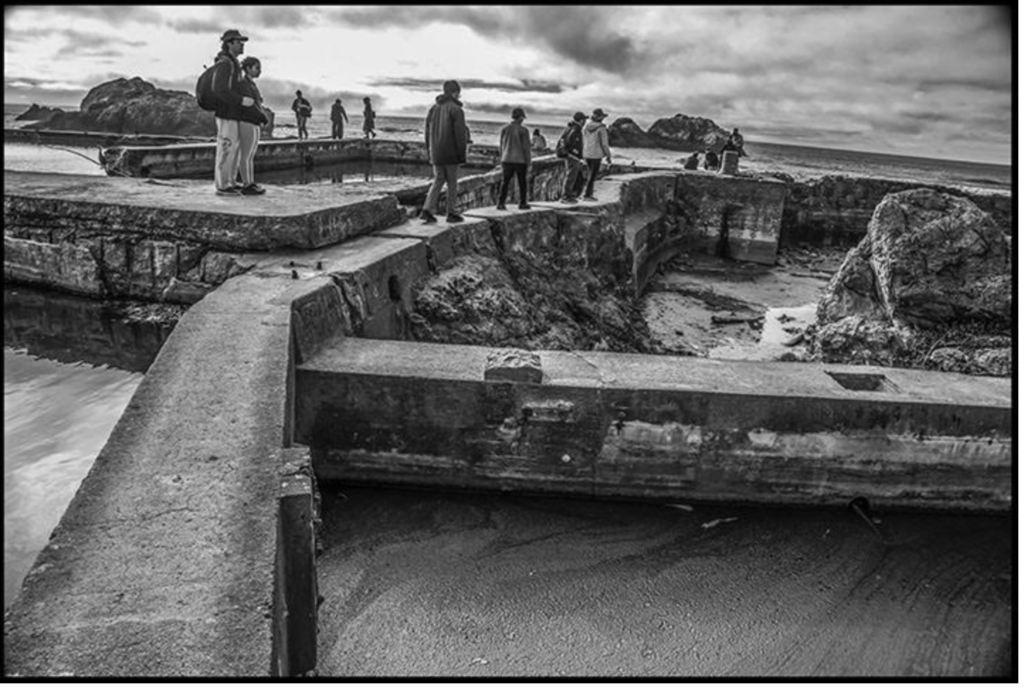
Nevertheless, in 1964 we were still protesting similar discrimination in employment at the Palace, and the color line at Roberts Recreation Area, a public pool in the Oakland Hills, had only been brought down by protests a few years earlier. So you could forgive us high school students for our ignorance of history. But as unenforced as the Dibble Act was for decades, Harris’ suit over being denied entry to Sutro Baths helped give California the basic framework for today’s anti-discrimination law.
I have a feeling that the Trump administration, in its effort to restore the racist status quo that we fought, may not yet have noticed that not only is Sutro Baths part of a National Park (the Golden Gate National Recreation Area), but that part of the park’s website proudly recounts the history of Harris’s famous case. If the administration moves to try to clean us out of history, we should be prepared to defend it.
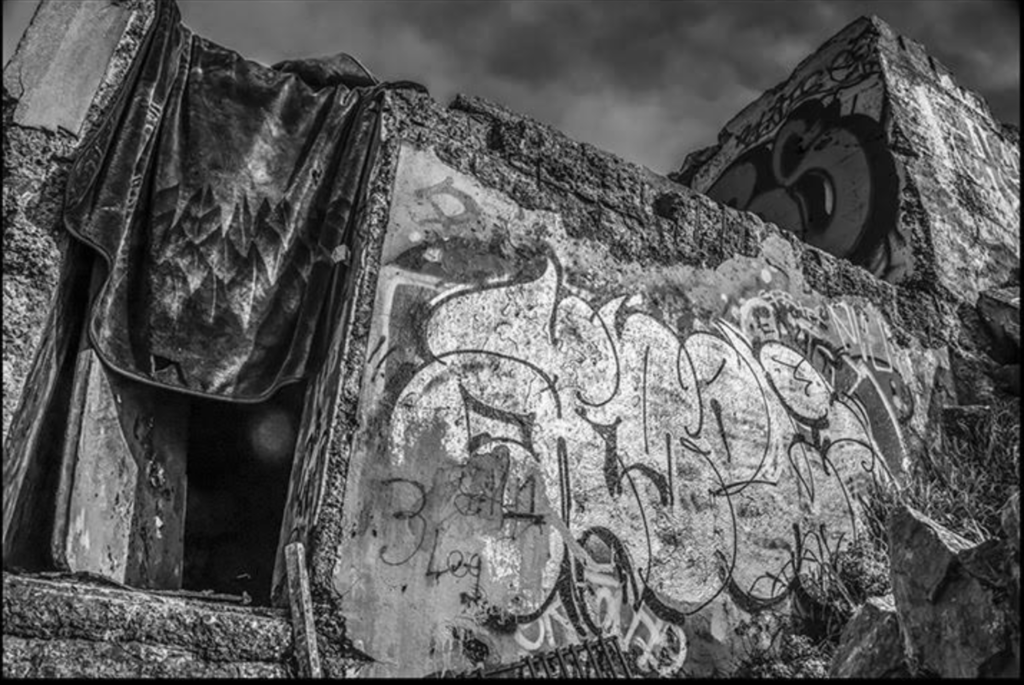
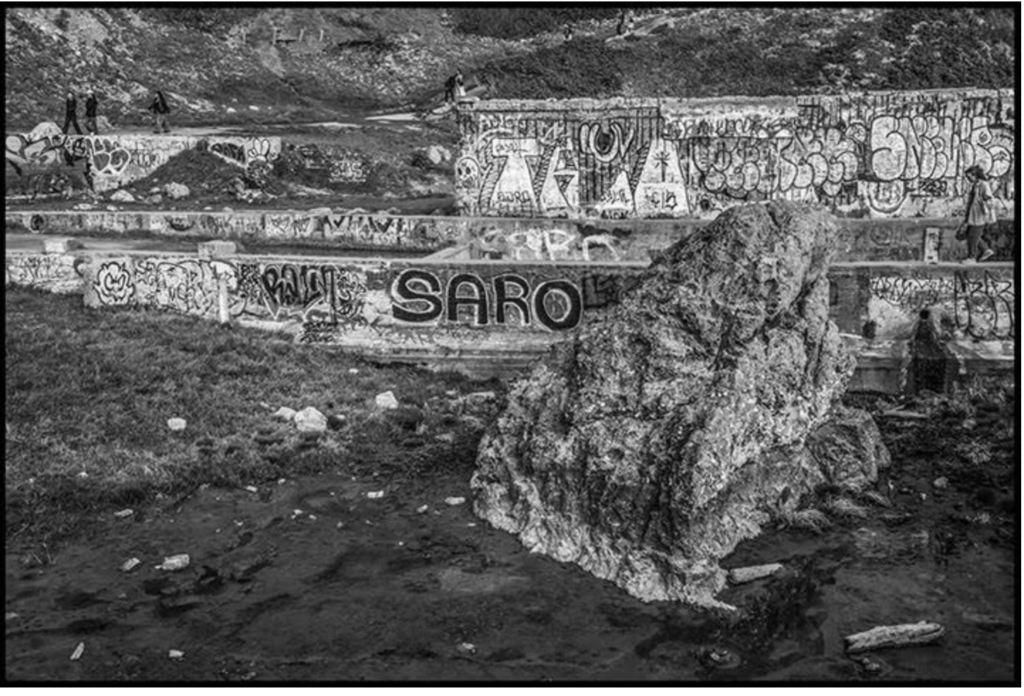
Today visitors easily walk down to the ruins of the baths. Between shrubs that threaten to obscure the walls, local graffiti artists have painted much of what remains. Their contribution makes the area come alive. On one ancient, desiccated ceiling truss someone has painted “Free Gaza.” People care in their way, enough to use dead detritus as their easel, giving justice a voice in the present.
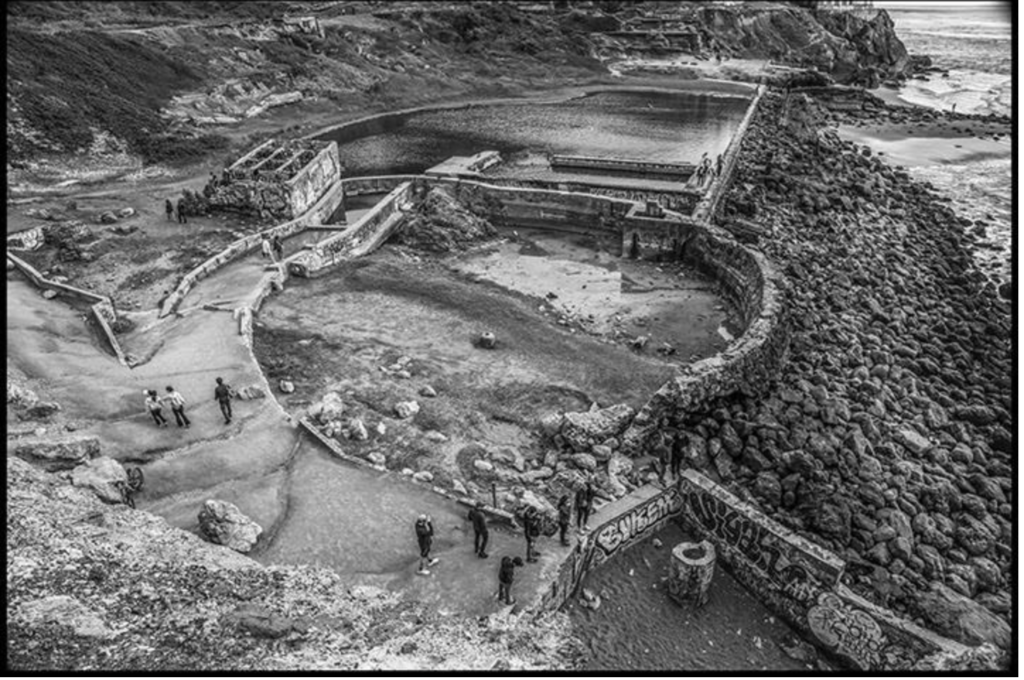
But as I walked east along the bluffs, I saw another piece of San Francisco’s reality today. People were living in small encampments, hidden away under trees clinging to the cliffs. A red umbrella shaded a pile of visqueen, presumably from a tent to protect whoever sleeps there from the wet fog that blankets the west edge of the city on so many nights.
The sidewalks next to the Palace, and up and down Market Street, have also seen their share of people spreading out their cardboard and a sleeping bag beneath the visqueen, and calling it home. The city authorities, especially these days, move them from away from the Palace, where they fear their visibility to tourists. Maybe some sidewalk sleepers find a place further out, whether near the Sutro Baths or in another hidden corner. But keeping people invisible to tourists echoes keeping people out of the front of the house in hotels and away from reveling bath patrons.
It makes no sense to me to celebrate our civil rights victories, and preserve the places that help us remember them, if we then turn away from people shut out of this modern world.