It seems just yesterday that SF DocFest, i.e. the San Francisco Documentary Film Festival, was the new kid on a crowded local block—the first spinoff from SF IndieFest, which has since created a whole stable of satellite events across the annual calendar. (With yet more to come, as animal-centric Critter Fest will launch this fall.) Not a few Bay Area cinema showcases that were well-established when DocFest arrived are now defunct, victims of shrinking audiences and rising costs, among many factors. But DocFest and other IndieFest brethren endure, the former now marking its 25th year.
That quarter-century mark gets celebrated with a program this Wed/27 through Thurs/4—its online component runs till Sun/7—that as usual finds a lot of fun in new nonfiction filmmaking. But there are also some honorary looks backward, notably a “2001 Flashback” sidebar (complete with 2001 ticket prices) bringing back a few favorite titles from the festival’s inaugural edition. The kind of Early Errol Morris-Like studies of all-American eccentrics that have been an integral part of DocFest gets a night to itself this Wed. via three such golden oldies.
First on that look-back bill is a double bill of Atomic Ed and the Black Hole by Ellen Spiro (who’ll attend the screening) about a former atomic bomb-maker turned collector of Nuclear Age errata, with Mellisa Edmon’s Gibtown, profiling the Central Florida hamlet that’s retained its edge after decades as a home for sideshow and circus performers during their off-season.
The night’s second program is Jessica Everleth’s Plaster Caster, whose subject was just in her early 50s at the time—she passed away a few years ago at age 74. Cynthia “Plaster Caster” Albritton was famous as a rock groupie who coddled (and/or worried) rock stars’ egos by making plaster-cast sculptural duplicates of their, um, non-musical equipment. Her models ran from Jimi Hendrix to New Wave and punk luminaries; eventually she also cast the breasts of their female colleagues, including personnel from L7, Mekons, and Yeah Yeah Yeahs.
Later in DocFest, there will be a 25th anniversary screening of Thomas Riedelsheimer’s Rivers and Tides, a portrait of another singular artist—Andy Goldsworthy, the British sculptor-environmentalist whose works exist (then decay or dissolve) at nature’s pace. That meditative film wound up becoming a surprise long-running hit for the Roxie Theater, and for Roxie Releasing. Longtime Goldsworthy gallerist Cheryl Haines will attend this special revival on Sun/31, sharing some insights in an onstage interview.
But 2026 DocFest’s official opening night is Thurs/28, when the emphasis is largely on music. James Buddy Day’s 40 Years of Fuckin’ Up provides a suitably energetic, messy big-picture view of NOFX, the So. Cal. punk outfit who were admittedly “terrible” for their first decade or so. They suddenly got good (and popular) in the 1990s—though issues around drug and alcohol abuse, a shifting lineup, personality clashes, lawsuits et al. continued to make the road very bumpy. We meet them when lead vocalist Fat Mike has just informed the others that their next tour will be the last, a decision that irks. Nonetheless, that tour does generate good vibes, as well as the inevitable spasms of drama.
Vibing is the whole story in Mischa Richter’s Summer Tour, which follows some cross-country devotees of Grateful Dead afterlife/offshoot Dead & Company on their supposed final tour in 2023. Constituting a “traveling hippie village,” these twirly-dancing acolytes look, speak and act a whole lot like their predecessors did fifty years earlier—even if most weren’t even born yet when Jerry Garcia died. Summer will have an afterparty at Muddy Waters (featuring a DJ set of live Dead bootlegs), while 40 Years will be preceded by exhibit/meet & greet at 418 Valencia Gallery, with NOFX members present.
There is no lack elsewhere in DocFest’s schedule of movies about entertainers, art-makers and their fans. Subjects include comedians Punkie Johnson (Punkie) and John Candy (I Like Me); a new generation of Irish musicians (Celtic Utopia); vintage R&B vinyl collectors (Soul Searchin’); fabled “rock hotel” the Sunset Marquis (If These Walls Could Rock); heavy metal (Di’Anno: Iron Maiden’s Lost Singer); and using ASL to convey music to the Deaf community (The Way We Move).
Blood & Guts is an ingratiating look at the Adams family, who from the unlikely upstate NY base of minuscule Roscoe aka “Trout City USA” have made eight features in 15 years, pretty much all by themselves. They hit a vein with 2019’s witchy revenge tale The Deeper You Dig, and have stuck with horror ever since, accruing a significant following (and an ongoing relationship with streaming platform Shudder). But for all their films’ macabre Gothicism, the parents and two daughters appear harmonious, good-humored, and to have a great deal of fun at “work.”
Of course, not everything is fun and games at DocFest. Several films address our current climate of extreme political strife in the US, including Sharon Liese’s Seized, about a particularly appalling instance of press intimidation in small-town Kansas. The crisis of affordable housing is addressed in Wood Street, which depicts residents of Oakland’s largest tent/RV community as they fight against imminent eviction by city authorities, and Saving Etting Street, about an effort to rehab abandoned homes in West Baltimore. The Surrender of Waymond Hall, The Second Life of Freddie Cole and The End of Isolation provide different perspectives on survival during and after incarceration in the world’s most lockup-happy nation.
#WhileBlack analyzes racial targeting by police and media alike. Human Shield portrays abortion clinic “escorts” who protect clients running an ever-increasing gauntlet of on-site harassment from far-right and evangelical protestors. All About the Money examines the case of a wealthy heir who uses his financial good fortune to attempt building a radical collectivist community in rural Massachusetts that exists outside dog-eat-dog capitalism—though his motives, and results, end up decidedly mixed. Just One Man finds Richard Propes waging war from his wheelchair on many Americans’ worst economic enemy: Medical debt.
Farther afield, Min Sook Lee’s There Are No Words scrutinizes the lingering impact of Cold War politics on her family, including a nonagenarian father who was once an intelligence officer in 1960s South Korea. And Palestine Comedy Club provides a platform for a half-dozen standup talents who are surprisingly adept at eking laughs from a bleak subject—perhaps unsurprisingly, since their audiences are generally living in de facto war zones, and really need a little levity.
Features of LGBTQ+ interest include Just Kids, about the hurdles non-binary youth and their parents face due to punitive anti-trans laws in various states. It shares some themes with The Road to Sydney, whose protagonist is a trans Filipina dancer facing challenges both in the Philippines and the U.S. Quba! provides an overview of queer culture and rights in Cuba, where things have gotten much better since the death of openly-homophobic Fidel, but still have a ways to go in terms of social attitudes and public policy.
All the above just covers a fraction of this 25th DocFest’s programming, which also has room for the sporty (roller derby-focused Rising Through the Fray, high-diving Acre Wall Jumpers), the resilient (Stray Embers, about Northern California residents climbing back from the devastation of the 2018 Camp Fire), and the Fears of a Clown—a So. Cal. man whose longshot dream is of opening a museum of the baggy-pants-’n’-greasepaint arts. Unique communities are captured in Clovers (hard times in Asheboro, North Carolina), Life Beyond the Pine Curtain (idiosyncratic individuals in East Texas), and The Fair (about a nearly 170-year-old annual event in a conservative rural Illinois so resistant to change, all the contestants for Miss Menard County are natural blondes).
But the stranger-than-fiction prize for this festival edition must go to Amazing Live Sea Monkeys, in which the widow of that “aquatic novelty” kit’s inventor—herself a former actress in 1960s grindhouse sexploitation opuses—fights a long-running lawsuit against the toy company that usurped and downgraded her late husband’s once-fabulously popular curio (which are brine shrimp eggs kids “just added water” to in order to create “Instant Life!”). En route, we also find out some very surprising things about the late spouse, not least that he was active with the KKK and Aryan Nations… despite being of Jewish heritage.
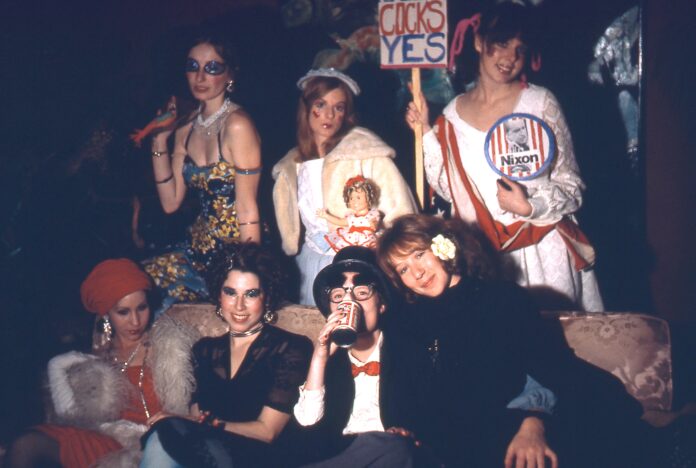
The official closing night selections on Thurs/4 kick off with Remake, the latest from Ross McElwee, who greatly popularized the “personal documentary” subgenre with 1985’s Sherman’s March. His son Adrian was much in evidence in some subsequent, equally diaristic films. But until now they largely downplayed the issues with mental health and drug addiction that finally ended Adrian’s still-young life. It’s a typically digressive but insightful, melancholy rumination on grief and loss. Of particular local interest is the world premiere of Betsy Newman’s Anarchy in High Heels: The Story of Les Nickelettes. It draws on plentiful archival footage to recall the women’s theatrical troupe whose boisterous DIY style during its lifespan from 1972 to 1985 was a sort of feminist spin on The Cockettes’ drag camp meets SF Mime Troupe’s political satire.
DocFest also features numerous shorts, a reading/Q&A session with Joel Gion of the Brian Jonestown Massacre, a special edition of Rick Prelinger’s Lost Landscapes of San Francisco, a panel on pitching your documentary concept to funders, several parties (including a Roller Disco one), and more. Its “Virtual Festival,” featuring access to many in-theater titles and more, is live May 28-June 7. For full info on the 25th SF DocFest, which primarily takes place at the Roxie and Vogue Theaters, go to https://sfdocfest2026.eventive.org/welcome