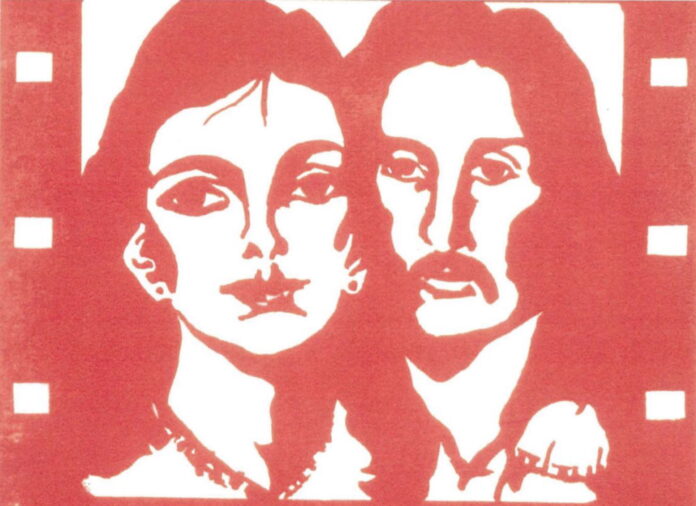
We asked Marc Huestis, legendarily subversive camp filmmaker and one of the co-founders of San Francisco’s first LGBTQ film festival—now known as Frameline, June17-27—to tell us what the scene was like 50 years ago, when a rag tag team (including pioneering gay photographer Danny Nicoletta and several other members of the DIY underground film scene) got together to “put on a show” almost 50 years ago. Filmmakers included a who’s who of the time: Cleve Jones, Ken Ward, Ric Mears, Bernie Boyle… and you won’t believe who got rejected! Their moxie is being celebrated at this year’s fest, which is a celebration of half a century of queer film and local history.
Picture this.
San Francisco, 1977. Location: a formerly Irish working class neighborhood that evolved into a gay mecca and rechristened as “the Castro.”
The streets were alive, the smell of sex was everywhere, and with it a creative new culture. It’s as if a giant house had dropped, and a gazillion gays came out. Filmed in glorious Technicolor. We weren’t in Kansas anymore!
And in that landmark year, what would become Frameline had its very first screening.
I had come to the city several years prior on the infamous Green Tortoise bus. As if by kismet I immediately hooked up with a fabulous theatre group named the Angels of Light, an offshoot of the legendary Cockettes. Their shows were legendary, featuring bearded drag queens, outrageous costumes, light fixtures made from coffee cans, and sets made out of cardboard boxes covered with glitter.
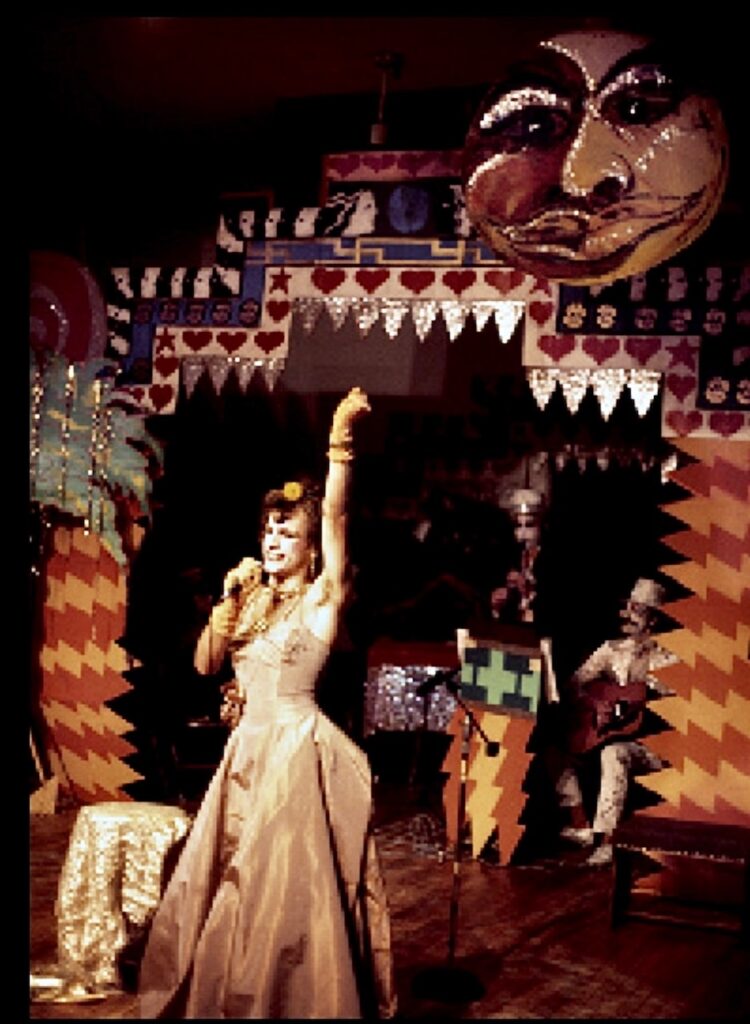
I had a featured role as a gypsy street urchin in the show entitled “Paris Sites Under the Bourgeois Sea” (how’s that for a title). In one the Angels’ smaller studio productions, I played a torch singer named Ellen Organ, a takeoff on the alcoholic singer Helen Morgan. Unfortunately when I was acting out a drunken rage, the booze bottle I was holding accidentally flew out of my hands, spiraled into the air and hit someone in the audience. It was literally a showstopper. An ambulance pulled up and my accidental victim was rushed to SF General, where he got seven stitches.
I knew at that moment my career as an out of control drag queen was over. And anyway I wasn’t a very pretty girl.
I pondered what to do next. Well I loved movies, had seen tons of them, so maybe I could become a filmmaker! I started to take film classes at City College, and quickly realized I had found my calling. I used all the wild colorful friends in the Angels’ circle of fabulous weirdos as actors. I was churning out one short every month.
Harvey Milk’s camera store was just down the street from my flat on Castro Street. So this is where I got my Super 8 films developed. There was a young, adorable clerk working the front desk named Danny Nicoletta. He had known me casually from the Angels, but in dropping off my footage we became good friends. Danny, too, was a fledgling filmmaker and we often had lengthy discussions about our films. Others who dropped of their Super 8’s at Harvey’s often joined our conversations at the front desk. We all realized there was a common thread.
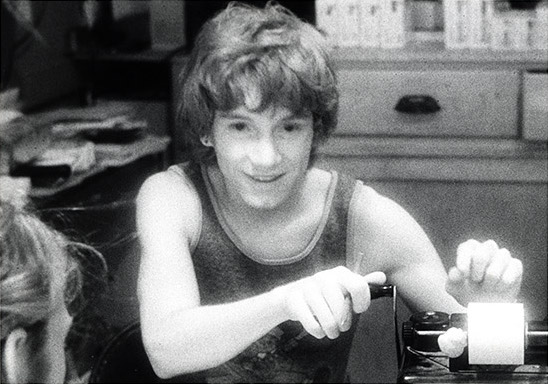
One day we all thought, “Hey let’s put on a show!” It was a very “Mickey and Judy” moment! The first meeting was held in my Castro Street flat. The group grew organically to eight. We were a ragtag bunch of hippies, all men. And I have to admit I didn’t join the group purely for altruistic motives. I just wanted my goddamn films to show, and there was safety in numbers.
In that moment in history, there were precious few films coming out of the gay community. Very few had access to professional film equipment. So Super 8 was an affordable option to capture the burgeoning energy that existed.
Planning a showcase of our reels commenced. Almost every film submitted was selected. A few were not, most notably one by a young filmmaker named Rob Epstein. It was deemed not gay enough. Of course Rob would go on to win two Oscars (one for The Times of Harvey Milk), multiple Emmys, and a Grammy.
We had a poster designed and booked a warehouse-like gay community center on 32 Page Street. Its manager, activist Hank Wilson, loved what we are doing and gave the space to us for next to nothing.
Of course social media did not exist then, so we relied on a grassroots publicity campaign outside of any mainstream media. I was a wiz with a staple gun, so every day I would blanket every lamp post in the hood with our posters, thumb tacked them onto countless neighborhood bulletin boards in laundromats. And I know it was an ecological no-no, but I even staple gunned posters on trees in Buena Vista Park, a major cruising spot for gay guys. Word was out.
On February 9, 1977 the “Gay Film Festival of Super-8 Films” premiered. We were expecting a modest turnout, but come the show there was a huge turnout. Even Harvey Milk showed up. The house only held 125 but we crammed in 200, and many were turned away.
People sat on the floor. Joints were passed. The films were shown on Danny’s Super 8 projector onto a white bed sheet (I often joke that sheet is now our Shroud of Turin). The movies were non-sync sound, with musical soundtracks on cassettes. The splices occasionally broke, but the audience, happy that the work was reflective of their lives, was most understanding. In the spirit of the times, admission was free.
My films were mostly kooky parodies, “Miracle on Sunset Boulevard” where my muse, drag queen Silvana Nova, plays washed out movie star Norma Hazbeen who has a spiritual epiphany when she meets the Great Goddess “Cliché in the Afternoon.” The flick featured Silvana jerking off to fantasies of making love at Land’s End a la From Here to Eternity, and a three-minute short gem entitled “Poodle Poo-Poo Miracle Mask.”
Amongst the other offerings was Danny’s a very sweet sensitive piece called “A Film,” “an autographical film about destiny and love of San Francisco”; Ric Mears’ “Continuum 2” which “grew out of a desire to take a piece of music, graph out its beats and rhythms using animation” and Bern Boyle’s wild “Untitled” which was “crude in more ways then one.”
The festival was so popular that another one was quickly slated for March 13, 1977, this time at 330 Grove Street, a much larger gay community center.
All this was heady stuff for us young queers. Though these films were super low budget they represented our unfiltered gay voices. Yes there were mainstream movies like Boys In the Band with gay content that previously existed, as well underground films from Kenneth Anger, Andy Warhol and Paul Morrissey, the Kuchar brothers, and others, but none came out as gay filmmakers. To me our little films represented the seeds of things to come.
Although I left the group to pursue my own filmmaking, this group continued to evolve and more fests occurred. By the third year, the presenters now officially had a name—Frameline. In addition, lesbian films were added, though at that time there were precious few by and about queer women.
A major step forward occurred in 1980 when a teller at Wells Fargo teller named Michael Lumpkin came onboard. His vision for the festival was grander, and in the next year Frameline presented its very first fest at the Castro Theater.
The opening night film was “Greetings From Washington DC” (showing June 17 at Frameline 50 as part of the “Frameline from the Beginning” program). It was so exciting to screen Frameline films at our cathedral of cinema! Michael went on to helm 25 fests, and for my money will always be the heart and soul of Frameline.
It’s been amazing to see that our little gay “let’s put on a show” now is the oldest and largest LGBTQ Film Festival in the world. There are so many great Frameline memories. Vito Russo’s Celluloid Closet lecture (some of Vito’s ashes are ensconced in the Castro Theatre), the first AIDS docs (including my 1986 film “Chuck Solomon: Coming of Age”), the early works of Derek Jarman and Pedro Almodovar.
Marlon Riggs’ landmark Tongues United, the amazing films coming out of the New Queer Cinema of the early ’90s including Go Fish, The Living End, Looking for Langston, Swoon, The Incredibly True Adventures of Two Girls in Love, a rough cut screening of Paris Is Burning that blew the roof off the house, sold out screenings of Bound, We Were Here, Lilies, Hedwig and the Angry Inch, and so many more.
Everyone will tell you nothing compares to Frameline audiences. They hoot and holler at comedies, soak up the dramas, and marvel at the realness of the docs. And filmmakers who get to see their films on the giant silver screen at the majestic Castro often remark that it is the best screening they ever had.
And 50 years—fuck! Having been diagnosed with HIV in 1985, I’m pinching myself I’m even alive! I thought I’d be dead years ago. One thing on my bucket list has been attending the opening night of Frameline’s 50th. I fantasized I would be an old geezer wheeled out opening night and wave to the crowd.
That will now not happen. Instead I will tap dance on that stage and belt out the Sondheim song “I’m Still Here”.
Happy 50th Frameline. May there be at least 50 more.
FRAMELINE 50 runs June 17-27. More info here.