

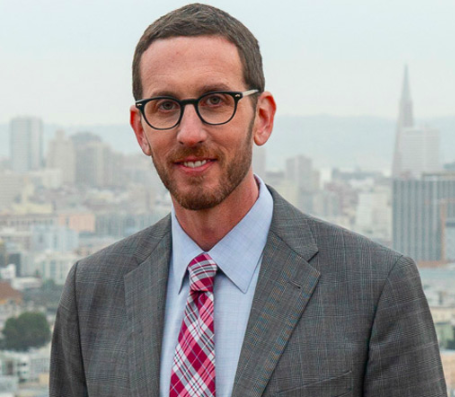
The most telling moments of what was otherwise a failure of a Congressional debate Tuesday came at the end, when the candidates got to ask each other questions. To nobody’s surprise, state Sen. Scott Wiener asked Sup. Connie Chan about housing. To nobody’s surprise, Chan asked Wiener about AI regulations.
I’m going to start with the housing question, because that’s been central to the Wiener campaign’s attacks on Chan.
Wiener asked: If you care about climate change, why did you oppose my bills allowing more housing near transit and oppose the mayor’s upzoning plan?
The moderators just sat back and listened. Chan didn’t respond directly to the question.
The problem is that the question contains an assumption that is almost certainly not true. Wiener is arguing that transit-adjacent housing will reduce the amount of driving and thus the consumption of fossil fuels, and will help limit global climate change.
That might be the case of we were talking about 100 percent social housing, but that’s not what Wiener’s bills and the mayor’s upzoning promote. In fact, none of Wiener’s housing bills include a single dollar for affordable housing.
Instead, Wiener and Mayor Daniel Lurie want more market-rate housing, which these days means $6,000-a-month apartments and $2 million one-bedroom condos.
Let’s parse this for a second.
Suppose a private developer builds 500 units of market-rate housing, with 10 percent (under Wiener’s law) set aside for below-market-rate units, near the Civic Center BART station and multiple Muni stops. (BMR housing is based on the average median income in the city; now that the AI boom has driven the number way up, a $2,800-a-month apartment can qualify as “BMR.”)
So 90 percent of the people moving into this new building will be, in a word, rich. The building is right next to abundant transit options, but the rich people (the cheapest condo is $2 million; some are much more expensive) are the least likely ever to take public transit. They’re not walking to Civic Center, waiting for a BART train, or standing on Market St. waiting for a bus. (Wealthier commuters in the East Bay will take BART into the city, but data shows they don’t use buses.) When they need to travel, they will call an Uber or a Waymo—a private vehicle that adds to traffic congestion and thus emissions. Some of those vehicles are electric, but they still need energy, and much of Northern California’s electricity still comes from natural gas plants, which emit carbon.
They will order household goods from Amazon, which will arrive in a truck. They will order food from Doordash, which will arrive in a car. None of this helps the climate crisis.
The global data is immensely clear: An individual’s climate footprint increases directly with that person’s income and wealth. These days, with so much commerce and transportation conducted through delivery and transportation apps, the situation is even worse.
(New York City, where even relatively wealthy people take the subway, is an exception based on 100 years of habit and tradition—and the fact that so many people are in such a small space with such narrow, congested roads that it’s hard to get anywhere in a car.)
So there is no evidence that transit-oriented housing in San Francisco will do anything to address climate change.
Even if Wiener were correct, the impacts of his policies will be so tiny that it can’t even be measured. Addressing global climate change will also require addressing the other existential threat to humanity—economic inequality. It will require a massive transfer of wealth, both from the tech barons who support Wiener to the working people who support Chan, but frankly, from the global North to the global South.
It will also require us to rethink the fundamental tenet of modern capitalism: The notion that growth is not only good but essential. If we as a society continue to focus on making the economic “pie” bigger, at a fatal cost to the planet, instead of focusing on how that wealth is divided up, we will fail, transit-oriented development or not. I have never heard Scott Wiener suggest that we slow economic growth or take vast amounts of money from his donors and use it for sustainable development in the global South.
You can’t put that in a 30-second ad or a campaign mailer, and it’s hard to address in a “debate” that features two candidates making speeches and two moderators who don’t moderate. Neither of them said: Senator Wiener, your question assumes facts not in evidence.
You can’t explain it to voters unless the major news media are willing to challenge their basic assumptions about late-stage capitalism. That’s one of the fatal flaws of US politics today.
So on to AI.
Chan asked Wiener how he could be trusted to regulate AI when an IE funded in part by Anthropic put up more than $3 million to help him win. Wiener said “there is no Anthropic money in this race.”
Again, let’s parse that.
A group called Public First Action has, indeed, put more than $3 million into electing Wiener. It’s a matter of public record that Anthropic put $40 million into that organization.
Anthropic says that money was just for “public education,” and wasn’t used for political ads. Maybe: We don’t know that for sure, because Public First Action, Inc., is a dark money PAC that doesn’t disclose its donors or the amounts they gave or where the money went. We do know that Anthropic’s money was the seed funding that made this operation possible.
We do know that employees of and investors in Anthropic and Open AI have given more than $300,000 to Wiener’s campaign. So there is absolutely Anthropic money in this race. We know that the AI industry wants Wiener, not Chan, in Congress.
Wiener insisted that he pushed an AI regulation bill that the AI companies hated. But the version of the bill that passed had the full support of… Anthropic.
Joe Eskenazi, one of the two moderators, knows all of this. He’s written about it. He did nothing to correct the record.
That’s in part because of the format of the “debate,” which gave the moderators no room to challenge what the candidates said. That’s a complete failure.
For the record: My independent adult daughter works on the Connie Chan for Congress campaign. Wiener’s campaign has said that he will not participate in any debate or forum that includes me on the panel. Too bad: I would love to debate Scott Wiener on housing policy, any time, anywhere. But the guy won’t even respond to my texts.