
Mayor Daniel Lurie’s Rich Family Zoning Plan—and the California Environmental Quality Act—will face a crucial test this spring in a San Francisco courtroom, and quite possibly, in the California Supreme Court.
A broad coalition of neighborhood, small business, and housing groups has sued the city, arguing that the city failed to evaluating the impacts of the massive rezoning plan under the California Environmental Quality Act.
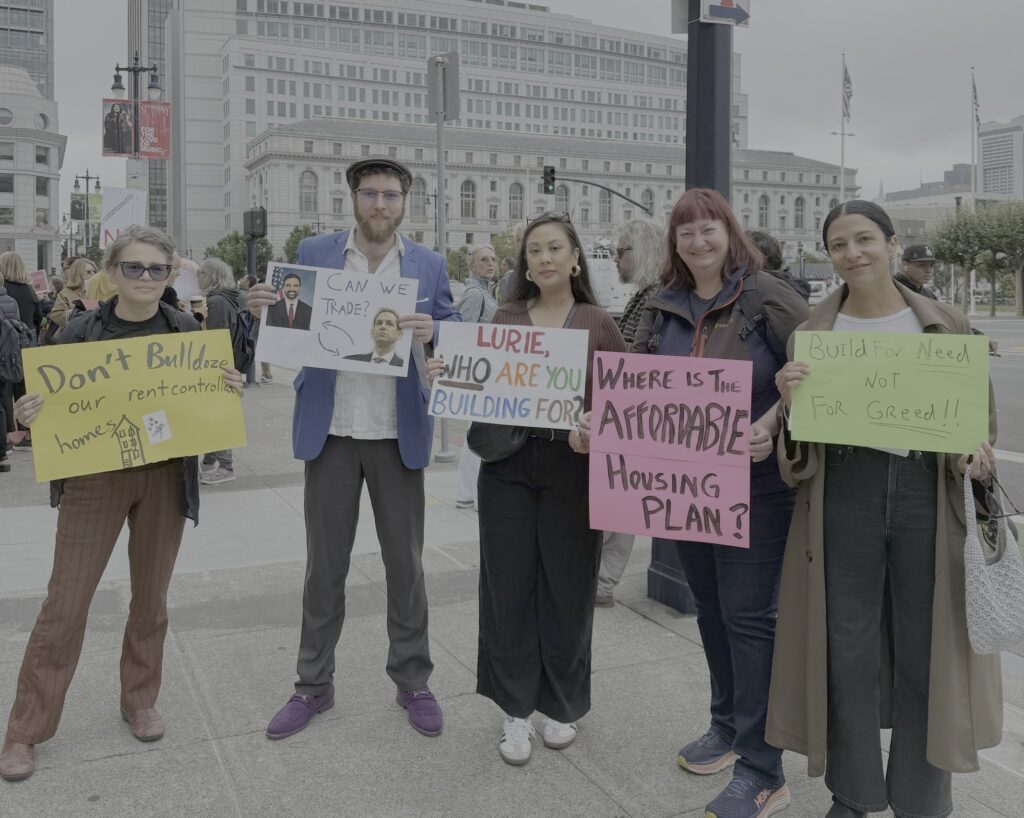
CEQA, which the Yimbys and developers hate, requires a full analysis of projects that could have an impact on the environment. The city argues that the rezoning is covered under a 2022 study of the Housing Element of the General Plan—but the plaintiffs argue that study looked at a very different situation.
The complaint notes:
The 2022 EIR analyzed a very different project than the 2025 Upzone. The 2025 Upzone allows 4,000 additional residential units, building heights up to 350-feet taller than analyzed in the 2022 EIR, and development in new areas not included in the 2022 EIR, such as the historic-resource-rich areas of North Beach and Fisherman’s Wharf, and development in formerly off-limits Priority Equity Geographies (lower-income areas).
The 2025 Upzone will result in the displacement of rent-controlled tenants and legacy businesses, by replacing rent-controlled and existing affordable units with luxury, high-rise condos, eliminating requirements for affordable housing, and allowing development in the areas within the Priority Equity Geographies Special Use District – something avoided in the 2022 Housing Element. The 2025 Upzone allows at least 20,564 two-unit rent-controlled units (10,282 parcels) to be demolished and replaced with luxury condos.
From the coalition’s press release:
This plan makes sweeping, permanent changes to how San Francisco grows, but it was approved without a serious, honest look at what those changes actually mean for residents,” said Katherine Petrin, co-founder, of Neighborhoods United San Francisco. “You cannot claim to support families and affordability while advancing a rezoning that encourages displacement, strains infrastructure, and offers no clear path to housing people can afford.
CEQA is under attack, and state Sen. Scott Wiener has taken the lead on preventing the use of the landmark law to challenge housing.
So this could be a defining case.
The argument in the lawsuit is that CEQA requires an analysis of alternatives to a project—and one alternative would be to adopt the 2022 Housing Element as it was with no changes.
Lurie and his allies have argued that without the Rich Family Zoning Plan, the city would be out of compliance with (Wiener-sponsored) state laws requiring the removal of any obstacles to massive amounts of new luxury housing for rich people.
Nothing in any of the legislation pushed by Wiener and the Yimbys provides a dollar to fund the 46,400 affordable units that the state has mandated and the Housing Element calls for.
CEQA doesn’t stop projects. The law just states that decision makers have to give the public an honest and complete assessment of the environmental impacts. It’s perfectly legal for a governmental agency to say: This is bad for the environment, but we are going to do it anway.
But CEQA does sometimes require things to slow down.
If this lawsuit succeeds and a judge says the city needs to do more study of the impacts of the Rich Family Zoning Plan, Gov. Gavin Newsom will have to decide: Does the state back off on its threat to eliminate all local land-use control while the courts sort this out?
How does this impact the state’s mandates for other cities?
No matter what the trial court judge says, this will wind up in the appeals courts, and maybe the state Supreme Court, where the future not only of local housing plans but of the state’s premier environmental law could be decided.