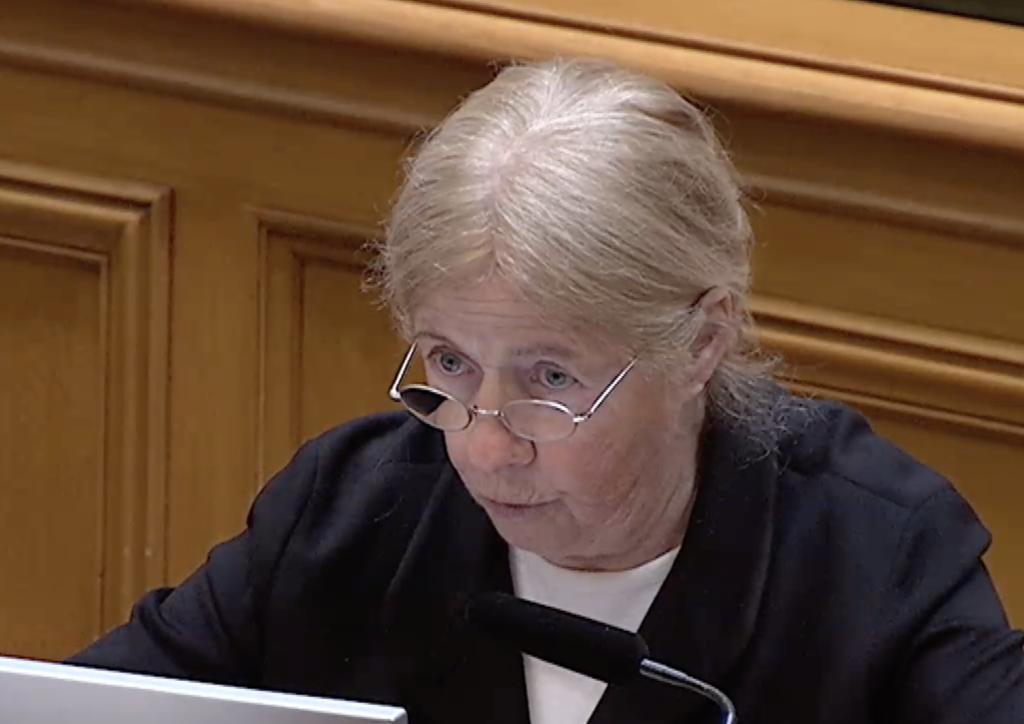
One of the best Planning Commission members in the 40 years I’ve been covering that body is stepping down after two decades of service. Kathrin Moore told me she will rotate off when her term ends this summer. “Twenty years is a long time,” she said.
Commissioner Gilbert Williams, who has also been an excellent addition to the panel, is also at the end of his term, and one commission post is vacant.
That means Sup. Rafael Mandelman will have a chance to reshape the commission, which plays a critical role in San Francisco: The commission oversees land use policy for the city, and since so much of local politics is about land use, the seven commissioners have tremendous influence.
For most of the past decade, the commission has been split on key issues, with the three members appointed by the president of the Board of Supes standing up to the three appointed by the mayor. Since all three of the vacancies are for board-appointed supes, Mandelman, who is much closer to the mayor than previous board presidents, will be able to shape future debates.
Moore, a retired architect, has extensive knowledge of planning issues and policies, and has challenged the Yimby agenda, Mayors Breed and Lurie, political corruption, and developers who are bad actors. She has been a polite, soft-spoken but fierce advocate for rational community-based planning. You have to go way back to the days of Sue Bierman to find someone as excpetional.
Williams, a union carpenter and anti-displacement advocate appointed by former Board President Aaron Peskin, was a refreshing community voice in his term. (One of Peskin’s legacies: He cared deeply about land use and environmental policy, and always appointed great planning commissioners.)
Mandelman now can nominate three candidates, who must be approved by the full board. But with a Lurie-friendly board majority, it’s likely Mandelman’s picks will get the nod.
That could mean the end of any independent voices on one of the city’s most important commissions. Mandelman will get to nominate his choices in late June.
Sup. Matt Dorsey was unable to get six votes for his bill to mandate that city money only go for drug-free housing, meaning people in permanent supportive housing could be evicted and sent back to homelessness if they are caught using illicit drugs.
That’s in part because the San Francisco-Marin Medical Society, an influential group of physicians, sent the supes a strong letter of opposition. From the letter:
SFMMS believes if an individual is evicted from housing based solely on their addiction to and use of an illicit substance, the language of the bill should ensure that this individual is not at risk of a return to homelessness as a result of that eviction. SFMMS believes, at a time of constrained funding and access to supportive housing, the city should prioritize drug-free housing but not create new obstacles or be restrictive in funding for supportive housing. … An individual with a substance use disorder evicted from housing because of relapses should be moved to a setting with more intensive services. The ordinance as currently written does not contain minimum guardrails that, at the very least, would ensure that the evicted individual is not relegated to an undetermined setting with less support and possibly homelessness. An amendment to create this minimum protection seems both reasonable and in keeping with the goals of the administration, and should not be left to an indeterminate process.
That’s the crux of the debate: Everyone agrees that some people in PSH want a sober environment, and the city should provide some housing that supports abstinence-based recovery. The problem is that many, if not most people in recovery (including, by his own admission, Dorsey) relapse at times—and if that means they are thrown out onto the streets, the odds that they will successfully complete treatment effectively vanish.
The Dorsey legislation doesn’t explicitly guarantee that nobody can be evicted from PSH for drug use unless there’s another spot for them in a different environment.
It’s a much larger problem that has hampered both state and local attempts to address substance use issues: Nobody ever wants to pay for the necessary level of long-term and short-term treatment on demand, including critical psych beds and residential programs. Instead, Lurie is cutting services and using the police as the primary treatment option, turning the county jail into an overcrowded nightmare with inmates suffering from mental-health and withdrawal symptoms.
So now the bill is back to the Public Safety and Neighborhood Services Committee Thursday/28. The medical society says it will support the measure if it’s amended—but Dorsey can’t mandate funding. Only the mayor can do that.
The meeting starts at 10am.