On March 3, Mayor Daniel Lurie announced his so-called “Stronger Muni for All” campaign. The signature-gathering effort is aimed at putting a parcel tax on the November ballot to stave off “catastrophic Muni service cuts, reduce traffic congestion” as well as build a more “reliable and more affordable transit system.”
The event, held at Dolores Park in the Mission District, featured five district supervisors, the CEO of the Chamber of Commerce, the principal officer of Teamsters local 665 and a local transit advocate. The media advisory included a small note at the bottom about the committee — Stronger Muni for All, Mayor Lurie’s Ballot Measure Committee — and its funders. The top three contributors: Ripple Labs, Airbnb and Visa.
The current Muni debate rehashes old narratives and highlights the political failures related to this funding crisis.
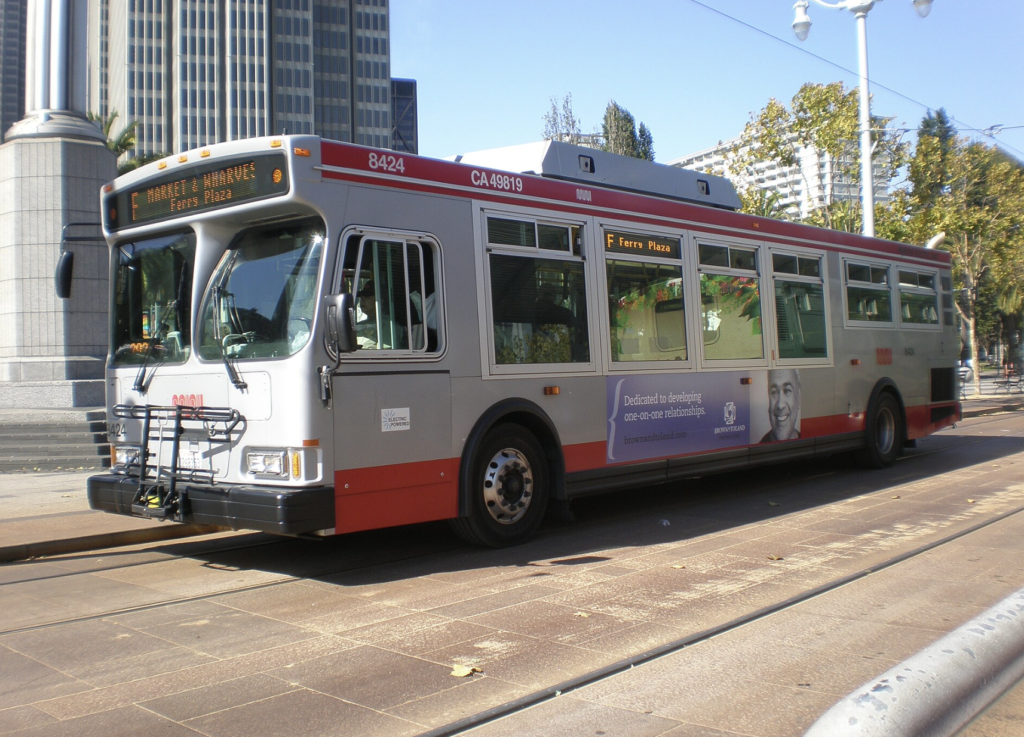
The parcel tax would generate between $150 million and $200 million a year for the SFMTA, which comes at a critical time as Muni faces an upcoming budget deficit of more than $300 million. Without the new money, Lurie said, Muni could be forced to cut at least 20 bus routes and decrease service by 30 percent.
Parcel taxes aren’t property taxes, which are strictly limited by Prop. 13. Property taxes are based on the value of land and buildings; parcel taxes are a fixed rate based on the size of a parcel.
Under the proposal, large commercial parcels would be taxed at a higher rate than residential units—but Lurie included a $400,000 cap on the largest properties. That means, for example, that Donald Trump, who owns half of the Bank of America Building, would pay only a fraction of what he has saved under Prop. 13.
Lurie’s office drafted the measure without ever talking to tenant groups. That would have allowed landlords to pass half the cost of increased taxes down onto their tenants. After an uproar by renter advocates, who could have sunk the measure by opposing it, Lurie agreed to cap pass-throughs to $65 a year.
Dylan Fabris, community and policy anmager with the nonprofit San Francisco Transit Riders, said the transit coalition pushed the mayor’s office to consider a variable rate tax, which has been commonplace across the state for decades.

“We pushed pretty strongly with them to consider a variable rate, which is something that lots of other cities in CA have been doing since the 1980s, but we in San Francisco have not done. So that means taxing based on square footage rather than a flat rate for every parcel. It’s still not the most progressive way of doing things, but because of Prop 13 there’s a lot of restrictions on how we can tax based on value so it’s kind of a response to Prop 13,” Fabris said in an interview.
The Mayor’s Office declined.
Jason Henderson, a professor of geography and environment at San Francisco State University, has written extensively about the city’s transit policies and funding debates. He discusses the continued influence of Prop 13 in his 2013 book Street Fight: The Politics of Mobility in San Francisco.
“Ideologically, Prop 13 represented an antigovernment ethos among a sizable number of mostly white suburban voters in California that was interlinked with conservative discourses about social welfare for immigrants and the working poor, term limits on elected officials, opposition to new affirmative action programs in the public sector, and broad disenchantment with the racial and class shifts in the state, especially in the public schools.”
This kind of antigovernment ethos is, unfortunately, commonplace in the current mayor’s office. Lurie’s approach to city governance is that of a CEO running a corporation, with his main accountability to his perceived shareholders, in this case private transportation companies.
Lurie is not unique in his approach to governing a wealthy city like San Francisco, as he follows a succession of mayors who have been unwilling to “go big” on funding Muni, as former District 5 Supervisor Dean Preston told us.
“While everyone likes to talk about Muni and talk about how they like public transportation in political circles, the reality is not many people want to spend political capital on it,” he said in an interview.
On Tuesday March 10, Lurie held a press conference announcing legislation he and Board of Supervisors President Rafael Mandelman sponsored supporting curbside electric vehicle chargers. During Mandelman’s remarks he noted that “the first and most environmentally friendly thing we can do is to make it possible for as many people as possible to live their lives without cars.”
Supporting EVs in the city provides a potential alternative to the climate change effects of personal vehicles, but it does little to mitigate the congestion problems the city is already experiencing. And the installation of the curbside chargers makes it easier to drive, and discourages people from using public transit.
Similarly, if the parcel tax is passed, it will help Muni forestall a massive budget hurdle looming this July, but only temporarily. To resolve this long term will require spending that political capital, not on bringing Taco Bell downtown but on solidifying a service that is the lifeblood of the city.
It’s become clear that Lurie views Muni as a kind of 20th century relic. For his office, transit solutions are based around supporting private enterprise and allowing those companies to fill the gaps in the Muni system, rather than putting money back into said system to make it better.
Private interests like Ripple, Airbnb and Visa are willing to give the mayor a political victory, but have no interest in footing the bill for a municipal service like Muni.
As Preston outlined in one of our conversations, there is widespread support for the kind of lasting solution to Muni’s budgetary issues discussed in the previous piece. Doing so, however, requires elected officials to clear longstanding political hurdles.
He noted that many at MTA, people who have spent their careers fighting for Muni, would support the kind of billionaire tax that would keep the agency solvent for decades, but they’re stifled by the political machinery of City Hall.
“They’re given a certain political reality. I’m sure there are tons of people at mid to high levels of the MTA who would be perfectly happy to put a tax on billionaires or some other gross receipts tax or rideshare tax to fund public transit. And they probably still wouldn’t have their jobs if they did that.”