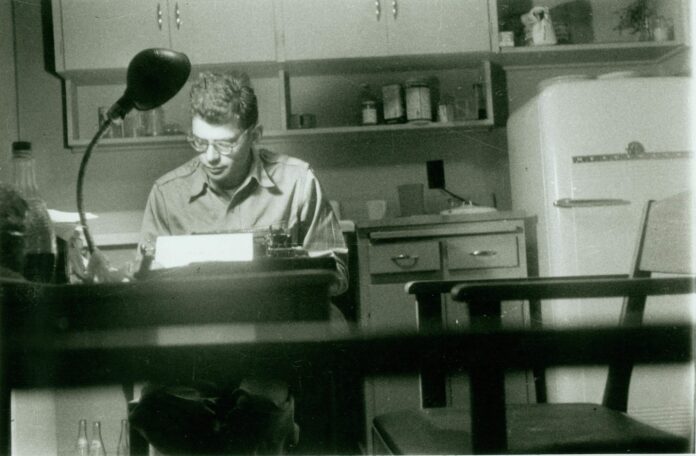
The story goes that on a hot San Francisco autumn night in 1955, a roomful of poets, drifters, and wide-eyed believers crowded into the Six Gallery on Upper Fillmore St. and listened as a young, bearded man unspooled a long, incantatory cry into the air. This eruption would come to embody the Beat era.
No one knew exactly what they were witnessing, but it was too raw to ignore. Somewhere between breath and prophecy, Allen Ginsberg had found a frequency, and the room, alive, sweating, and electric, became the first witness to Howl. The poem would soon ignite an obscenity trial and redraw the boundaries of American speech.
Seventy years later, that echo is still ricocheting through the city.
On Mon/11, The Chapel will hold an event—different in shape, but similarly charged—as (((folkYEAH!))) presents A Centennial Celebration of Allen Ginsberg, marking 100 years since his birth and the enduring shockwave of Howl and Other Poems.
The evening unites musicians and writers into a single, shifting organism—sound and language colliding in real time—culminating in a rare live performance of Howl by the Kronos Quartet. It’s not a reenactment, however. No one is trying to cosplay the Six Gallery or summon ghosts in sepia. The point is to test whether that same voltage can still surge through a contemporary room.
It is also, crucially, a night built less on sequence than on accumulation. Musicians move through poems, poets move through sound, and the boundaries between forms begin to dissolve in real time.
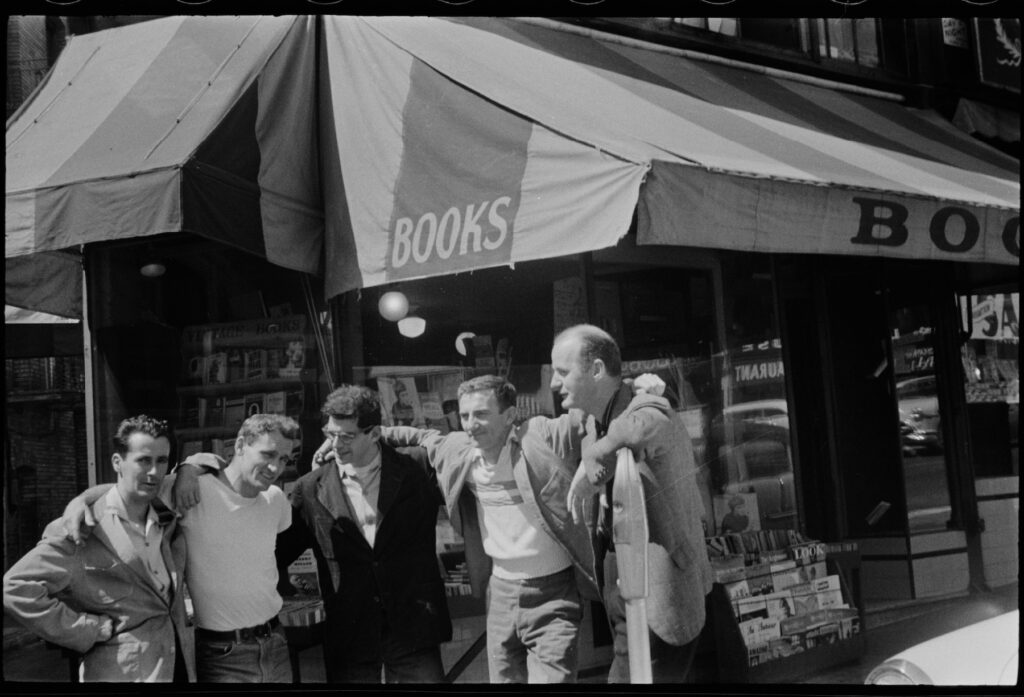
The structure resists polish in favor of presence, allowing for a kind of controlled unpredictability that mirrors the spirit of the work itself.
That approach echoes how Ginsberg worked in public. His readings were rarely static; they were communal experiments. He moved between poetry and chant, between language and music, collapsing distinctions that still tend to hold. It’s the kind of only-in-this-city activation the producers are hoping to invoke.

“San Francisco is where he wrote Howl,” says curator Peter Hale, who oversees the Allen Ginsberg Estate. “It’s where he matured as a writer and found permission to live openly and write honestly.”
Hale’s relationship to that history isn’t distant. Drawn as a teenager into the experimental literary and Buddhist scene around Naropa University—where Ginsberg helped found the Jack Kerouac School of Disembodied Poetics—he first encountered the poet in the ‘80s as a living presence rather than a fixed icon.
“He said he was gay,” Hale recalls. “That was the first time I’d heard anybody publicly say that they were gay.”
“It was smoky rooms, parties, drinking, and meditation,” he adds. “The boundaries were blurred, but it was magnetic.”
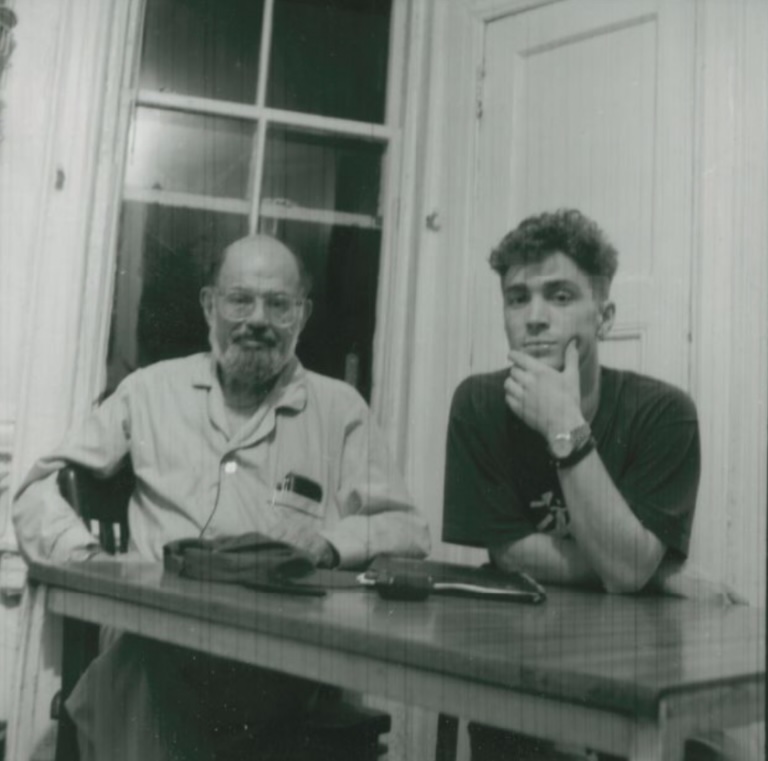
What began as proximity eventually became responsibility in 1992, when Hale began archiving tapes and photographs, helping shape posthumous projects, and translating a countercultural moment into something that could continue to evolve.
The evolution now shapes the event itself. Hale and co-producer Jesse Goodman, inspired by late producer Hal Willner, known for his expansive tribute projects, approached Ginsberg not as a relic but as an open framework for reinterpretation.
“We were inspired by Willner’s approach of having different artists reinterpret a single figure,” Hale says. “When he died, it felt like a torch passing, like, ‘You guys take over.’”
The lineup stretches across disciplines and sensibilities: Tune-Yards’ Merrill Garbus, Vetiver’s Andy Cabic, Kim Stanley Robinson, Tongo Eisen-Martin, Dominique DiPrima, and Brontez Purnell.
What Hale is pointing to is something larger than a single moment. Howl didn’t arrive all at once; it grew out of a San Francisco scene already in motion, a loose constellation of poets including Kenneth Rexroth, Robert Duncan, and Gary Snyder, and a culture of public readings where poetry was spoken aloud, tested in real time, and shaped by audience and atmosphere.
It was here that Ginsberg met Peter Orlovsky, his lifelong partner, and began fusing poetry with performance, spirituality, and radical openness.
He didn’t pass through once and leave a legend behind; he kept returning. In the ’60s, he chanted at the Human Be-In in Golden Gate Park, which arguably launched the Summer of Love, threading poetry into a rising counterculture.
He continued reading and teaching in San Francisco into the ’90s, when he gave what is believed to be his final public reading at The Booksmith in 1996, a year before he died in 1997, still chasing that same open line.
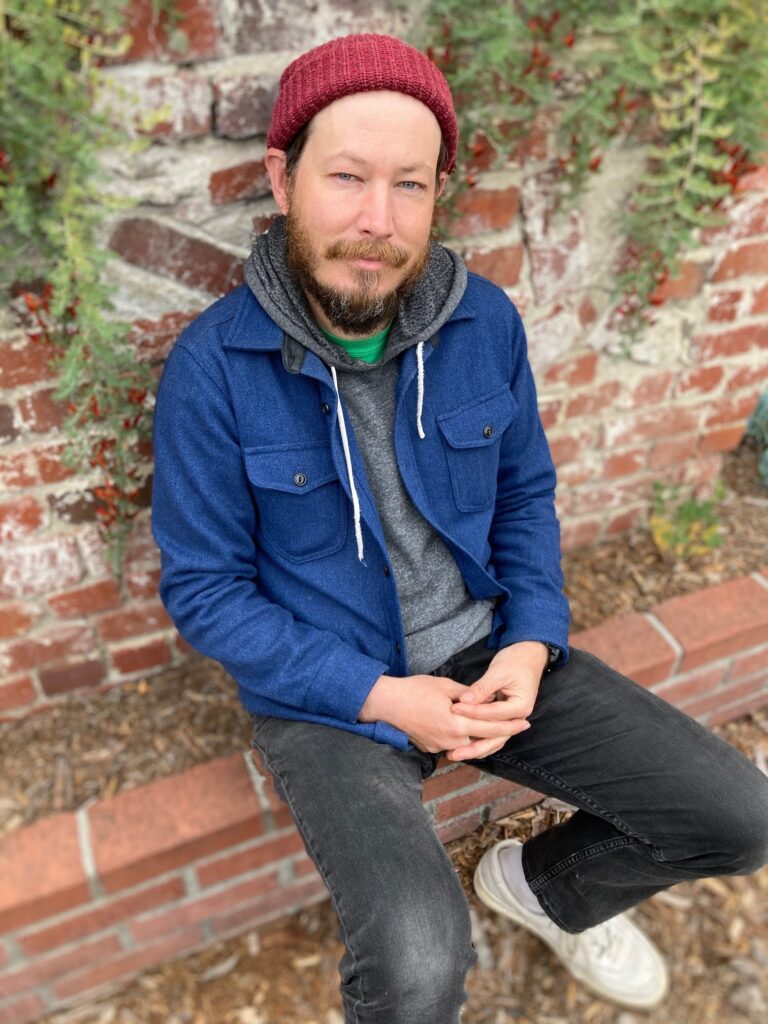
For Cabic, Howl‘s lineage runs sideways through music. As the founder of band Vetiver and a longtime collaborator of Devendra Banhart, he emerged from a 2000s scene that echoed the Beat-era cross-pollination of songwriters, poets, and visual artists who shared space, traded influence, and built something loose and communal.
“I probably discovered him through Kerouac and William Burroughs in college,” he says. “It wasn’t until I got to college that I discovered a love of reading.”
“What I love about Ginsberg is his interviews, the range of his interests, and the way he folds different practices into his own,” he adds. “That’s encouraging.”
Cabic will perform songs Ginsberg himself once played, folding his own style into that lineage. There’s a bittersweet nostalgic spin. “A lot of what was here isn’t anymore,” Cabic says. “You don’t have the same freedom to pursue art full-time.”
If Cabic’s perspective is tempered, Purnell arrives sharper. The writer, musician, and cultural critic cuts across novels, essays, and punk performance. He has fronted bands like Gravy Train!!!! and The Younger Lovers, bringing that same confrontational energy to the stage.
“I’m deeply honored,” Purnell says about taking part in the event. “I remember reading Howl when I was about 14 or 15. It was wild. It always followed me.”
A “post, post, post-modern writer” by his own account, he wrestles with how and whether he belongs in Ginsberg’s lineage. “I would like to think that if Ginsberg and James Baldwin got together and had a shamelessly, cynically ironic son, I would be it,” says the author.
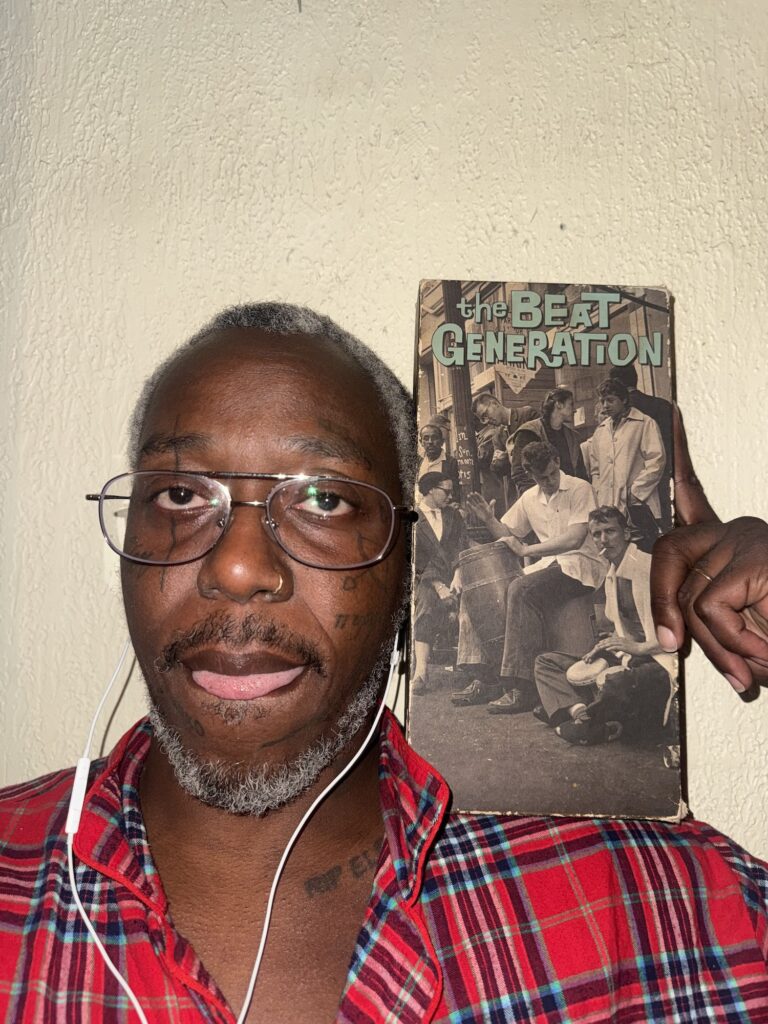
His view of Howl is less reverent than diagnostic, shaped by a culture that no longer responds to language the way it once did.
“The fact that something like that would face an obscenity trial and the fact that people don’t even read anymore, it’s almost awe-inspiring and a little deflating,” Purnell says. “Something that was once offensive now reads like Shakespeare.”
What’s changed, for Purnell, isn’t the poem so much as the conditions around it: the audience, the attention span, the very idea of what counts as transgressive.
“I think the revolution is long over,” he adds. “Can we even get people to read anything again?”
That question extends beyond literature and into the cultural landscape he moves through every day, where he says he meets 50 drag queens and 50 DJs but rarely meets any writers.
As for the shape of the event, what began as a group reading expanded into something larger, building toward Kronos Quartet’s closing performance of Howl. The poem becomes a destination, something the evening moves toward.
“We want people to be inspired to find their own voice,” Hale says. “We want to pass the torch.”
Back in 1955, no one in the crowded Six Gallery (now a Mexican street food restaurant) could have predicted what Howl would become—only that something had happened and rearranged the air.
The question now is quieter but no less urgent: Can that kind of moment still occur?
ALLEN GINSBERG CENTENNIAL Mon/11, 7pm, The Chapel, SF. Tickets and more info here.