Last month’s Supreme Court decision in Louisiana v. Callais, effectively narrowing Section 2 of the 1965 Voting Rights Act—thus making it harder to challenge voting maps that dilute minority voting strength—shocked many who saw the VRA as set in stone. But for many who lived through, or even have studied, the Civil Rights Era, it was a reminder that the fight for equality is never over, and the voices that drove the push for civil rights should echo now more loudly than ever.
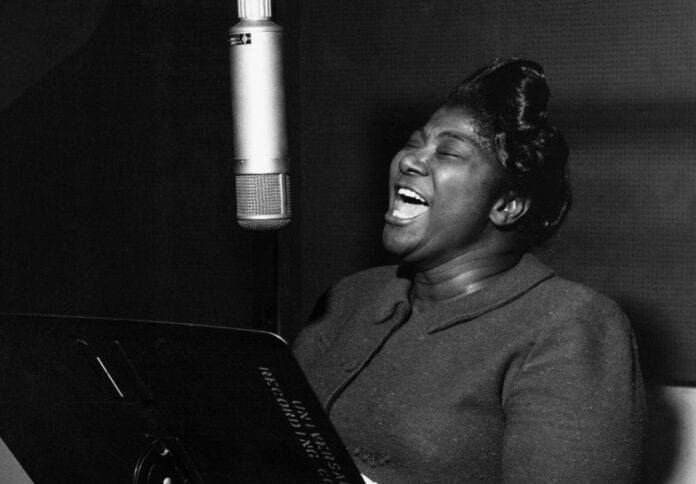
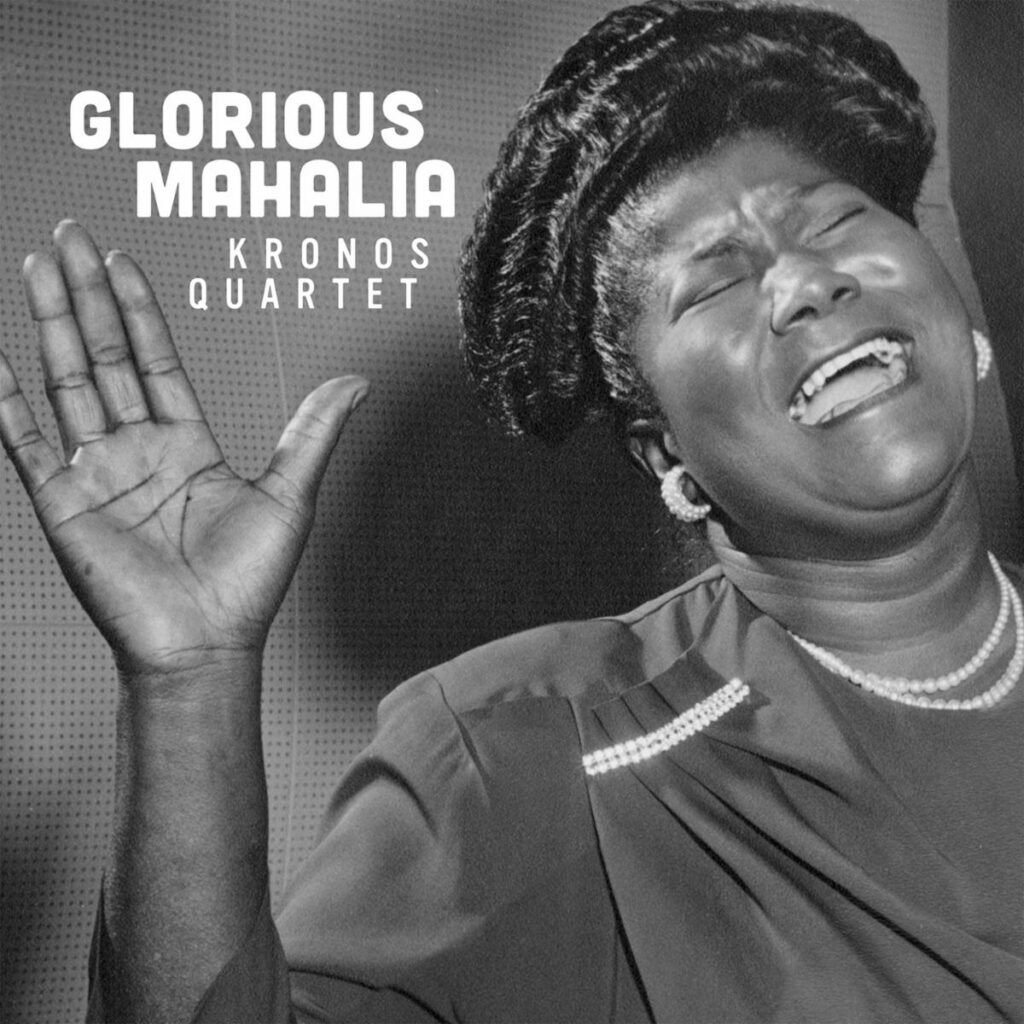
New Kronos Quartet release Glorious Mahalia vividly brings back one of those essential voices, diving into revered gospel singer and civil rights hero Mahalia Jackson’s life experience and music. Over 11 tracks in three parts, the record features new compositions and arrangements for the string quartet, utilizing archival audio from two moments in Jackson’s history: a 1957 live performance of gospel and spirituals in her adopted hometown of Chicago, and a 1963 interview with her friend, the radio broadcaster Studs Terkel, covering Jackson’s working life in the South, the prejudice she faced as a Black woman, and her involvement in Dr. Martin Luther King, Jr.’s civil right efforts.
In fact, a serendipitous moment between Jackson and Dr. King inspired the record, which has been in development for more than a decade. “I was at home late one night flipping through television channels, as one does,” said Kronos Quartet founder David Harrington. “I landed on C-SPAN, and there was an interview with Dr. King’s lawyer and speechwriter Clarence B. Jones. He was telling the story of composing the speech that came to be known as the ‘I Have A Dream’ speech, how special that was, and how as he was writing it he heard Martin’s voice internally, and wrote what he heard. I immediately understood, because this is what composers do: communicate the music they hear inside them.”
Later, Harrington discovered more of the “I Have A Dream” story. “As Dr. King was giving the speech, Mahalia was on stage with him. He was reading this terrific speech, this work of composition, but Mahalia, in that way that close friends and mentors know you, must have sensed that he could tell this story more effectively in a different way. She called out to him, ‘Tell them about the dream, Martin!’ And he trusted her, so he went off the page and gave us this iconic improvisation based on his previous sermons. It was a moment of transformation that could only come from that trust between friends, from truly listening to what someone had to say.
“Once I knew that story, and found out that Clarence was still alive, I thought to myself, ‘Well, I’ve got to find him.”
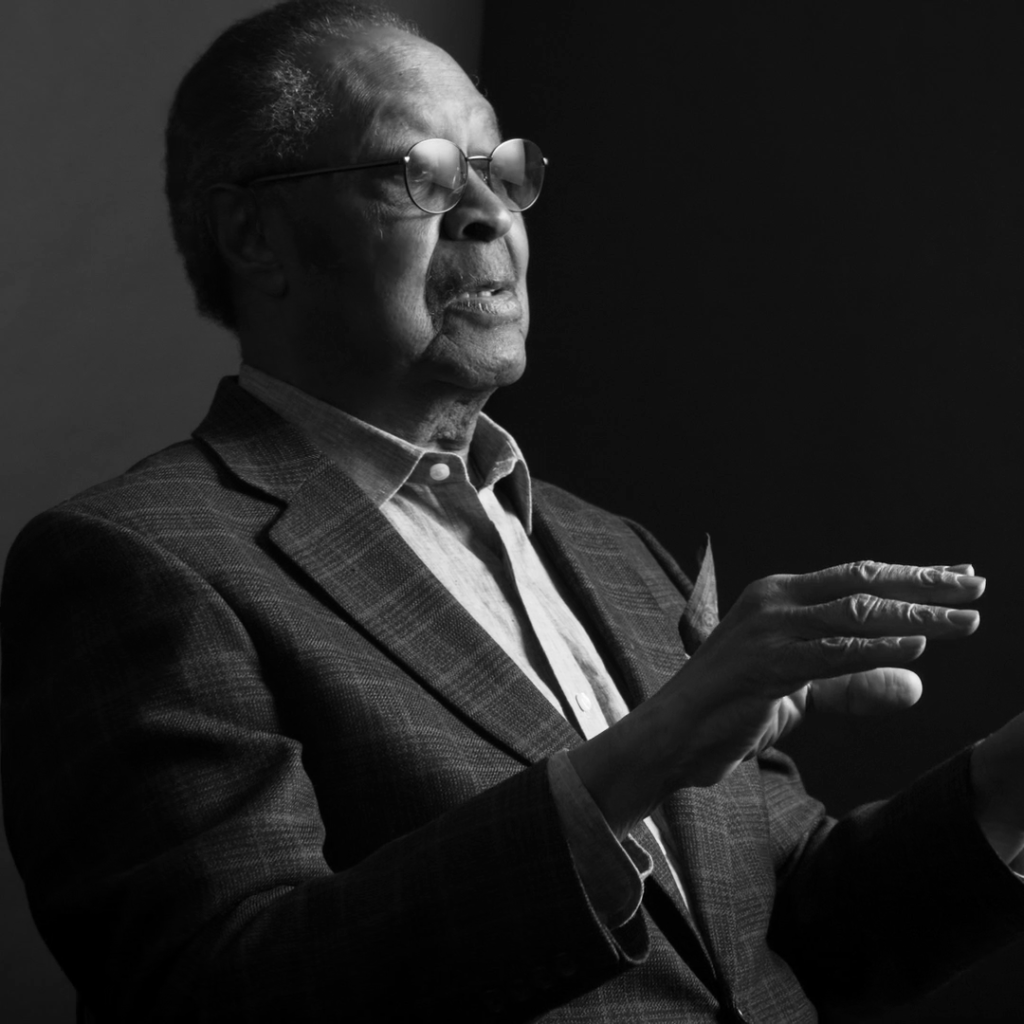
A new piece on Glorious Mahalia, Oakland-based composer Zachary James Watkins‘ Peace Be Till, includes a recent interview with Jones, recorded especially for the project at SF’s Women’s Audio Mission. Jones turned out to be surprisingly easy to find, Harrington said. “I started asking around, and it turns out he lives in Palo Alto. Our musician friend Karim Nagi got his number for me. One thing I’ve learned in life is that when you get a contact like that you call it right away. I had Pete Seeger’s number in my pocket for 20 years and I never called him. I still have it,” he laughed. “So I called Clarence out of the blue and said, ‘Hey, it’s me!'”
Harrington was relieved that Jones, now 95, had heard of Kronos Quartet, and they began to speak about music. “Great people always surround themselves with musicians, I think because they know the value of listening closely,” Harrington said. “I told him, I’ve got this idea. There’s a young composer I’d like to talk to, and I think I can get a studio. How about if in a couple weeks we all meet, and you tell the story of the speech. And that’s pretty much what happened.”
Harrington knew Watkins through mutual friend and scene connector Andy Meyerson of the Living Earth Show. Watkins said, “The whole situation brought up something I often ponder: how musicians connect the dots, and how our art form is the relationships we build, this living form of notation.” For Watkins, who is also a sought-after recording engineer and member of the experimental band Black Spirituals, the personal encounter with Jones set him on a year of deep thinking, listening, and composition.

“I remember I wore one of my nicely designed, Southwest-style dress-up shirts. My attempt at kind of looking good. He commented on my appearance and made me feel comfortable. I could tell he was eager to share, so soon the information was flowing. There were some realities of the musical culture that we were referencing: Mahalia Jackson, Black spirituals, gospel music that I actually did not grow up with. I knew that I wanted to research these musics deeper, and really allow myself to sit and listen.”
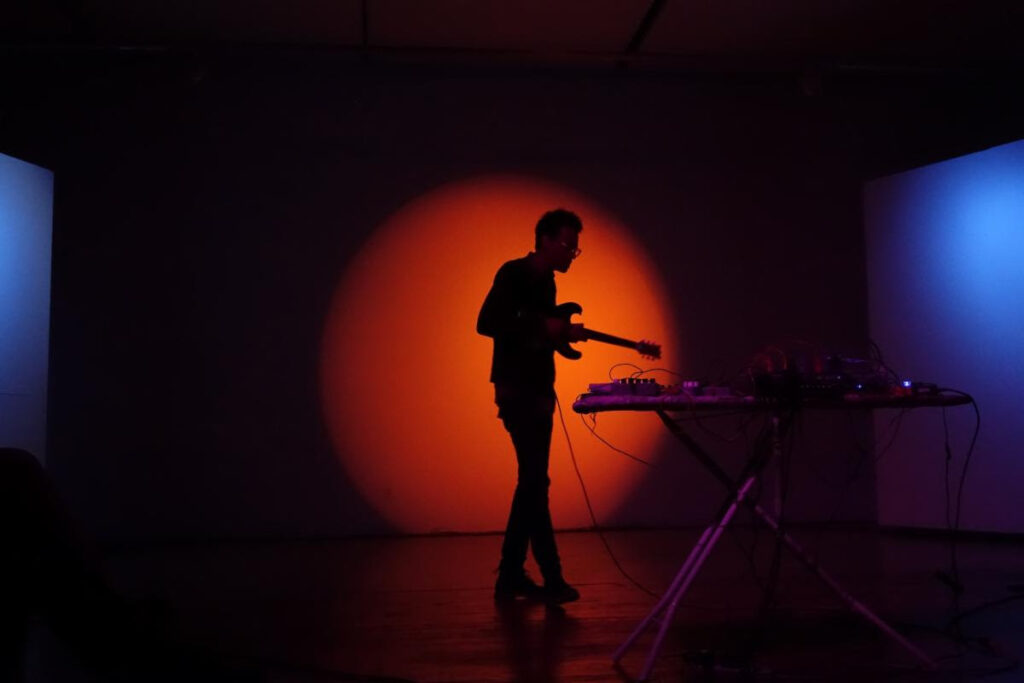
Watkins, who describes himself as “a Black man with a white mother,” found himself reflecting profoundly on history, both personal and national. “To be in that room, in that space, to begin that concrete part of this journey of actually capturing the sonic tones of his voice and his memories and his stories, it felt bigger than that one piece. It became storytelling, archiving, and also the transmission of a powerful reality that we are fighting for. So yes, big assignment.”
What resulted was a five-movement sound collage, “inspired by the complex, subjective concept of high vibration resonance.” Watson explained, “Thinking back on the process of this composition, I’m blown away, I don’t really know how I did it. The collage takes multiple moments of that hour of talking, it takes that time and brings it in on itself and overlaps. Originally, I didn’t have an understanding of what I was doing, I was just moving through the feeling of it. When I heard it being rehearsed a year later, I knew there was still work to be done until it was finished, but the kernels were there from the start.”
Jones is also legendary for smuggling King’s “Letter from Birmingham Jail” out of prison in 1963 by carrying handwritten notes on scraps of paper tucked inside his shirt. During the recording session with Harrington and Watson, he recited the “Letter” from a book that Watkins had brought. “Hearing that was just off the charts,” Harrington recalled. “he read it as if he still had it completely memorized. I just remember really taking in that moment, like, wow.”
Glorious Mahalia is the third in a series of records that Kronos Quartet has released through Smithsonian Folkways Recordings, the other two being Long Time Passing: Kronos Quartet and Friends Celebrate Pete Seeger and Mỹ Lai, a visceral piece about the US Army’s 1968 murder of more than 500 unarmed civilians in Vietnam. Glorious Mahalia also includes a new composition by Stacy Garrop, a newly arranged version of “God Shall Wipe All Tears Away” with Jackson’s vocals set to music by Jacob Garchick, and an appearance by Jackson’s pianist and collaborator Mildred Falls.
Turning back to the theme of connection, Harrington said, “You don’t know where the things you do might lead, how they might touch the right person at the right moment. Might this make a great big change? That’s what keeps me jumping out of bed every morning: ‘OK, what can we do?’ Especially in this challenging time, when it just feels like we’re getting squashed. That we have these voices like Mahalia and Clarence coming down through history to uplift us is a resource we shouldn’t overlook.”
Glorious Mahalia is available on Smithsonian Folkways Recordings.