There was a time when Abram Jackson didn’t know a position like his current job as director of interpretation for the Fine Arts Museums of San Francisco existed. But it does—and now, he works with community partners to create more inclusive exhibitions.
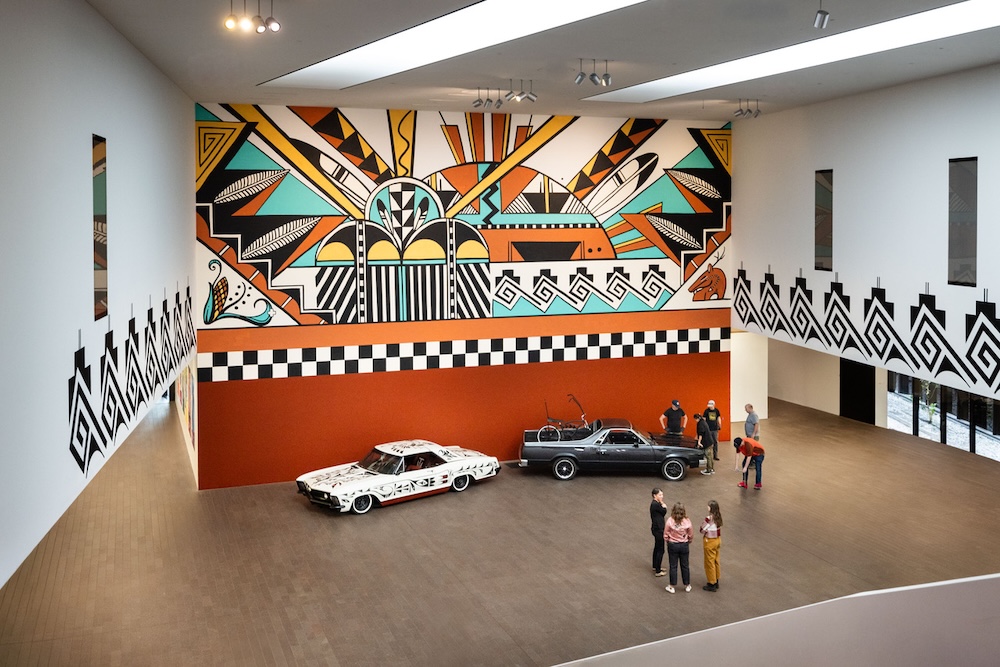
This often means reframing the texts on the labels and bringing in historical context. But Jackson’s latest project is a bit different. He created programming to go with Rose B. Simpson’s LEXICON (through February 7 at the de Young Museum), for which the artist installed two classic cars she rebuilt. Hillary C. Olcott, Curator of Arts of the Americas, is the curator of LEXICON—she suggested a car show to go along with it. So a related June 6 event, Lowrider Culture Celebration, will see vehicles parked on the lawn in front of the museum, along with a movie screening, art activities, and DJ.
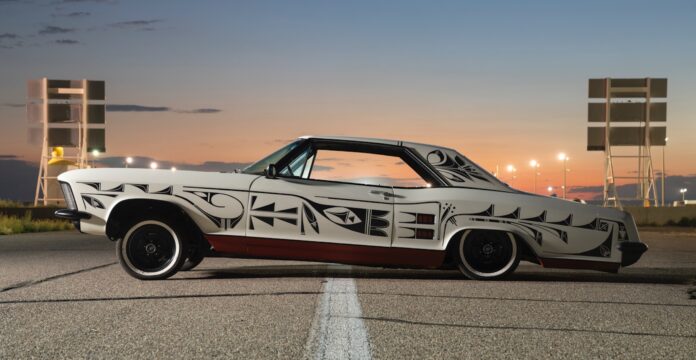
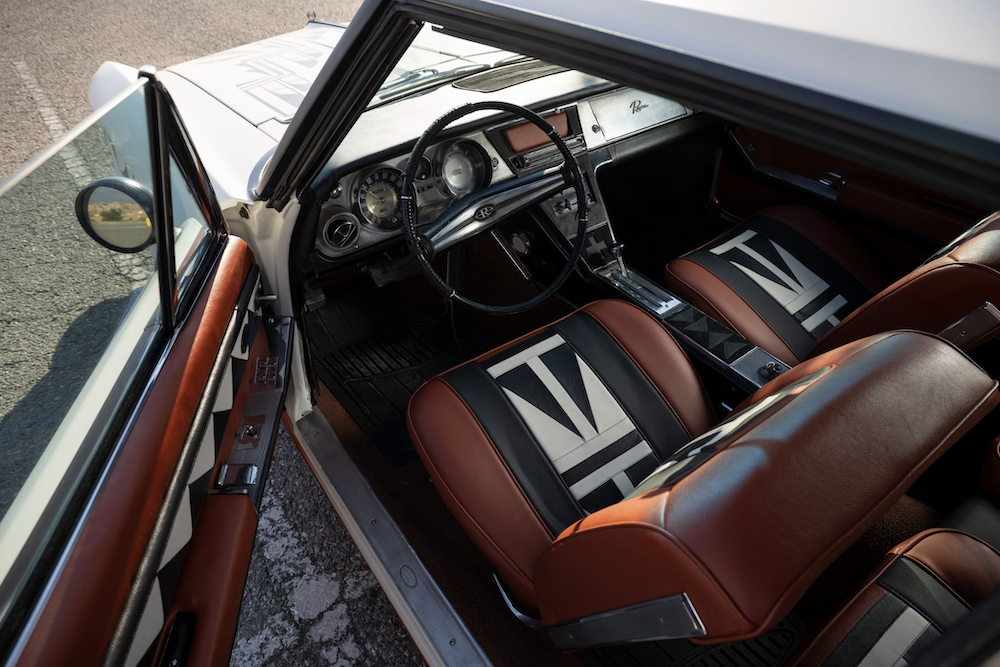
Simpson grew up and lives on the Santa Clara Pueblo in New Mexico, near Española, a low rider capital. She has always loved cars, a fact that is evident in the 1985 Chevrolet El Camino and a 1964 Buick Riviera she refurbished and then painted in Pueblo pottery motifs, now on display at the de Young. The Chevy has black glossy patterns on top of matte black, in the style of the famous Tewa potter Maria Martinez. The cream-colored Buick is painted with another Tewa design.
Jackson’s colleague, manager of interpretation Sedey Gebreyes, found three partners to work on the event—Ruby Ramirez, who co-founded the Califas Classic Car Club and represents Frisco’s Finest Car Club; Angel Romero, the founder and president of the all-women’s car club Dueñas; and artist and curator Vero Majano. They planned a day that Jackson says will offer fun for everyone. Along with 22 lowriders on the museum’s lawn, the celebration includes family art-making with Cecilia Perez aka Hey Ruca; a film screening and panel organized by Majano and moderated by Romero and Ramirez; and music on the front lawn by DJ Brown Angel.
Museum work wasn’t always part of Jackson’s life. After earning two master’s degrees, in ethnic studies from San Francisco State University (where the subject was born) and in education at the University of Southern California, he became a dean and ethnic studies teacher at the San Francisco’s Bay School.
One of his students got him his current job. Frances Homan Jue, who writes and produces the museum’s audio tours, was telling her sons over dinner that she needed someone to review the script for Soul of a Nation: Art in the Age of Black Power 1963–1983, which came to the de Young in 2019. One of her sons suggested she ask Jackson, who was at the time teaching a class called All Power to the People, about the social movements of the mid 20th century, including the Black Arts Movement.
Jackson says he was blown away when he got the email asking for his help. “I had no idea that was a job,” he remembers. “It was really love at first sight. I was like, ‘Whoa, this is something that people get paid to do?’ And Frances loved my edits, and the institution loved my edits.”
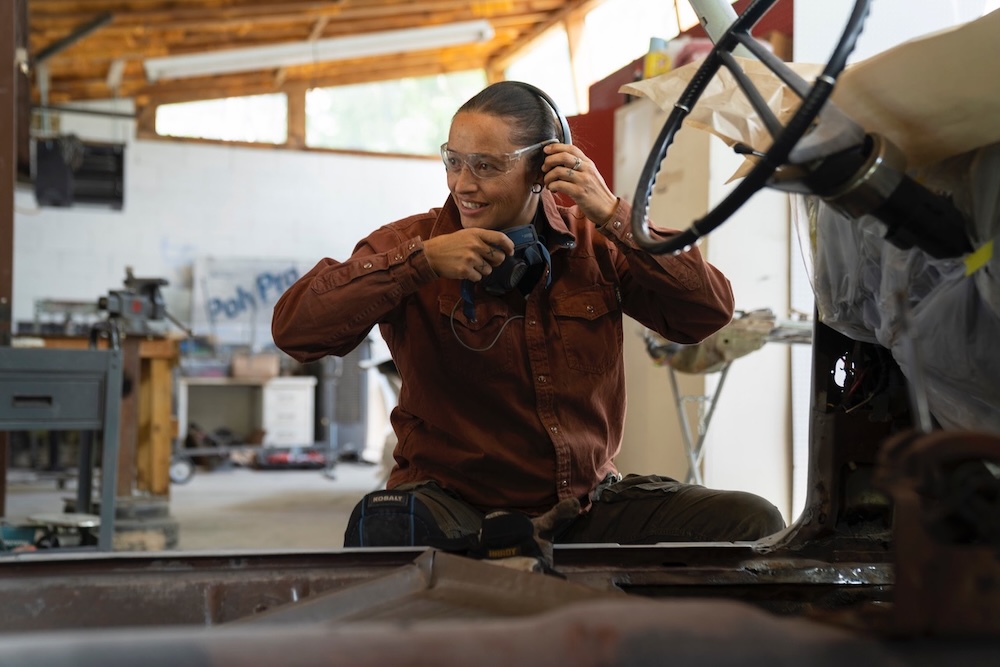
The museum officials loved them so much, they contracted Jackson to review exhibition didactics, or the texts explaining the art. He did that for three years, until his current position became available in 2022.

Jackson says he would “light up” whenever he got an email asking him to work on an exhibition. He still remembers the first edit he did on a piece about Fred Hampton.
“Originally it said that Fred Hampton was killed by the Chicago police. I suggested that we edit it to say ‘Chairman Fred Hampton was murdered by the Chicago police with the help of FBI COINTELPRO,’” he says. “That was my first taste of this, and I was like, ‘Wow, that’s an important shift.’ So, I’ve been obsessed and inspired by this work and committed to it ever since.”
Other exhibitions Jackson has worked on include Kehinde Wiley: An Archaeology of Silence and Ansel Adams In Our Time. During the latter show, the interpretation department partnered with Indigenous people from the Southwest. While talking with a member of the Pueblo tribe, Jackson got some unexpected information about a photo.
“We asked him, ‘Is this picture appropriate? Do you think it’s something that would be fair to show, given some of the photographs are of a ceremony?’ He said, ‘Oh, it’s fine to show, and by the way, that guy second to the left is my great-grandfather.’” Jackson said. “All of our jaws dropped, because in so many of those photographs of that time, a lot of the sitters or subjects were unnamed. To have a descendant give us a name and some context was just so extraordinary. I asked him, ‘Can I write down what you think about this?’ and that [became] the label for that photograph.”
The lowrider celebration taps into traditions that its co-organizers hold dear. Both Romero and Ramirez grew up with lowriders—in Sunnyvale, Romero would go cruising with her mom. In Daly City, Ramirez always looked at Lowrider Magazine first thing when she went to the grocery store. Her uncles and cousins had the classic cars.
Romero says she wasn’t sure at first what to think about working on the celebration, but after seeing a video of Simpson talking about her work, she was sold.
An art lover, Ramirez is also excited.
“When Angel told me about it, I was like, ‘This is dope,’” she said. “I saw Rose’s video, and her car with those Indigenous patterns is something you don’t see a lot in the lowrider world.”
Both women call this a historic event.
“Being there with other women, sharing the space with Rose’s cars, and being at the de Young Museum,” Romero said. “It’s an honor.”
LOWRIDER CULTURE CELEBRATION June 6. de Young Museum, SF. More info here. ROSE B. SIMPSON: LEXICON is in the museum’s Wilsey Court through February 7. More info here.