It’s a major achievement for any arts organization to negotiate cultural changes and financial challenges over the long haul, let alone survive to nurture a second or third generation of creatives. That Frameline, aka the San Francisco International LBGTQ+ Film Festival, has endured to see its 50th anniversary edition seems in some respects even more unlikely… given that the communities it reflects and serves have never stopped being demonized for political points both in the US and abroad. Many battles have been won, certainly. Yet the activist-struggle timeline from the Anita Bryant era to the Trump one is marked by almost nonstop opposition and pushback.
Even moviegoing itself has been swimming upstream since the festival’s founding in 1976, first against the arrival of cable and VCRs, more recently the accelerated decline in theater attendance wrought by COVID. Still, this institution remains robust. No doubt that’s because its audience sees Frameline not just as an artistic and social event on the calendar, but an increasingly rare example of in-person strength in numbers—evidence that the gay community thrives and celebrates itself no matter what latest adversity it’s under assault from. This year’s return to its traditional Castro Theatre home base provides one acknowledgement of a lengthy organizational history. And the fact that at the time of this writing many shows were already approaching sell-out (admittedly within a remodeled venue’s reduced capacity) attests to Frameline being anything but a relic of primarily nostalgic appeal.
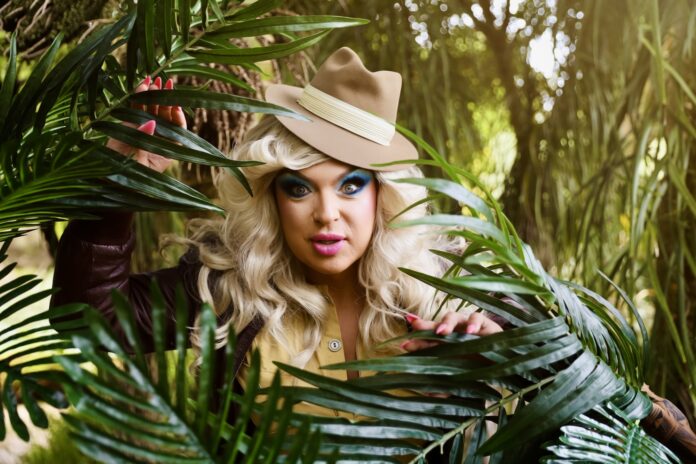
The 11-day festivities open at the Castro at 5pm on Wed/17 with “Frameline From the Beginning: It’s All Coming Back to Me Now,” an overview of its own history encompassing trailers, shorts and reminiscences from the last half-century. That’s followed at 7:30 by longtime SF performance maestro D’Arcy Drollinger’s new Lady Champagne, a spoof of vintage sexploitation trash featuring a rollcall of local and national drag royalty. The Roxie at 9pm will host an advance screening of buzzed-about new horror film Leviticus, which opens in regular theaters on Friday. It puts a menacing demonic spin on that concept beloved by evangelicals, that parents unhappy with their offspring’s sexual identity can “pray the gay away.” Suffice it to say, that tactic proves highly problematic, even lethal, to the teenage protagonists in Adrian Chiarella’s thriller.
That last feature isn’t the only upcoming major release in the festival. There’s also musician Hayley Kiyoko’s directorial debut Girls Like Girls, a coming-out adolescent drama playing one day (Thurs/18) before its commercial opening. You’ll also get early access to two June 26 releases, Maddie’s Secret (on Thurs/25), with comedian turned writer-director John Early in a not-entirely-comedic drag role as a humble gourmand whose surprise online cooking-show fame exacerbates some well-buried psychological issues; and (on Mon/22) Avalon Fast’s Canadian CAMP, a surreal mix of horror conventions and PTSD drama set at a rural summer retreat for troubled youth.
All these programs will feature filmmakers and/or cast members in person. Other starry occasions on the calendar include a Fri/26 “Pride Kickoff” spotlight on Jennifer M. Kroot’s new documentary Hunky Jesus, about the beloved annual Eastertime Dolores Park competition; and Sat/27 live event “An Evening With Colman Domingo,” which has journalist Jazz Tangcay in conversation with the onetime Bay Area theatre actor turned Emmy-winning, Oscar- and Tony-nominated MVP of stage (Passing Strange, The Scottsboro Boys), big screen (Rustin, Sing Sing, Michael) and small (Fear the Walking Dead, Euphoria, The Four Seasons).
The official closing night selection on Sat/27 is Teenage Sex and Death at Camp Miasma—another surreal queer spin on horror tropes from the already cult-adored trans talent Jane Schoenbrun (I Saw the TV Glow). They will accept this year’s Frameline Queer Lens Award on the Castro stage. Other well-known directorial names in the festival include Gregg Araki, whose frisky kinkfest I Want Your Sex is his first feature in twelve years, and 75-year-old Canadian-Swiss Lea Pool, whose visa-crossed-lovers romance We’ll Find Happiness extends a career that stretches back nearly as far as Frameline’s origin.
Speaking of the festival’s back chapters, they will be plentifully on display in programs beyond the aforementioned opening-day overview. There’s “San Francisco on the Queer Screen” (Fri/22), Peter Stein’s clip-filled presentation on the city’s on-camera representation; “.99 Cent Queer Video Fest” (Sat/20), which commemorates a short-lived but influential weekly barroom event in the early 1990s Mission District that featured early work by the likes of Cheryl Dunye, Justin Bond, Todd Verow, and Jenni Olsen; “Objectionable Contents: Banned Retro Shorts” (Thurs/18), exhuming litigation magnets by Jack Smith, Jean Genet, and Todd Haynes; plus the self-explanatory “Nineties & Zeros Fucks: Sexy Frameline Shorts of the ’90s and 2000s” (Sun/21).
Also on tap are a number of full-length revivals, including queer classics (Donna Deitch’s out-of-the-closet romance Desert Hearts, the Wachowskis’ Bound, Lino Brocka’s Philippines Macho Dancer, Derek Jarman’s historical phantasmagoria Caravaggio, Jennie Livingston’s ballroom documentary Paris Is Burning), plus the ever-controversial mainstream thriller Cruising. In addition there are a few lesser-sung golden oldies, notably 1970s bi-sexploitation comedy Score, rarely-seen 1991 Yugoslavian trans drama Virgina, and Julie Davis’ 2001 gay male romcom All Over the Guy, in which Dan Bucatinsky (of Hacks and The Comeback) adapted and starred in a revamped adaptation of his stage play. Kortney Ryan Ziegler’s Still Black: A Portrait of Black Transmen provided a groundbreaking survey of that demographic which the festival first screened in 2009.
Frameline’s continual commemoration of LGBTQ+ leadership, memorable personalities and achievements is particularly heavy this year on films about art and artists. The Centerpiece selection on Thurs/25 is Barbara Forever, Brydie O’Connor’s tribute to the life and career of SF’s pioneering, prolific lesbian filmmaker Barbara Hammer. Other documentaries running a gamut of creative outlets and luminaries include looks back at the envelope-pushing feminist performance art issuing from 1970s and 80s Los Angeles (Acting Like Women), a queen of the Canadian New Wave punk scene (Antidiva: The Carole Pope Confessions), a renowned poet (Mary Oliver: Saved by the Beauty of the World), transgressive programming on the free platform Manhattan Cable Television (Public Access), and queer presence in popular music (Rock Out). Plus individual portraits of a late musical star (A Taste of Heaven: The Ecstatic Song & Gospel of Maestro Raymond Anthony Myles), a celebrated photographer (Roy Blakey aka Uncle Roy), and a major Hollywood success story (Colin Higgins of 9 to 5 and Foul Play, in Celebrating Laughter).
On a more current note, Tomorrow’s Too Late follows UK pop hitmaker Dylan Holloway through the personal and professional hurdles of gender transitioning, while Time Warp finds The Rocky Horror Picture Show still capable of riling the resident moral watchdogs in small-town Wyoming. 10s Across the Borders offers another kind of present-tense deja vu, discovering Paris Is Burning’s ballroom milieu very much alive and well in today’s Southeast Asia.
If gays have long been a conspicuous presence in the arts, the sporting life is finally starting to catch up. Documentaries highlighting that new reality include ones about basketball (The Brittney Griner Story), tennis (Billie Jean King portrait Give Me the Ball!), soccer (Gamechangers: The Ashlyn Harris Story, The Last Guest of the Holloway Hotel), the Mexican rodeo circuit (Jaripeo), and the NHL’s first out pucksman (The Hockey Player). There are also dramatic narratives involving rowing (Belgian lesbian coming-out tale Skiff) and competitive bodybuilding (Sam McConnell’s midwest-set Test, written by star Brock Yurich).
Early in Frameline’s history, viewers demanding uplift and “positive images” booed the trailer (I’m not sure about the screening itself) for a 1983 Canadian thriller, Self-Defense, because it was a violent thriller—even if much of the violence was in defense of a gay man who finds shelter from homicidal homophobes in a communal Toronto home. It was actually a pretty good movie. But back then genre films were considered inherently exploitative by the festival’s audience. No such qualms exist now. Indeed queer horror is a whole thing these days, as demonstrated by Leviticus, Camp Miasma, CAMP (all mentioned above), and supernaturally tinged First Nations tale At the Place of Ghosts. The program also includes up-to-the-moment takes on teen comedy (Black Burns Fast), sci-fi (Our Effed Up World), murder mystery (Labrador: Autopsy of Silence), black comedy (Loves Company), true crime (The Cruising Murders), and the edgy romantic-triangle thriller (A Safe Distance).
On the other end of the scale, there’s still room for more experimental features, as represented by the likes of The Faggots & Their Friends Between Revolutions, based on a famed tome from the 1970s radical underground; paired midsized works by adventurous latter-day underground filmmaker Henry Hanson (A Tale of Two Dogs); and comingled animation/live action trans romance Something You Should Know About Me.
There’s a lot of trans content in Frameline’s 50th go-around, a particularly excellent example being Ivan & Hadoum, about the love that develops between a trans man born and raised in a southeastern Spanish town, and the fiercely independent Moroccan emigre woman who works at the same produce packing plant she does. In Ian de la Rosa’s astute debut feature, issues of sexuality and gender don’t doom this relationship nearly so much as hostilities around immigrant labor in an evermore-vulture-capitalist EU economy.
A more fantastical vision of gender identity is presented in Rodina Singh’s Dreamboi from the Philippines, not to mention Canadian low-fi iconoclast Louise Weard’s Castration Movie Chapter iii. Junior Ghosts—Premorphic Drift; a fragmentary passage, which as you can tell from its title is no conventional narrative—and its actors include above-mentioned directors Avalon Fast and Jane Schoenbrun. Notable nonfictions include Fire Within, examining homelessness in our Tenderloin’s Transgender District, and the support provided to overlapping communities by Glide Memorial.
There are at least two fairly elaborate costume dramas, the aristocratic U.K. biopic Madfabulous and enigmatic island-set German drama Trial of Hein. Modern seniors get jiggy in the Spanish Maspalomas, and in Montreal, My Love, where Joan Chen’s heroine rattles her insular Chinese-Canadian community by coming out at an advanced age.
Sexiness is also key to other films from Mexico (volatile trucker drama On the Road), Manhattan (Argentine director Lucio Castro’s magical-realist erotic reverie Drunken Noodles), Japan (Anshul Chauhan’s Tiger) and Brazil (The Passion According to G.H.B., which portrays an extended orgy of “fucking, drugs and classic literature”). Closer to home, Mickey & Richard provides an XXX-rated laden look at the problematic relationship between latter-day Palm Springs retiree Richard Bernstein and his brawny, confident alter ego, early 1980s porn star “Mickey Squires.”
But as ever, the quest for true love drives many Frameline titles this annum, whether it’s from the perspective of a Spanish teen exploring desire on a family vacation in Germany (Strange River), two young women experiencing a Before Sunrise-like crash course in possible coupledom (Shanghai-set Ephemera), seemingly mismatched men in a Welsh fishing village (On the Sea), the cut-up chronology of a Sapphic partnership doomed by mortality (Belgian Julian), or further titles from Tunisia, Norway, the Netherlands and beyond.
All that is still just a partial view of what’s scheduled for Frameline’s half-century landmark, which also encompasses films from Tunisia, Norway, France, the Netherlands and elsewhere; numerous shorts programs; ten episodes of the Australian gay teen drama Invisible Boys; and still more. In addition to the Castro, primary venues are the Roxie and Vogue in SF, BAMPFA in Berkeley, and the New Parkway in Oakland.
FRAMELINE 50 FILM FESTIVAL June 17-27, www.frameline.org