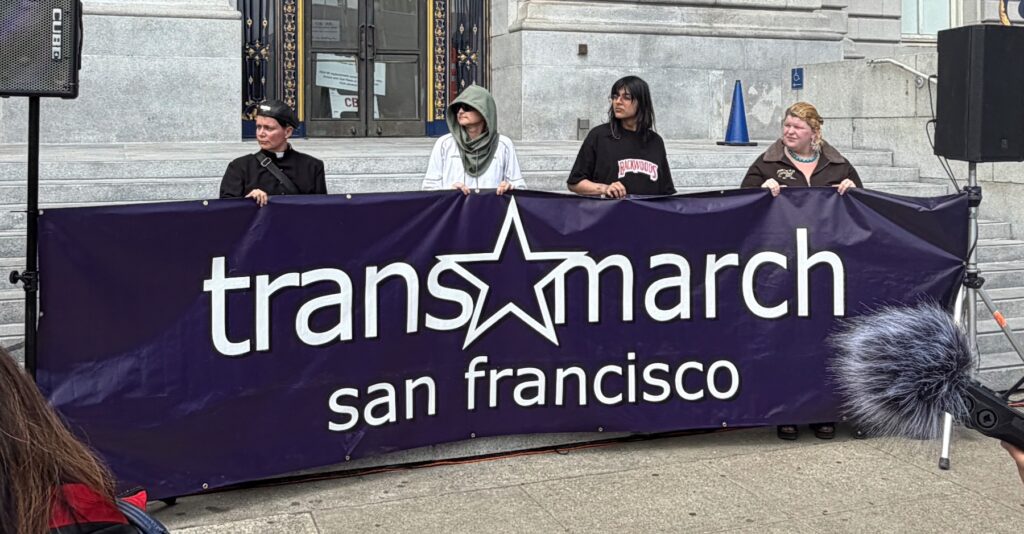
Dozens of people gathered on the steps of City Hall for a powerful and emotional rally on Monday afternoon, called by the Trans March Organizing Committee after police violence and failure to protect the community marred this year’s “celebration of joy” at the annual event during Pride Weekend.
As Trans March leaders delivered a list of demands to increase safety and hold officials accountable at a meeting with city officials and representatives of Mayor Daniel Lurie upstairs, chants of liberation and calls for more protection for trans people rang out below. Leaders of the Trans March, Transgender District, and other organizations gave testimony to the fear and panic that broke out at the event.
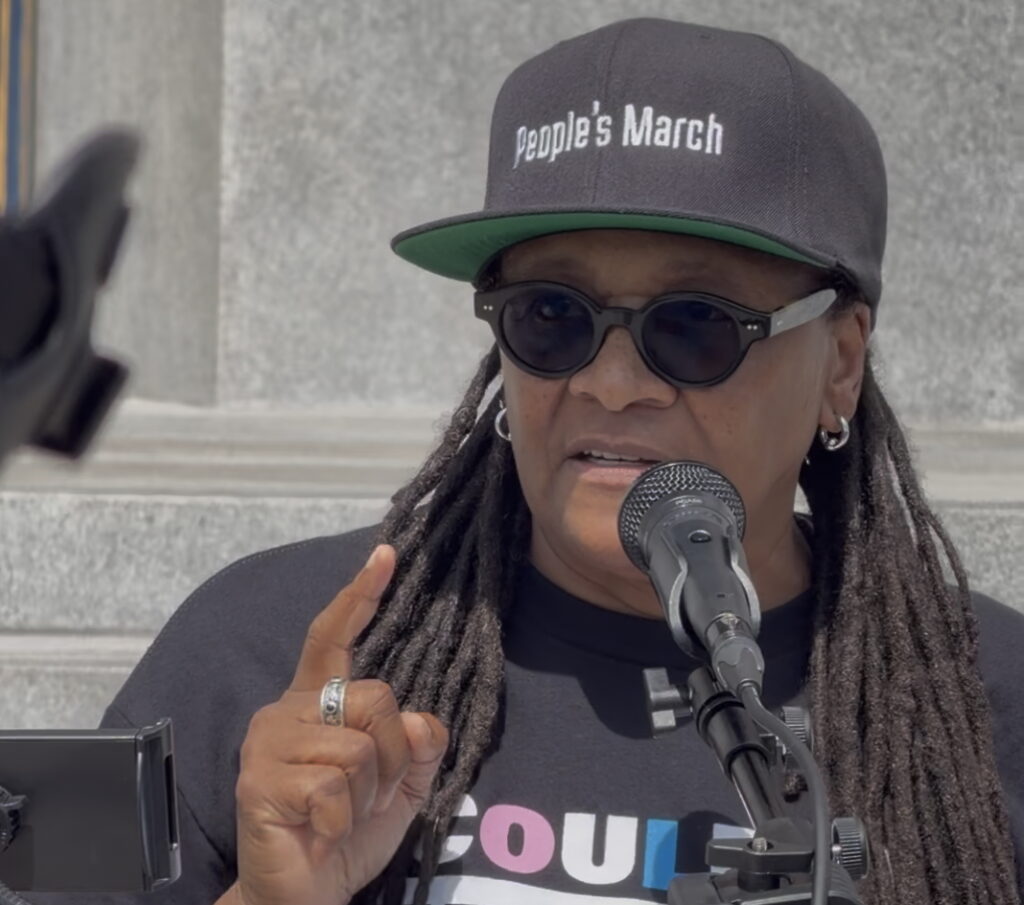
Trans March police liaison and lawyer Renee Coe described a chaotic scene during the march. “I saw a squad cards drive directly into the march, and police in full riot gear confronting and pushing people to the ground.” As she called out to the people being arrested for their contact information, Coe herself was “shoved with a billy club and pinned against a concrete wall.”
(Police arrested four people, two for alleged vandalism and two for obstruction, after they claim they saw people spraying paint on Flock and private surveillance cameras at Market Street and Eighth Street during the march. DA Brooke Jenkins’ office has charged the alleged vandals with eight counts of felony vandalism. The arrests occurred near the historic site of Compton’s Cafeteria in the Tenderloin, where trans people rose up against police brutality in 1966, helping to kick off the modern queer rights movement. Police also raided a SoMa block party in full riot gear and arrested 20 in an overwhelming use of force. Sup. Jackie Fielder has demanded an inquiry into the police actions and charges.)
Coe and others also spoke about a less-covered threat during the Trans March: A number of cars tried to drive into or through the march, and, the speakers claimed, no one from SFMTA or the police department tried to stop them or stepped up to protect the crowd. Instead, the community itself secured the intersections and perimeter of the march.
The demands that the organizers submitted to the mayor:
Drop All Charges against event participants who were arrested All charges against participants in this year’s Trans March must be dropped immediately. The use of disproportionate police force, surveillance technologies and subsequent prosecution against community members does nothing to advance community safety.
Invest in Community Safety, not Police The relationship between SFPD and the transgender community is shaped by a long history of institutionalized police violence, discrimination, and mistrust. This has been exacerbated by the recent budget process defunding services and programs that working class people in San Francisco rely on in favor of prioritizing militarized policing and surveillance. We believe that community-led safety initiatives are a proven alternative and deserve sustained public investment. The City must work with Trans March organizers and other community-based organizations to invest in solutions that meet the real needs of the trans community.
Replace Police Presence with Civilian Traffic Management A situation where drivers can drive vehicles into the crowd is unacceptable. The City must mobilize the San Francisco Municipal Transportation Agency (SFMTA) to fully close Market Street and surrounding intersections during the Trans March. Traffic control should be managed by civilian agencies working in coordination with Trans March organizers and our community safety team, rather than through police enforcement.
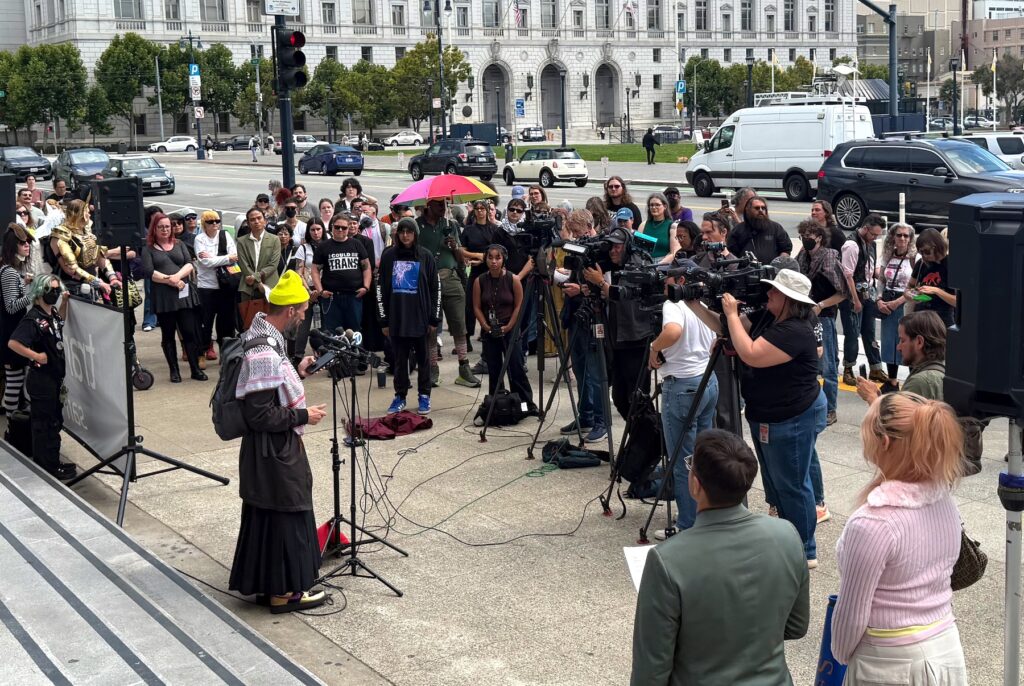
Speaker Jason Wyman, aka Queerly Complex, drew a connection between the victory of community organizers on Thursday, June 25, in restoring to the city budget Lurie’s proposed $28 million in cuts that directly affected trans and queer people, and the violence of the state on the two days following that. “They are scared of us because they see our power when we come together,” Wyman said.
Peoples’ March organizer Alex U. Inn told the crowd that if the matyor doesn’t accept the demands, “We escalate the political costs. This is an election year, and city leaders care deeply about their public accountability. Every time city officials step out for a campaign rally, a press conference, or a photo op, our coalition will be there.
“We are ended the era of politicians waving the Pride flag for public relations, while staying silent when riot gear is deployed against us,” Inn said. “When our trans siblings are arraigned, we will flood the halls of justice. Our presence will show the District Attorney that if you try to persecute one of us, you answer to all of us.”
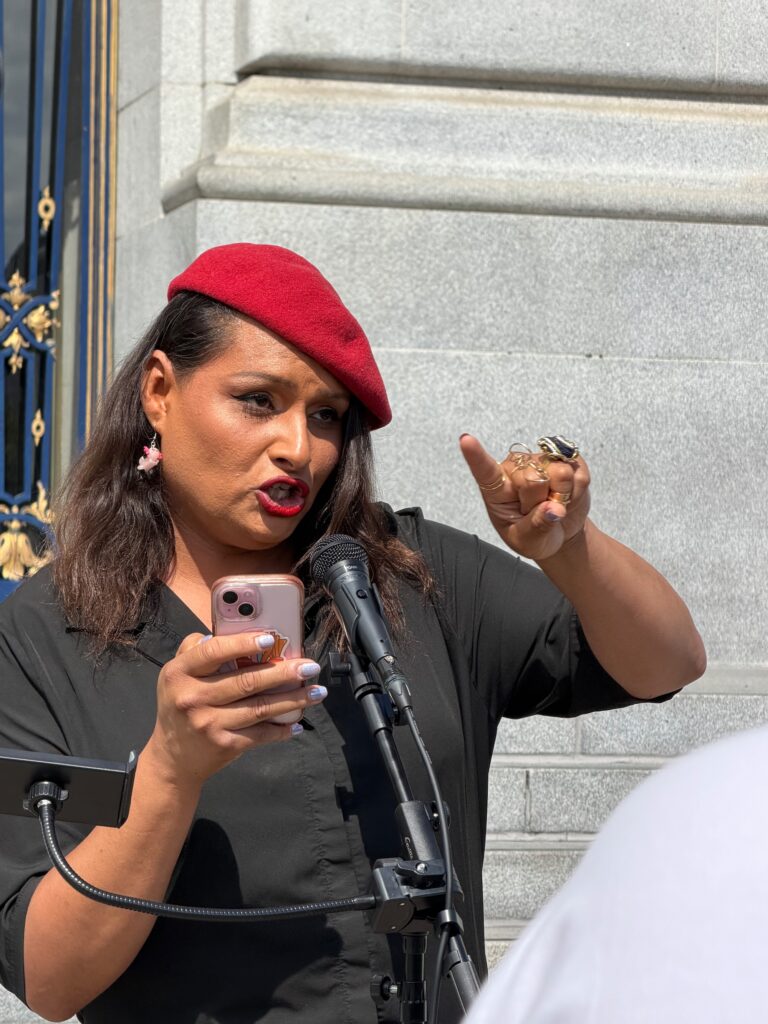
At the end of the rally, community leaders emerged from City Hall after their meeting with city officials. According to Trans March co-director Rose Astra, the mayor’s office received the community’s demands, but no agreement was reached. “The fight must continue,” Astra said. “We can’t rely on the police or public institutions to keep us safe, we need to be organized as a community to do that.”
Trans leaders vowed to keep pressure on until the demands were met, and announced another rally on July 19, requesting people follow the Trans March’s social media for more information and to support the effort .