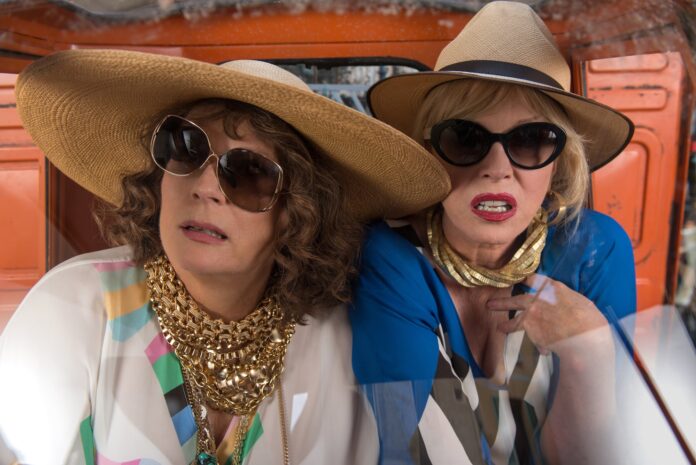
A decade has passed since Absolutely Fabulous: The Movie reunited Edina Monsoon, Patsy Stone, and their deliciously dysfunctional circle of fashionistas, publicists, and hangers-on, proving Jennifer Saunders and Joanna Lumley’s gloriously outrageous creations had plenty of champagne-fueled life left.
The 2016 film, released July 22, toasted one of TV’s most influential comedies, while magnifying it for the big screen.
Released nearly 24 years after the BBC sitcom first premiered, Absolutely Fabulous: The Movie finds Monsoon (Saunders) accidentally sending supermodel Kate Moss plunging into the Thames during a fashion launch, triggering an international media frenzy that forces her and Stone (Lumley) to flee to the French Riviera.
The film also assembled one of the most cameo-packed British comedies in recent memory, with additional appearances from Stella McCartney, Jean Paul Gaultier, Rebel Wilson, Jon Hamm, and others. Spice World, eat your heart out!
The celebrity parade reflected the franchise’s remarkable cultural cachet; appearing in Absolutely Fabulous was a badge of honor, especially for stars willing to poke fun at themselves.
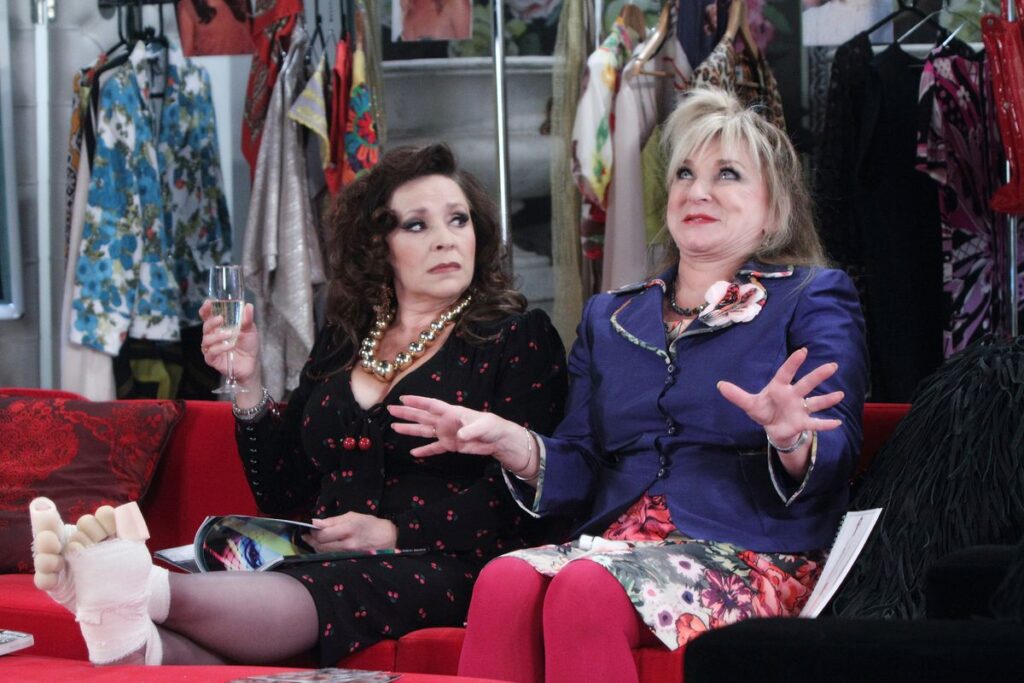
For Helen Lederer, who reprised her role as the delightfully well-meaning but spectacularly ineffective magazine employee Catriona in the feature, the anniversary recalls the friendships among the core cast members.
“The fun in the house we filmed in in north London and walking down the street having a laugh with Fleur (Harriet Thorpe), as well as the fabulous black and white jacket that was designed for me—with a ridiculous amount of random black bows sewn on in various places,” Lederer told 48 Hills.
While “Absolutely Fabulous” became synonymous with extravagant fashion, impossible excess, and deliciously bad behavior, its lasting appeal rests on the strong writing, acting, and chemistry between its performers.

Over the years, Lederer says she developed a clearer understanding of her character’s peculiar charm.
“I realized that Catriona was a benign but privileged woman who wants to contribute to [Patsy’s] magazine but doesn’t really have any training to be of much use,” she says. “Her vacant but well-meaning demeanor developed over time.”
That obliviousness made Catriona a perfect inhabitant of “Ab Fab”‘s satirical universe. Working alongside Thorpe’s equally hapless Fleur, she just unaffectedly floated through the chaos of magazine publishing.
In a world populated by oversized egos and relentless social climbing, Catriona remained one of the show’s sweetest creations.
Lederer says that each time production resumed after extended breaks, it never felt like a last shout.
“It was always nice to meet with the J’s—Joanna Lumley, Julia Sawalha, Jane Horrocks, Jennifer Saunders, and the late June Whitfield,” she says. “Everyone was always pleased to see each other, and it was always fun to see Harriet. We never speculated about the future—we just got on with the days of filming.”
That matter-of-fact approach perhaps explains why slipping back into Catriona’s shoes felt so natural.
“It was as if we had never been away,” Lederer says. “The characters were so strongly formed that it was a case of stepping back into familiar terrain. Harriet and I would catch up during tea breaks and then jump into character.”
For all the series’s sharp observations about celebrity culture and fashion, its creators never lost sight of its essential absurdity.
Asked to summarize the film during a 2016 press conference that included SF Bay Times, Joanna Lumley offered perhaps the most succinct description imaginable: “A chaos of drink, and cigarettes and champagne.” Jennifer Saunders immediately chimed in, “And a few illegal substances… and generally, in very bad shoes.”
Premiering in 1992, the original series became an international phenomenon by satirizing the excesses of Britain’s fashion and PR industries. Beneath the vodka, cigarettes, and designer labels lay sharp observations about vanity, gluttony, and the pursuit of relevance.
Beyond its BAFTA Awards and American success (thanks to Comedy Central and BBC America), the series’ blend of camp, satire, and larger-than-life characters made it a natural fit for LGBTQ+ audiences, particularly in San Francisco, where “Absolutely Fabulous” became part of the city’s queer cultural fabric.
In the ’90s and early 2000s, it wasn’t unusual to hear patrons in gay bars trading catchphrases like “Sweetie, darling,” “Lacroix, sweetie, Lacroix,” or “Cheers, thanks a lot.” The more devoted among them might even argue over who was the Edina of the group and who was the Patsy.
Ahead of Absolutely Fabulous: The Movie’s release, a colorful Ab Fab contingent joined the 2016 San Francisco Pride Parade, bringing Edina and Patsy’s champagne-soaked brand of excess to one of the world’s largest LGBTQ+ celebrations.
Around the same time, SF Bay Times welcomed the film as a gleefully unapologetic return to form, celebrating its outrageous fashion, camp humor, and the enduring chemistry between Saunders and Lumley.
A decade later, that affection remains strong in San Francisco. Frameline recently marked the film’s 10th anniversary with a special screening, introducing the iconic duo to longtime devotees and a new generation of viewers.
In hindsight, “Absolutely Fabulous” seems prophetic. Long before Instagram influencers, viral branding campaigns, or carefully curated online personas, Saunders’ Monsoon had already built an identity around chasing trends, cultivating famous clients, and clinging to cultural relevance. The technology has changed, but the anxieties the show mocked remain familiar.
Although some have jokingly summarized the series as simply being about “two older women who drink, use drugs, and slag off work,” Lederer believes audiences connected with something deeper.
“The fact that the characters were so colorful and larger-than-life, yet mirrored the epoch of excess and PR, offered a safe window into extravagance and bad behavior that was deliciously naughty—yet very much of its time,” she says. “Now, the extremities are equally fun to watch for new generations. The program makes people happy.”
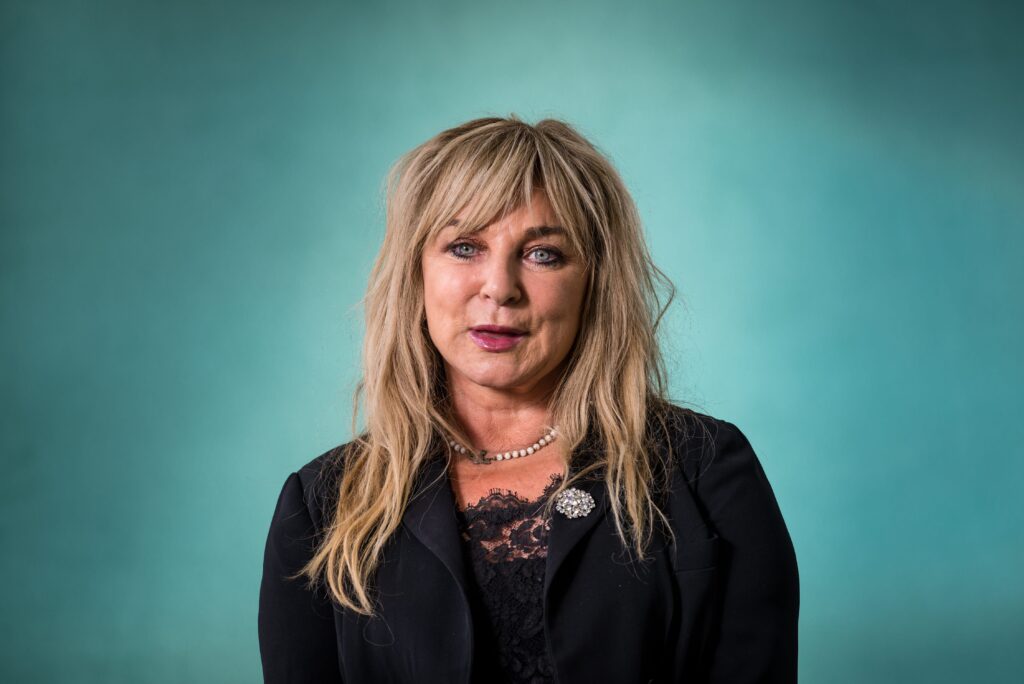
Lederer emerged during a revolutionary period in British comedy. She cut her teeth writing and performing her own stand-up in rooms above pubs, at a time when relatively few women were making careers in alternative comedy. Contemporaries like future “AbFab” creators Jennifer Saunders and Dawn French were simultaneously reshaping British TV comedy.
“Although French and Saunders were a couple of years ahead in their double act and their ‘The Comic Strip Presents…’ success, we knew of each other’s work,” she says. “This helped a lot in our understanding of each other.”
One of Saunders’ small acts of kindness on the Absolutely Fabulous film set still makes Lederer smile.
“I loved it when Jennifer kindly suggested we move some real chocolates off the set, as they were making me anxious,” she says.
Although American audiences will forever associate Lederer with Catriona, she has continually reinvented herself across the pond in the years since. Alongside acting, she has built a career as an author, memoirist, and champion of women’s comedy.
“I loved writing my comedy novel Losing It, and especially love touring around with my current memoir Not That I’m Bitter, which includes experiences of being on ‘Ab Fab,’” she says.
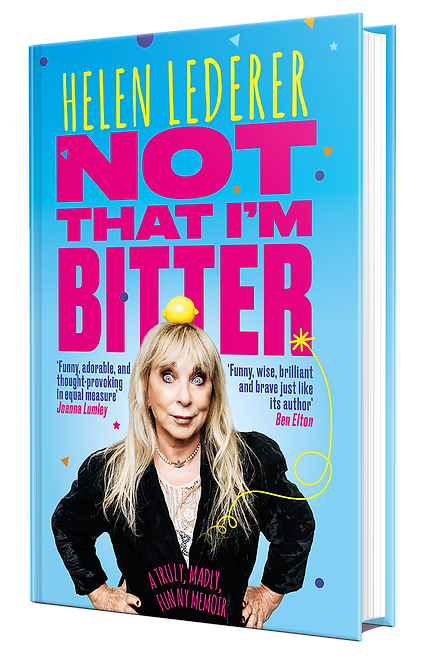
Her proudest achievement may be the Comedy Women in Print Prize, which she founded after recognizing that humorous fiction written by women rarely received the same recognition as more serious works.
“So I decided that, as I’d been a comedian and author, I’d better blooming well do it myself,” she says. “More than 70 books have been published by witty women authors since it began.”
As conversations about women running their lives on their terms continue to dominate popular culture, the series feels contemporary. What once looked like women stepping outside patriarchal-drawn lines now often resembles everyday reality.
“It celebrated the crazy times of loads of money and little sense,” Lederer adds. “The clever juxtaposition of inverting the rebellious mother and sensible daughter was genius. The famous people [including Twiggy] who increasingly wanted to appear in the later episodes bore testament to it being very in and the program to be in. Especially if the famous people could be seen to make fun of themselves at the same time.”
Whether Edina, Patsy, and the rest of the gang might someday return for one final shout remains anyone’s guess.
“I’m sure many people hope for it to re-emerge,” Lederer says with a laugh. “Ask Jennifer!”
ABSOLUTELY FABULOUS: THE MOVIE is available for rent on Prime Video, Apple TV, YouTube, Google Play, and Fandango.