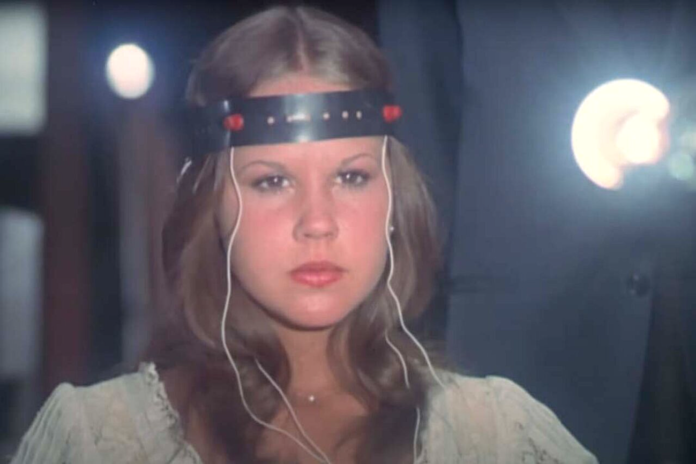
A high-water mark in the history of motion-picture follies was 1977’s Exorcist II: The Heretic, sequel to what had been the highest-grossing horror movie (and for a while the third-highest-grossing movie, period) ever. Director William Friedkin, writer William Peter Blatty, and star Ellen Burstyn declined to participate in a followup, partly because the first two were sparring with Warner Brothers over their profit shares. But the studio went full steam ahead nonetheless, enticing British talent John Boorman with a script by playwright William Goodhart that the former thought offered “an opportunity to make a film about metaphysics”—replacing the original hit’s gruesome torments visited on a little girl with a globe-trotting, phantasmagorical battle between Good and Evil.
It all went spectacularly, even infamously wrong. So distinctively so that, for a half century, Heretic has accrued a loyal fanbase amongst both bad-movie lovers and those auteurists who think it’s a kind of misunderstood masterpiece—or at least a brave (if near-fatal) artistic leap. One such obsessive, David Kittredge, has now made a whole documentary on the subject. Boorman and the Devil, which opens at the Alamo Drafthouse New Mission this Fri/4, is possibly the most entertaining and insightful film dissecting a disastrous film since 2014’s Lost Soul: The Doomed Journey of Richard Stanley’s Island of Dr. Moreau, about that beleaguered 1996 vehicle for Marlon Brando and Val Kilmer.
Exorcist II also had far more than its share of production woes. But it started out with high hopes, top-billed erstwhile exorcisee Linda Blair now recalling that the original script was “awesome.” Louise Fletcher, fresh off playing Nurse Ratched in One Flew Over the Cuckoo’s Nest (which won her an Oscar), was hired as the female lead, a psychiatric researcher who doubles as substitute maternal figure. (The absence of Burstyn’s actual mother is never really explained.) While the male lead was written for a younger actor, and Boorman had his Deliverance star Jon Voigt in mind, the studio insisted on Richard Burton, newly hot-again thanks to Equus on Broadway. A hefty budget was allocated… though it would eventually skyrocket.
But bad luck commenced even before shooting started, when veteran actor Lee J. Cobb unexpectedly died at age 64. His role’s responsibilities got largely shifted to Kitty Winn, another holdover from the 1973 film (along with Max Von Sydow, seen only in newly created flashbacks). Though shot almost entirely on studio soundstages rather than the planned international locations, the movie seemed to attract mishaps, not least because of the hazardous stunts and elaborate technical demands.
Things began running behind schedule immediately, with the clock ticking on a contractually obligated opening date. Then Boorman experienced a work-related health crisis that nearly killed him, shutting the whole thing down mid-production for five weeks. When he returned, the already much-revised script had to be rewritten further to make up for time lost. That included hatching a new climax that nearly everyone thought was a terrible idea—and which audiences would howl at, months later.
But even if it had all gone smoothly, Exorcist II might in the end have been perceived as a bizarre catastrophe. The Friedkin-Blatty original terrified because it had so firmly rooted supernatural phenomena in the disbelieving reactions of characters in a “normal,” secular world. This sequel was by contrast hallucinatory, surreal, wildly stylized. Its production designer was the guy who did Jesus Christ Superstar; heavy use of the then-new Steadicam allowed things like a “locust-demon’s point-of-view.”
Ennio Morricone’s over-the-top score was admirable in its own way. But whose idea was it to have Blair’s teenaged Regan perform a school tap dance to “Lullaby of Broadway” that ends in a seizure? Warner Brothers thought they were getting the director of megahit Deliverance and tough crime drama Point Blank. Instead, they got the baroque stylist of Leo the Last and sci-fi Zardoz—the latter a cult favorite, yes, but one that cost one-fifteenth what Heretic eventually racked up.
It was not, in fact, a financial disaster: People really did want an Exorcist sequel, and the advance promotion looked good. But once crowds actually turned up, their reactions reeled among aghast, baffled, and furious. Word of mouth was so bad that ticket purchases plummeted even before the end of opening weekend.
Boorman protested he’d deliberately made “A fairy story, not a scary story.” But that had not been the expectation, coming after what many considered the scariest movie ever made. He recut the ending—a very rare case of a film being changed mid-release—but Warners declined to accommodate further changes by paying for hundreds of new prints. (The film was considerably shortened when finally released in Europe.) The unkind laughter grew so loud—John Simon called it possibly “the stupidest major movie ever made”—that many careers were damaged, notably Boorman’s. His confidence severely shaken, he wouldn’t make another feature until 1981’s Excalibur, which fortunately was successful enough to restore his reputation and commercial viability.
Strangely, the Exorcist franchise has never really recovered. Every subsequent film (plus a shortlived TV series) tried reinventing the wheel, to extremely uneven results. Many of the half-dozen sequels to date likewise suffered major issues with studio interference, or other travails. (Perhaps Mike Flanagan’s The Exorcist: Martyrs, out next spring, will finally end the “curse.”) The 1973 film remains the best of the lot, by far; the worst was the most recent, David Gordon Green’s 2023 Believer.
But Heretic is one of those enterprises that is almost beyond good and bad—it is so daft, it creates its own fever-dream category. Some of it is objectively terrible, like the bored Burton’s somnambulant performance (so dependent on his sonorous voice, Boorman cracks he “couldn’t act from the neck down”), or the “sexy demon Regan” Blair is required to impersonate at the finale. At times, you marvel at Fletcher’s professionalism in sustaining a convincing naturalism amidst all absurdity. When her character is forced to utter the demon’s name, she spits out “Pazuzu” with a contempt that’s multi-layered, to say the least.
But as Pauline Kael noted, Heretic also has more visual imagination than another dozen films of the era combined—even if some of that is less impressive now, since intervening decades have flooded screens with fantastical imagery made easy by digital technology. Whereas II is all analog FX, from its elaborate matte-painting backgrounds to the very shiny, disco-age interiors. It looked like nothing else in 1975… except maybe a prior John Boorman or two, and some in the future.
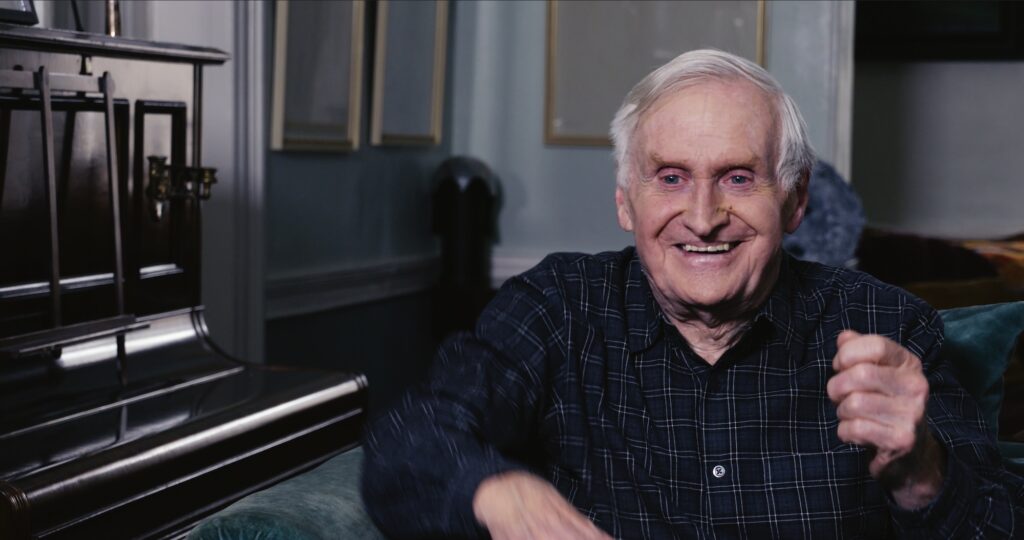
The documentary is ultimately an homage to this retired 93-year-old maestro as a visionary willing to be “over-ambitious,” as he puts it, sometimes reckless to the point of nuttiness. He’s a very entertaining interviewee, as are Fletcher (who passed away in 2022) and Blair; others heard from include latterday director-admirers Flanagan, Joe Dante, and Karyn Kusama. Kittredge’s movie also plays the Balboa on Wed/9, a night after that venue provides you with the chance to see Exorcist II on the big screen.
Some other unique visions of a variably horror-adjacent nature are arriving on local and home screens this week. The Balboa is also reviving two bona fide monster classics: On Fri/4 it’s 1954’s reptilious trend-setter Creature From the Black Lagoon, presented on 35mm in its original “old-school, red/blue anaglyph 3D.” (Glasses will be provided.) The next night brings James Whale’s epoch-making 1931 take on Mary Shelley’s Frankenstein, the one that made Boris Karloff a star, shown with a new original score of “psychedelic doom and gloom” played live by SF’s own Sleepbomb. More info:
The prior evening there’s more “live cinema” across the bridge in Larkspur, as Austin-based “arts-rock” ensemble The Invincible Czars play their own original soundtracks to a Lark Theater double bill of two fabled silents by F.W. Murnau: The original 1921 vampire thriller Nosferatu, and his 1926 Faust, an extravagant Goethe-derived fantasia made just before the German director “went Hollywood.” (Not for long, alas—he died in a 1931 Santa Barbara car crash, aged just 42.) Full info is here.
Over in Oakland at Shapeshifters Cinema, Sun/6 brings the latest installment of “Vital Signs,” a monthly film series by local filmmaker/curator Jonathan Kiefer spotlighting features from around the globe that generally have had little to no prior Bay Area (or even U.S.) exposure.
Excavated for your viewing pleasure this time is writer-directors Prashanth Kamalakanthan and Artemis Shaw’s 2024 Removal of the Eye, a droll domestic nightmare in which they play versions of themselves—a couple exhausted by the demands of their first baby. They live directly above the apartment occupied by her parents, and when 10-month-old Niko cannot sleep or stop crying, his increasingly senile grandma (Katerina Shaw) becomes quite concerning in her belief that an “evil eye” is at work. This gathering storm of parental overwhelmedness could have become a horror movie, but instead it mostly finds comedy in the situation, with some interesting stylistic and plot leaps thrown in. Info here, full series schedule here.
Another, more expansive leap of invention is Rafael Manuel’s debut feature Filipinana, which arrives at SF’s Roxie Theater this Fri/4. The Sundance prize winner is a cryptic tale largely set at golf resort just outside Manila, where the rich pay to screen out the surrounding poor—though nothing can fully shelter them from the pervasive heat. Isabel (Jorrybell Agoto) is a rural teen newly hired as a “tee girl,” tasked with setting the putting ball on the green for guests too lazy to do it themselves.
Her parallel-universe equivalent is Clara (Carmen Castellanos), a privileged young woman whose relatives are trying to lure her back from NYC. But Clara is, understandably, made queasy by the considerable gaps in wealth and gender at work here. As visually stylized as a musical, this very deadpan satire—with an apparent murder mystery buried deep under the surface—recalls the pastel-hued absurdisms of Swedish auteur Roy Andersson. Filipinana’s mannered quietude and slow pace demand patience. But if you can go with the flow, it’s an arresting experience.
Even more out-there conceptually is Buddy, which is presented as a cloying, brightly colored 1990s-style live action TV kidshow in the realm of Barney & Friends. The titular character is a orange unicorn who’s everybody’s best friend, dispensing helpful life lessons by song and example to children at “The Clubhouse,” as well as puppetry-animated objects (the Worry Well, talking backpack Strappy), other “furrys” like Betty Bunny, and random adults Nurse Nancy and Mailman Miles. It’s a seemingly perfect fantasy world… until one uncooperative little boy awakens Buddy’s “dark side,” and does not live to tell the tale. When the others grow suspicious, mayhem erupts, with survivors fleeing through unknown terrain as their erstwhile, now frankly murderous BFF is in hot pursuit.
Director and cowriter (with Jamie King) Casper Kelly has a resume of anarchic comedy ranging from “Adult Swim” cartoons to Too Many Cooks, the incredible 2014 viral short that put the last half-century of sitcom cliches through a very twisted wringer. His prior feature Adult Swim Yule Log (and its sequel) demonstrated the rewards and limits of stretching such pop-culture-subverting humor to the breaking point. As does Buddy, which has a harder time sustaining its idea (or blurring the parody-horror line) than something like the 2023’s sleeper hit Late Night With the Devil. Still, it’s a creative gamble some viewers are bound to love. Buddy opened last weekend at Bay Area theaters, including SF’s Apple Van Ness and Metreon.
Two more new movies offer much less ironic takes on terror, though both have plenty of twisty idiosyncrasies. Writer-director James Ross II’s first feature Parasomnia, which premieres on genre streaming platform Shudder this Fri/4, gets some fresh mileage from the recently over-mined horror terrain of sleep disorders. Riley (Jasmine Mathews) is a young woman whose night disturbances are perhaps unsurprising—after all, she survived witnessing a family murder-suicide at age 5, then a similar incident while in foster care a decade later. Now she’s turning 25, celebrating the occasion with her boyfriend (RJ Brown), an old acquaintance (Stephen Barrington) and his girlfriend (Danny Brown).
Needless to say, things soon get weird all over again on this anniversary, with elements of demonic and voodoo mischief surfacing in the convoluted yet clever, unpredictable screenplay. Though more inventive in its details than basic premise, Parasomnia is creepy and well-cast, the kind of confident debut that leaves you certain its maker has a long career ahead.
Last and probably least, there’s Onslaught, a sci-fi horror action movie opening nationwide Fri/4. It’s the latest from director Adam Wingard and writer Simon Barrett, who together and separately over the last quarter century have hewed an interesting if uneven path from indie horror (Pop Skull, You’re Next) to mainstream franchise fodder (Godzilla vs. Kong). They’re clearly having fun with this exercise in deliberately crass, retro-grindhouse-style cheap thrills, though I wish that feeling were more contagious.
Celeste (Adria Arjona) is a US Army vet with PTSD issues who is not thrilled when her ex-husband drops their child (Blake Kennedy as Daisy) off for the weekend on short notice. But soon she’s got much worse things to worry about: A former desert military base now rented to private defense contractors has hidden experiments in creating “the perfect soldier,” as designed by a third-generation Nazi scientist (Dan Stevens, memorable as the title figure in this duo’s peak achievement The Guest).
These are already-homicidal grunts rewired to become near-unstoppable, their only thought to kill everything in their path. Given a test drive, three such prototypes naturally spiral out of control. After slaughtering their minders, they venture out to the civilian world, where before long they arrive at the decrepit trailer park where Celeste and a few other antisocial misfits live.
This is tongue-in-cheek schlock, mashing together elements of The Terminator, Assault on Precinct 13, and more with tasteless, ultraviolent gusto. But being faux-dumb and faux-sleazy doesn’t actually make Onslaught any less dumb or sleazy—it lacks the wit for distinctions to be relevent. Instead, it’s got snark, bombast, and ultraviolence, a boilermaker that didn’t go down well for me. So much over-the-topness will no doubt make it a certain type of stoner’s delight. But I find it hard to recommend a movie likely to seem straight-up obnoxious if you’re not wholly baked.