This is Drama Masks, a Bay Area performing arts column from a born San Franciscan and longtime theatre artist in an N95 mask. I talk venue safety and dramatic substance, or the lack thereof.
These days, you can count on one hand how many theatre companies are actually responding to the mad world around us. Staging the umpteenth production of Cabaret is hardly the same as Arthur Miller writing The Crucible to rebuke the Red Scare. It sucks that we only got a one-off show about Luigi Mangione (which I missed) because established companies don’t want to draw direct connections between themselves and the headlines we all read each day.
“What good are we if we piss off the wrong people and get shut down?” they ask me. You’d be goddamn artists, that’s what. You like the label, live up to it. Give people a voice in this trying time rather than just creating wallpaper to be ignored.
That’s why a show like Awesome Theatre’s Bloodline—Fri/1-May 23 at Eclectic Box—jumps out at me. (I’ve worked with them before, but I’m now just another observer.) It’s written by Rebecca Pierce, a regular at Killing My Lobster, one of the few companies to actively speak out, and author of that essay I remember liking.
The play is about a fired DEI rep returning to Missouri to deal with her complex family history. Since last year’s DOGE-ification of the US government, I think we all know fired DEI reps these days. I’m intrigued by a contemporary story that features someone trying to improve the US’s contemporary problems with race having to reckon with its long-term problems. This is a country that claims it has no money for slavery reparations, but has plenty of money to restore Confederate statues and roll out the red carpet for white South Africans as it deports (or kills) its own citizens.
What I’m sayin’ is that it sounds like Pierce picked a helluva time to write a play about American racism. Hell, Jordan Peele picked a helluva time to write and direct Get Out. I can’t compare the quality of the two (I have no idea if I’ll even be able to see Pierce’s play), but Bloodline sounds like a welcome, incendiary reaction to modern times. I’d recommend something like that before I encouraged someone to see another show just happy existing without saying anything.
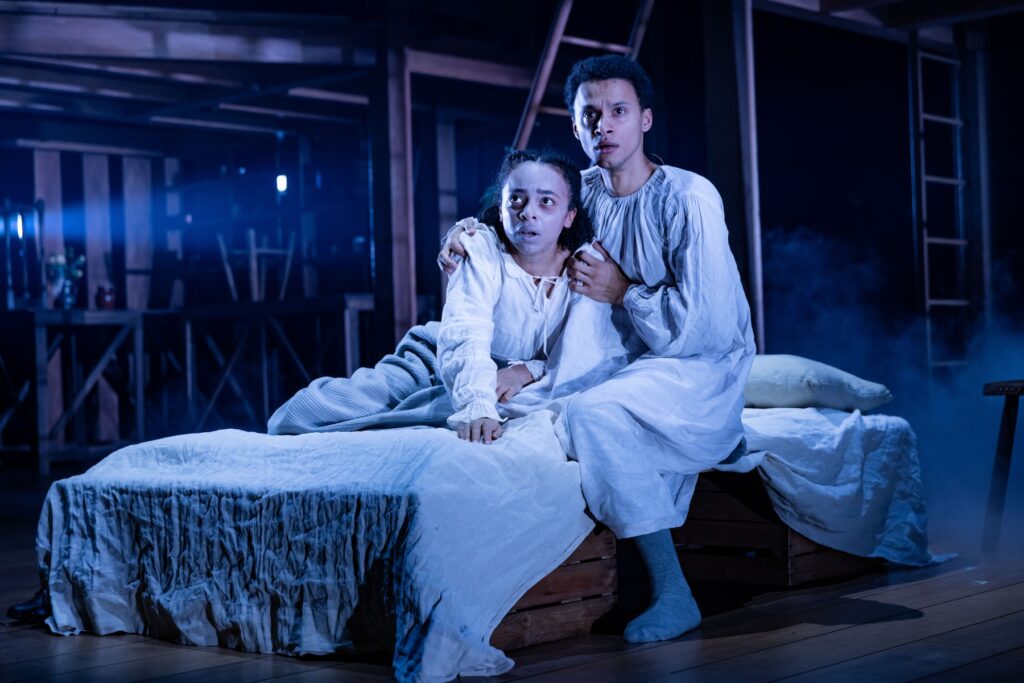
Hamnet North American premiere by ACT
The number one film this past weekend was a hagiographic bio-pic about a pop music icon. I have no plans to see it (in a way, I’ve already seen it), but it’s been fun reading the largely-negative reviews. Critics agree that it’s shameless propaganda, but not even good propaganda. What strikes me are criticism that the film wants to present its subject as a great artist without ever showing him truly creating. Doing so is a painful, dirty, frustrating process that discards more than what’s finished. The paradox of saying “separate the art from the artist” is that you can’t. The lived experiences of the creator inform every facet of the creation, no matter how far-fetched.
William Shakespeare was no stranger to “the heartache and the thousand natural shocks that flesh is heir to.” In a life that included poverty and plague times, much has been speculated about how much of the bard’s literal story is recreated in his yarns. This was, after all, the time before the autobiography. Usually, this speculation will take the whimsical tone of Shakespeare in Love, but occasionally, you’ll get the darker interpretation of Maggie O’Farrell’s Hamnet, adapted from her bestselling novel by Lolita Chakrabarti (North American premiere through May 24 at ACT’s Toni Rembe Theater, SF).
The play—from the same source as the Oscar-winning 2025 movie—hits points well-known to “bardolators”: Shakespeare’s (Troy Alexander) humble upbringing, his increasingly-distant marriage to Anne Hathaway (Kemi-Bo Jacobs, whose performance goes a bit too big), and their namesake son Hamnet (Ajani Cabey) death at a shockingly young age. From these scraps, O’Farrell crafts a dark fantasia in which death is the other shoe waiting to drop.
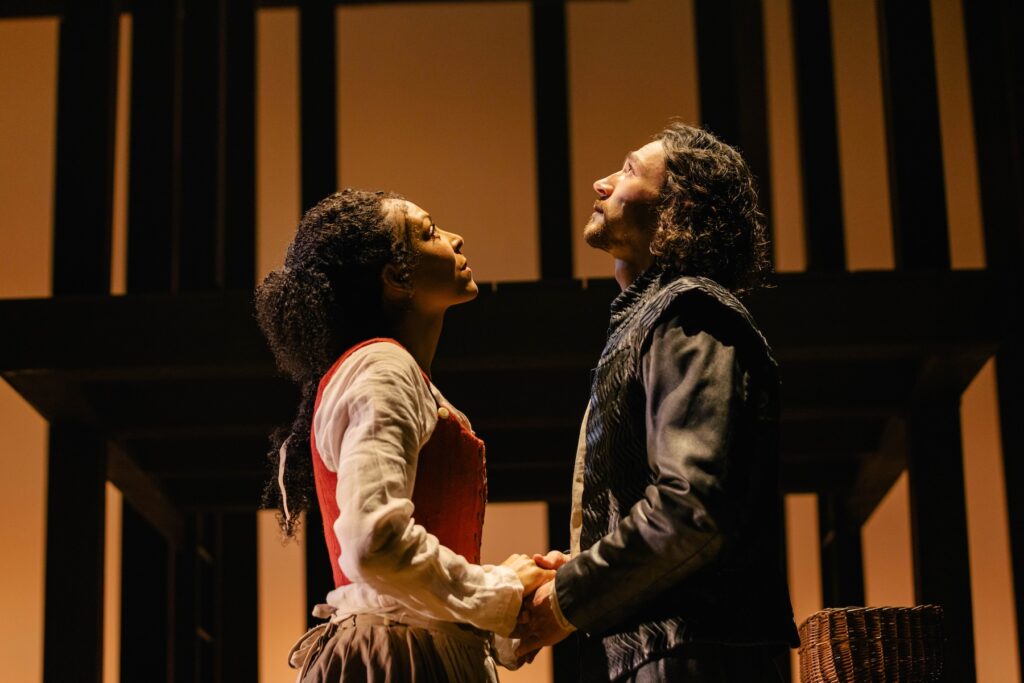
As a speed-run family drama, it isn’t bad. As a representation of an artist’s life, it lacks that for which I always look: the artistic process. What bits we get of Shakespeare’s plays seem to come through osmosis. Sure, this is more about he and Anne’s family life, but again, art is formed by the artist’s experiences, and the creation of art is messy. It would have been nice to see that.
The HVAC of the Geary Theater (as I’ll always call it) once again did a fairly decent job of keeping contemporary plagues out of the theatre. CO² levels on my 1,323ppm by the final bow.
I haven’t seen the film adaptation, but Hamnet is a fairly decent (and gorgeously-produced) representation of the pain that inspires an artist to create a heartbreaking work of staggering genius. It would have been better to add in just how the proverbial sausage is made, but the play certainly isn’t lacking in spilt blood.
HAMNET’s North American premiere runs through May 24 at ACT’s Toni Rembe Theater, SF. Tickets and further info here.
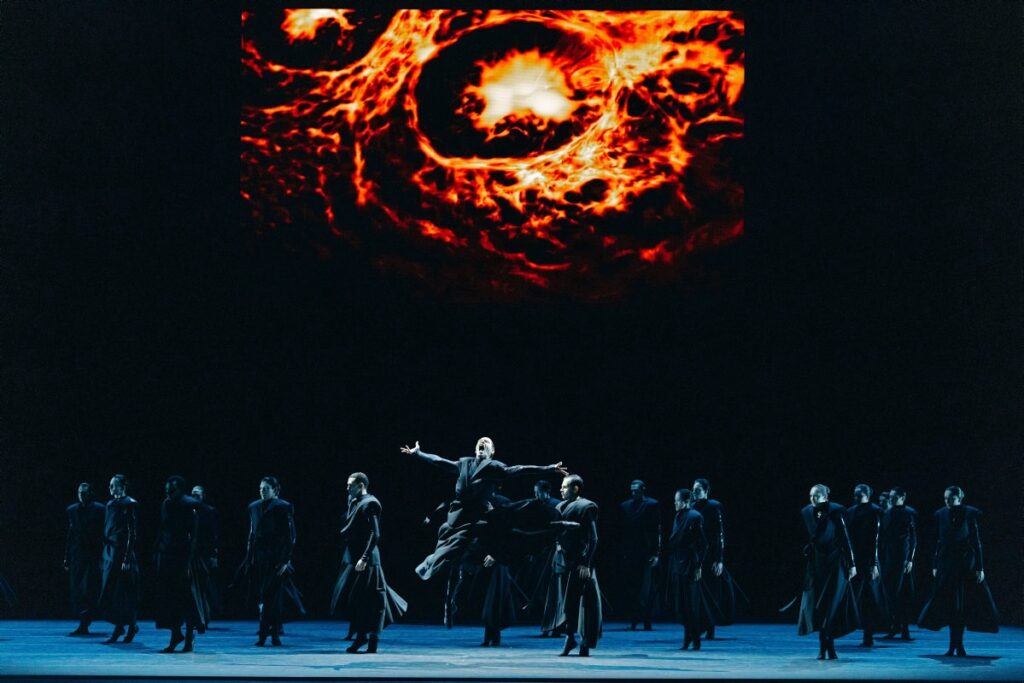
Mere Mortals returns to SF Ballet
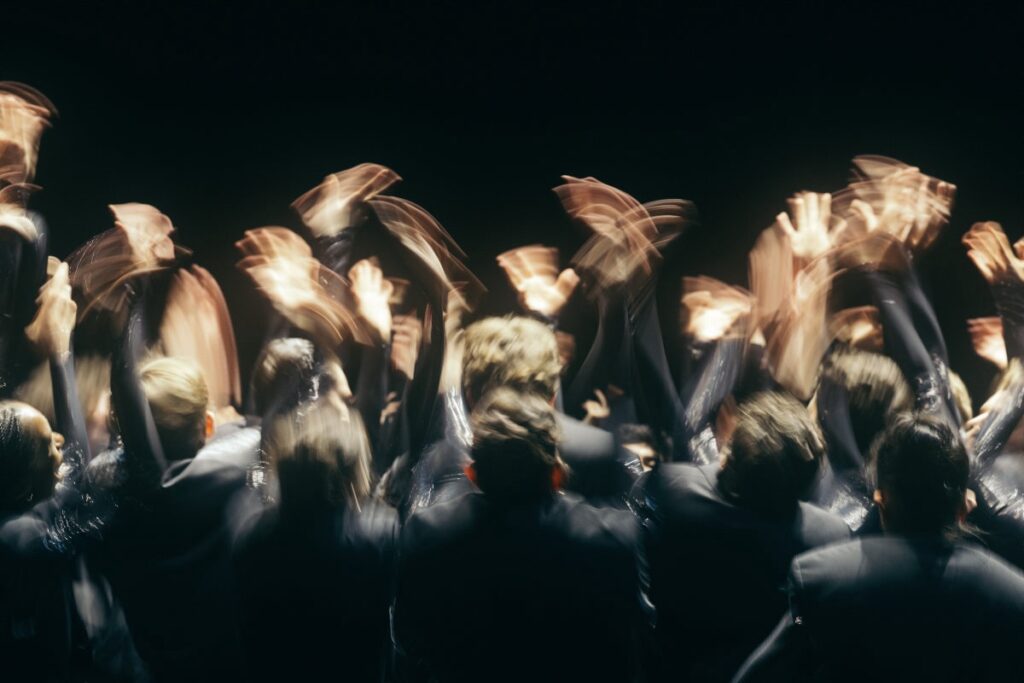
It’s been two years since I saw the world premiere of Aszure Barton’s Mere Mortals (through May 3 at the War Memorial Opera House). A lot has changed since then: The Constitution’s in proverbial pieces; the White House is in literal pieces; Starbucks, Apple, and more have happily acquiesced to fascists; and one of Epstein’s best pals thinks he has a license to kill.
Then, there’s the SF Ballet, which originated Barton’s piece. As even “moderates” began to distance themselves from White House stupidity, SFB were infamously slow-to-act in cancelling their performances at the rebranded Kennedy Center. In fact, the show they were going to put on was Mere Mortals. A show drawing parallels between AI and Pandora’s myth scheduled to play before a possible audience of the AI hucksters who helped bankroll The Annoying Orange’s campaign. SFB cancelled… eventually.
When I arrived for the opening of the remounted production last week, I was there less for the show proper. (Of which my opinion has not changed: fascinating choreo; great macrophotography; seizure-inducing noise; and vomit-inducing AI slop.) I was there to see if the Kennedy Center incident influenced the crowd. From the looks of it, not much. The most I saw was the more-posh attendees turning their noses up at the jeans-wearing ballet newbies, likely drawn in by the advertised use of AI. If I’m not mistaken, I think I saw at least one of the Sisters of Perpetual Indulgence in the balcony, so it was a fashionable night, to be sure.
It was also well-ventilated, with CO² levels peaking around 770ppm before dropping down to 497ppm by the final bow.
My mixed feelings of Barton’s ballet notwithstanding, the show is now “of its time” in more ways than one. Its a bold new work from a woman choreographer; a sensory-scrambling use of modern tech; an unexpected way to bring old and young to the ballet; and definitive proof that there’s no separating art and politics.
MERE MORTALS runs through May 3 at the War Memorial Opera House, SF. Tickets and further info here.