Frameline (June 17-27)—the world’s longest-running LGBTQ+ film festival—turns 50 this year, and celebrates that golden anniversary not just with new films but with a wealth of retrospective programming. The Wachowskis’ Bound, Derek Jarman’s Caravaggio, William Friedkin’s Cruising, and Donna Deitch’s Desert Hearts are among the classics screening at the festival. But it is not just features in the spotlight, as queer San Francisco on film and striking shorts programs also take center stage.
Peter Stein: San Francisco on the Queer Screen
Peter Stein jokes that people think he probably attended the first Frameline festival back in 1977 when it was called The Gay Festival of Super 8 Films. In truth, he was a senior at Lowell High School then and closeted. He wasn’t aware of the festival or 32 Page Street, the community center that hosted the inaugural event.
It would be nearly 20 years before Stein attended his first Frameline when he was a coordinating producer on Living Room Festival, a short films program that celebrated Bay Area film festivals. In the years since, the award-winning filmmaker and programmer went on serve as the Executive Director of the San Francisco Jewish Film Festival from 2003-2011. In 2014, he joined Frameline as Senior Programmer.
In recent years, he stepped away to work on film projects, but for Frameline 50, he wanted to return and in a bigger way. So, in addition to programming behind the scenes, on Monday, June 22, at the Roxie, Stein will take the stage to present “San Francisco on the Queer Screen: 50+ Years of Gay By the Bay” at the Roxie, combining a talk with film clips.
“The idea of the talk is to track how queer filmmakers, even if they didn’t identify themselves or we didn’t identify ourselves by that name, but people coming from LGBTQ identity were documenting and presenting life in the Bay Area as LGBTQ folks that might be different from the way mainstream views might have been presented and how that changed over time,” Stein says.
“I crowdsourced some of the recommendations,” he adds. “I have the great honor of working with nine or 10 co-programmers on the programming team at Frameline, and I also sought out smart folks like Jenni Olson and Susan Stryker and Jim Van Buskirk, so there’s a wealth of other people’s recommendations and ideas.”
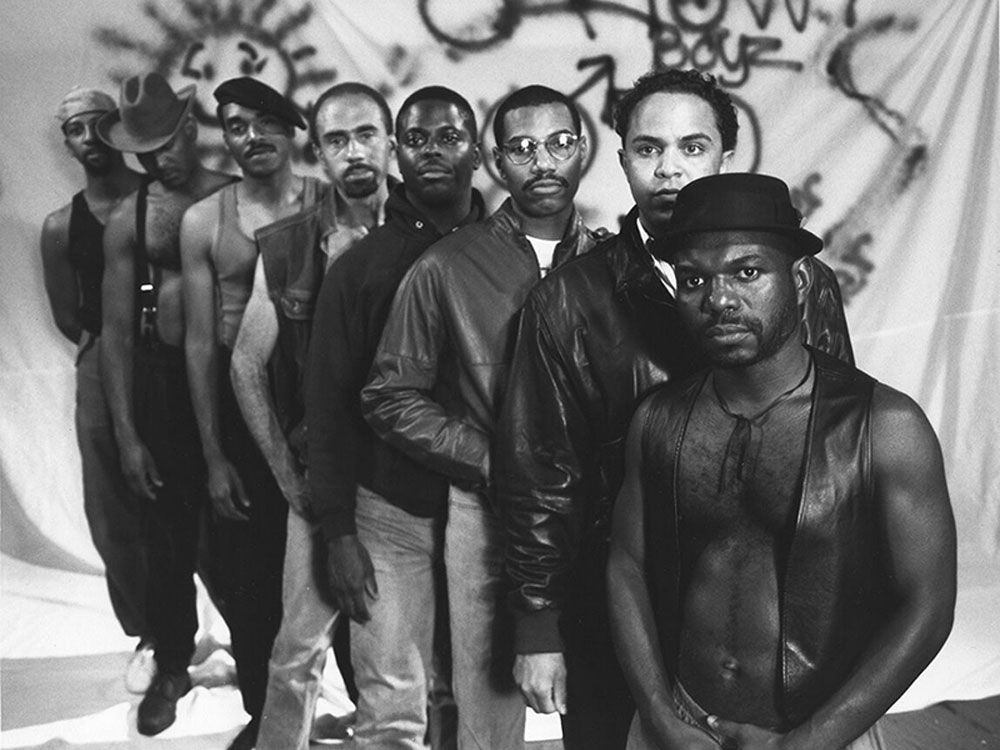
Marlon Riggs’ Tongues Untied, Tales of the City, Looking, and Stein’s own 1997 documentary The Castro are among the films and series he will be discussing. The earliest clips date back to 1947-1950, Harold O’Neal’s home movies capturing queer life in San Francisco. Another film capturing day-to-day life in Bay Area, in narrative form, is Richard Wong’s 2006 Colma: The Musical, written by, songs by, and starring H.P. Mendoza.

“What I love about Colma, it is that, unlike San Francisco as this fantasy gay mecca, all of the things that I will have talked about with regard to Tales of the City, you get to Colma and they’re in a town where there’s a lot of folks who are actually under the ground and dead,” Stein says. “But you can actually still have big dreams, and you can have love and heartbreak and accept each other for the queer, non-conforming Asian American and mixed person that you are, and I like that as part of the evolution of how queer folks in the Bay Area were presenting themselves on the screen.”
Jenni Olson’s The Royal Road (2015), a film told in landscapes and set against the El Camino Real and Hal Ashby’s 1971 cult comedy, written by Colin Higgins, Harold & Maude about the affair between Bud Cort’s suicidal teenager and Ruth Gordon’s eccentric septuagenarian also speak strongly to Stein in their very different ways.
“Jenni is a beautiful writer, and her landscape films are a particular kind of gaze onto the kind of undiscovered, uncelebrated landscapes of San Francisco, but she pulls you into a world of the kind of the sensitive longing of a queer-identified butch lesbian that had just not been expressed before,” Stein says.
“And I think Harold and Maude, while not a queer story in a kind of literal way, is coded beautifully as a Bay Area queer story, that was about essentially outsider sexuality and love beyond the bounds of what was considered morally or even physically acceptable.”
Jeffrey Winter: “.99 Cent Queer Video Fest“
These days, Jeffrey Winter is co-executive director of The Film Collaborative, overseeing the nonprofit’s Film Festival Distribution Program. His work is evident at Frameline 50 with Film Collaborative titles Time Warp, Mineshaft: The Cruising Murders, and the Barbara Hammer documentary Barbara Forever all making their Bay Area premieres at the festival.
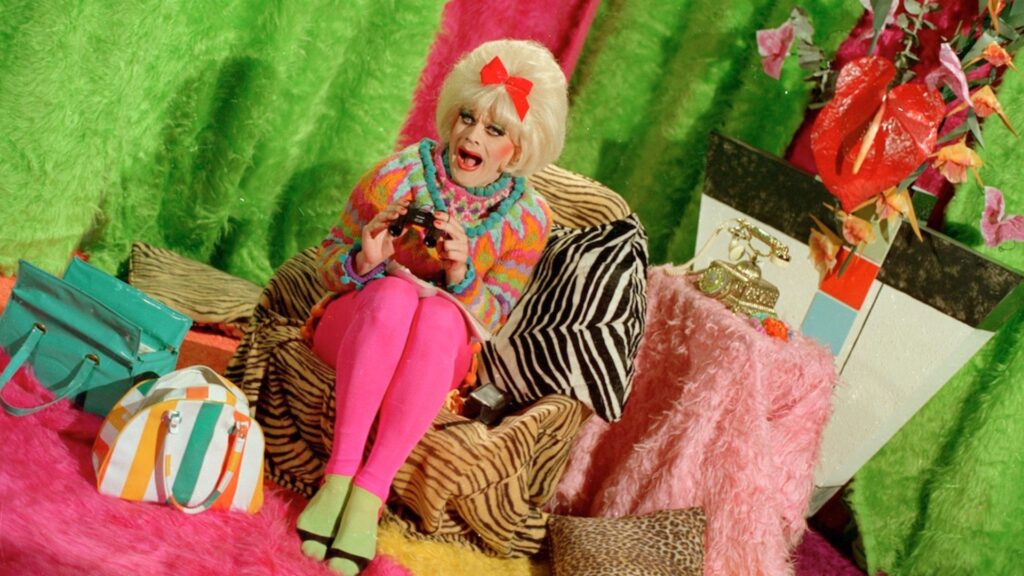
But that is not the end of Winter’s involvement with Frameline 50 as his shorts program .99 Cent Queer Video Fest, screens June 20, at Hamburger Mary’s. His show is a retrospective and a callback to a 10-month period in 1991 when he inadvertently jumpstarted what would become his career and helped usher in New Queer Cinema. He was 23 years old then, a recent transplant from New York City, and working as a bartender at Paula’s Clubhouse at 16th Street and Albion. A gay bar off the beaten path from the Castro, it was frequently empty.
“I was really just looking for a way to bring people into my bar,” Winter says. “I was meeting lots of young queer filmmakers who were making shorts and had no place to show them.
“We had big screen projection TVs, and I was like, ‘Let’s just start showing your shorts.’ There was nothing like that at the time, because there was no way to see your queer content, period. So it just sort of exploded. I had the happy hour on Thursdays, and I started showing films from four to seven.”
The good times for Paula’s Clubhouse screenings—which Bay Guardian declared the best thing happening in San Francisco in 1992—lasted only 10 months, when the bar sold to new owners. And while Winter and his happy hour were not part of Frameline, Executive Director Mark Finch provided his program at Paula’s with a little funding.
“Mark had incredible vision for bringing innovative programming into the Frameline fold that most people would have seen as outsider,” Winter says.
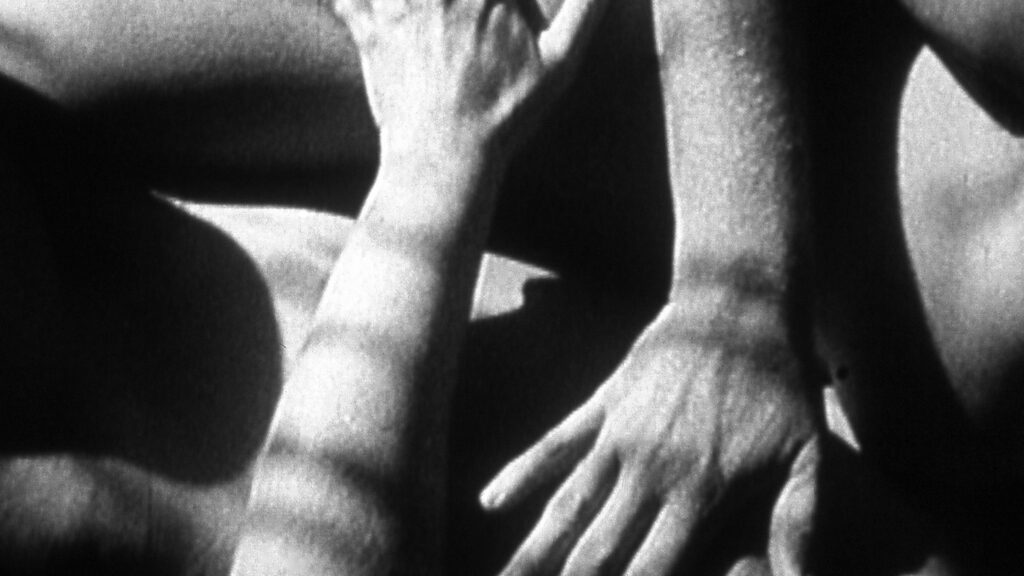
For the .99 Cent Queer Video Fest, he has put together a program of greatest hits from those his Paula’s days. There are a few works by veteran directors, including Kenneth Anger’s Fireworks (1947), Barbara Hammer’s Dyketactics (1974), and an excerpt from Marlon Riggs’ Tongues Untied (1989).
Then there are the shorts of filmmakers just starting their careers, among them Watermelon Woman director Cheryl Dunye’s Vanilla Sex (1992); We Were Here helmer David Weissman’s 976- (1987); the late Jon Bush’s B-Girls from Planet Q (1991), starring Mx. Justin Vivian Bond; and Built from Endurance from Todd Verow, whose Frisk’s 1995 Frameline world premiere stunned a closing night audience with its arresting adaptation of Dennis Cooper’s serial-killer novel.
There is one short screening that Winter never projected during happy hour, and that is Jenni Olson’s 575 Castro Street (2009), in which a recreation of Harvey Milk’s camera shop serves as the backdrop to a recording left by the slain supervisor.
“That film deals with San Francisco history and a lot of serious stuff,” Winter says. “It didn’t exist back then, and I wasn’t going to add it, but then ultimately the aesthetic style and the historical reference made it be like, ‘Who am I kidding? I actually can’t survive without it.’”
Jenni Olson: “Nineties & Zeros Fucks: Sexy Frameline Shorts of the ‘90s & 2000s“
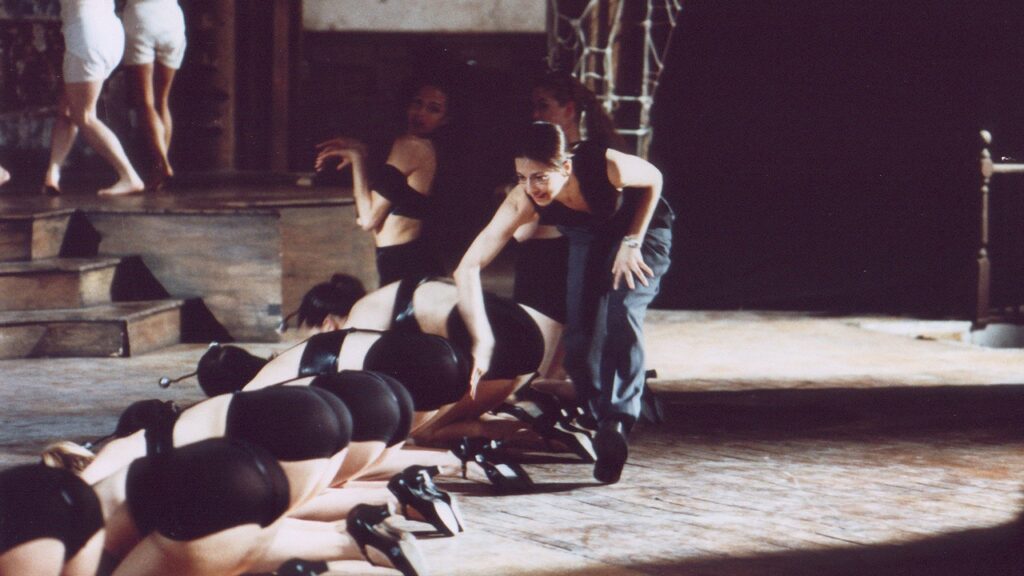
Curator and filmmaker Jenni Olson is a thread that runs through Frameline 50. Her own shorts program, “Nineties & Zeros Fucks: Sexy Frameline Shorts of the ‘90s & 2000s,” plays June 21 at the Roxie Theater. But her films also figure into Peter Stein’s talk and Jeffrey Winter’s shorts program. She is also a consulting producer on two works in the festival, Paul Rice’s The Faggots & Their Friends Between Revolutions, making its world premiere at Frameline, and Brydie O’Connor’s award-winning Barbara Hammer documentary Barbara Forever.
“Over all of these decades I have continued to feel such gratitude for the festival, and for everything that Frameline does,” Olson says. “Frameline distribution, and the completion fund, and the work that they do with restoration of films, and you know, just providing access to queer films to people all over the country and all over the world, and then, as a filmmaker, Frameline has played my films over the decades, they’ve also supported my work.”
Olson’s association with Frameline goes back to 1989 when she was the head of the Minneapolis LGBTQ film festival and started attending Frameline looking for films to program. Then in 1991, she applied for a guest curator position at Frameline, which would turn into an executive director position which she shared with the late Mark Finch until 1994. Several of her films are distributed through Frameline and she received completion funds from the organization for her film The Royal Road (2015). Her shorts program is one more example of her close relationship with the festival.
In putting her program together, Olson confined her slate to films from the 1990s and the early years of the 2000s. But that wasn’t her only consideration. The films she ultimately chose are ones she regards as personal favorites.
“What they have in common is that they’re sexy and provocative, and that’s a really important thing in general, and a really important thing right now,” Olson says. “They’re sexy and fun.
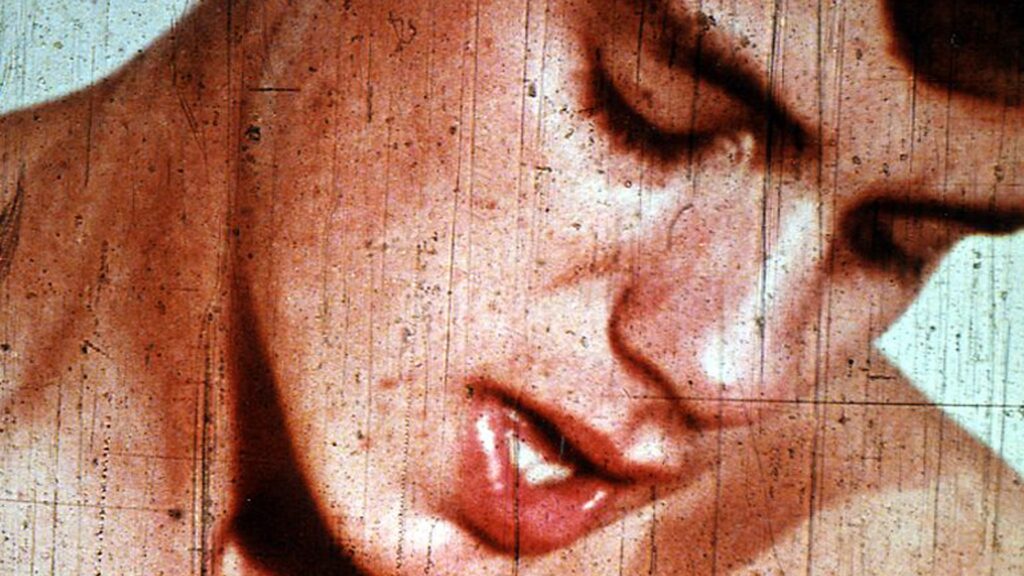
“These are films that haven’t really been seen; there’s no other way to see them. In particular, Jennie Livingston’s short, Who’s the Top, which is not available on streaming or in any other way and is just fantastic. It’s wild, it has like a musical sequence, and it’s set in San Francisco, kind of dyke exploring her S&M desires. But it’s also funny and just a really fantastic production.
“Another thing I’m excited about is a new restoration that Frameline worked with the UCLA Film and Television Archive on of a 1993 short called Ifé, which is by H. Lenn Keller. Lenn was the founder of the Bay Area Lesbian Archives, and she passed away a couple of years ago. Ifé world premiered at Frameline in 1993 in a shorts program that I curated. It’s a fantastic film of a Black butch dyke driving around the streets of San Francisco and cruising women, and it’s a gorgeous restoration.”
Noting that Frameline 50’s theme is “Can’t Stop, Won’t Stop,” Olson looks beyond her own place in the program to where the festival and its community find themselves in the second age of Trump.
“In this political moment when we’re so under attack, we really do need to stay connected to our anger,” Olson says. “I say this sometimes when I have a microphone in my hand, is like, fuck those people, they cannot take away who we are and our community. We have each other. Just being together in all of the love that we have and what we deserve is to be getting to be together and watch movies, not having our basic civil rights taken away.”
FRAMELINE LGBTQ FILM FESTIVAL runs June 17-27 at various locations. More info here.