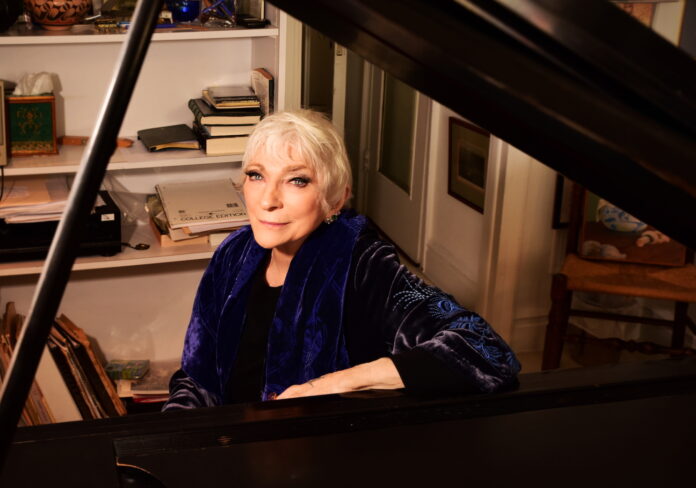
Before the stories, the famous friends, and the blue eyes immortalized by Crosby, Stills and Nash, there is the voice.
Judy Collins’ clear, luminous soprano can make a complicated lyric feel immediately understandable. On her recording of “Both Sides Now,” for example, the melody floats, the words land cleanly, and Joni Mitchell’s questions about love and experience unfold with the intimacy of someone thinking aloud.
That combination of musical elegance and emotional directness has carried Collins through folk ballads, Broadway, gospel, and her own songwriting.
In “Suzanne,” she draws listeners into Leonard Cohen’s dreamlike world. With “Send in the Clowns,” she gives Stephen Sondheim’s rueful accounting of missed opportunities a delicacy that makes its hurt linger. Her rendition of “Amazing Grace,” preserved by the Library of Congress’ National Recording Registry, offers the reassurance of a familiar hymn through a voice capable of holding a room’s attention without hurrying.
Now, at 87, she brings her “Sweet Judy Blue Eyes” farewell tour to Berkeley’s Zellerbach Hall (Sun/18), with Norwegian folk-pop duo Oakland Rain opening the Cal Performances concert.
Collins sounds enthusiastic about the shows ahead. Asked what life after touring might look like, she leaves the question open.
“The future is there for us to handle, which is wonderful,” she says. “And the tour itself is just marvelous, so I’m doing what they tell me to do, which is to stay in the now.”
The concerts have featured guests and onstage conversations, and a documentary is planned. A later “Celebration Encore” series will give her further opportunities to revisit neglected songs and stories.
Collins grew up hearing her father sing Irish, English, and Scottish folk songs alongside American standards, while her own training centered on classical piano. At 13, she performed with an orchestra and seemed headed toward a career as a concert pianist. Then, at 16, she heard “Barbara Allen” on the radio and asked her father for a guitar, turning toward the folk music that had surrounded her since childhood.
Her piano teacher, conductor Antonia Brico, still hoped she would pursue that classical career.
Backstage after one of Collins’ shows, Brico took her hands and told her, “You could have gone places, little Judy.” Collins eventually made the Oscar-nominated documentary Antonia: A Portrait of the Woman, helping renew attention to her mentor’s career.
Her instinct for amplifying other gifted artists became central to her own recording career.
Her 1967 album Wildflowers brought Mitchell’s “Both Sides Now” to a wider public. Cohen’s “Suzanne,” Ian Tyson’s “Someday Soon,” and Sandy Denny’s “Who Knows Where the Time Goes?” likewise became inseparable from Collins’ interpretations.
“I got their songs where they had to go and sang them live, and then people would pick them up,” says Collins. “It’s like scattering seeds for new growth.”
Cohen also pushed her toward writing. In 1966, she remembers, he asked why she wasn’t composing her own songs.
“So I started writing, and I’ve never stopped,” Collins says.
She returned the encouragement by urging him to sing his own work. Their friendship became a lasting creative exchange, though Collins laughs at the suggestion of another kind of intimacy.
“Everything about him appealed to me,” says the singer. “Except the sex part. I couldn’t have handled any of that. He was too dangerous.”
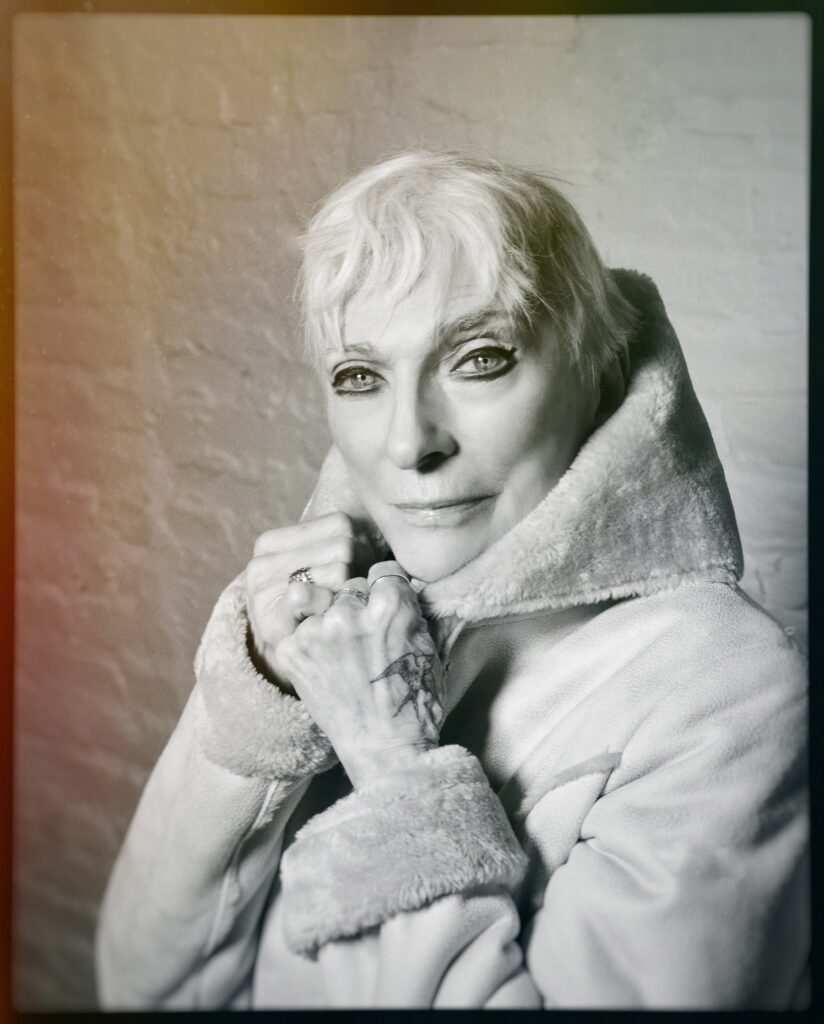
The beauty of her singing has always coexisted with a willingness to speak up. In 1967, she performed at the anti–Vietnam War rally at San Francisco’s Kezar Stadium, adding her voice to the city’s gathering protest movement, alongside artists like Country Joe and the Fish, Quicksilver Messenger Service, and Big Brother and the Holding Company.
“Oh my, that was a very big and important show,” Collins says.
A couple of years later, she testified in support of the Chicago Seven and attempted to sing Pete Seeger’s anti-war song “Where Have All the Flowers Gone?” in court. She still bristles that Aaron Sorkin’s feature film about the trial omitted that episode.
She calls the exclusion “a slap in the face of what I was standing for and what the Chicago Seven were standing for.”
In San Francisco, her appearances continued through the Civic Auditorium in 1970, Masonic Auditorium in 1973, and Davies Symphony Hall for the 1989 TV special “Sing Out America! With Judy Collins.” Her commitment to making music accessible also brought her to Laguna Honda Hospital’s Gerald Simon Theatre in 1985 for a Bread & Roses concert.
Founded by Mimi Fariña, Bread & Roses brought live performance to people in hospitals, prisons, and other institutions.
“Mimi was a very big part of my life,” she says. “She was a wonderful singer and a wonderful artist.”
She remains close to Fariña’s sister Joan Baez and fondly remembers their mother’s loyal encouragement. She adds a teasing complaint she shared with Baez: “You never did write me notes as your mother did.”
When Fariña died, Collins joined Holly Near and Maria Muldaur to sing “Bread and Roses” at the 2001 memorial at Grace Cathedral. Afterward, she released a dove on the plaza.
In 2019, Collins returned to Golden Gate Park for Hardly Strictly Bluegrass and sang “Masters of War,” “Suzanne,” and “Both Sides Now” on the Banjo Stage.
The farewell tour’s title carries its own personal history. Stephen Stills’ “Suite: Judy Blue Eyes” captured the anguish of their romance’s ending. When he played it for her birthday in California in 1969, she remembers saying, “It’s a beautiful song, but it’s not going to get me back.”
They remained friends, reunited for tours in 2017 and 2018, and still talk often.
“It’s one of those enduring things,” says Collins. “And you don’t get too many of those in life.”
Her newer writing carries the influence of her second husband, industrial designer Louis Nelson, best known for designing the Mural Wall for the Korean War Veterans Memorial on the National Mall in Washington, DC.
He encouraged her to produce a poem every day for a year. That work helped generate 2022’s Spellbound, her first album consisting entirely of her own songs, and her 2025 poetry collection, Sometimes It’s Heaven: Poems of Love, Loss and Redemption. She brings the book to concerts and reads selections aloud.
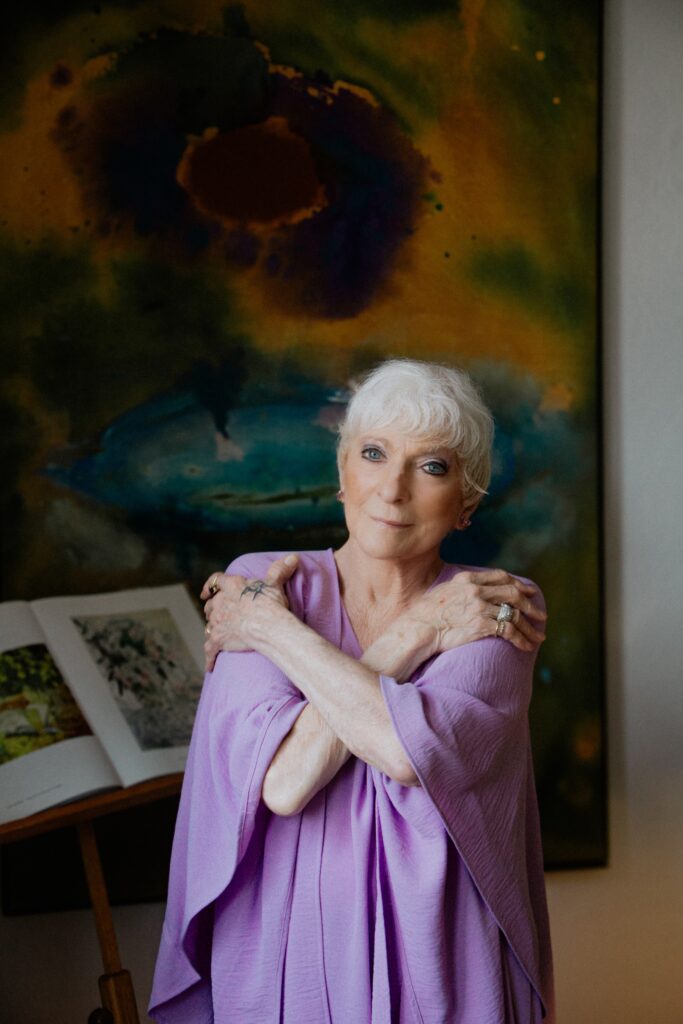
Nelson died in 2024 after 46 years together. Asked which songs bring her closest to him, Collins answers, “All of them.”
Performing had helped her through loss before. After her only child, Clark Taylor, died by suicide in 1992, Collins canceled her shows. Joan Rivers, who had lost her husband, Edgar, to suicide five years prior, called with advice drawn from her own grief.
“‘You can’t cancel all your shows,’” she recalls Rivers telling her.
Collins restored the dates and returned to performing with her family by her side. “It saved my bacon,” she adds. “It was exactly the thing to do.”
Years later, she drew on that experience after losing Nelson. “When Louis died, I just jumped in the car and on the plane,” says Collins.
Singing has helped her through both losses, and that’s why she describes “Who Knows Where the Time Goes?” as “a song of triumph.”
Collins is still finding room in her concerts for new poems, younger artists, and songs she hasn’t sung in years.
In Berkeley, they’ll share the program with the classics that audiences have carried with them for decades—all connected by that clear, luminous soprano and her gift for making a familiar lyric feel newly understood.
JUDY COLLINS: SWEET JUDY BLUE EYES: THE FAREWELL TOUR Sun/18, Zellerbach Hall, Berkeley. More info here.