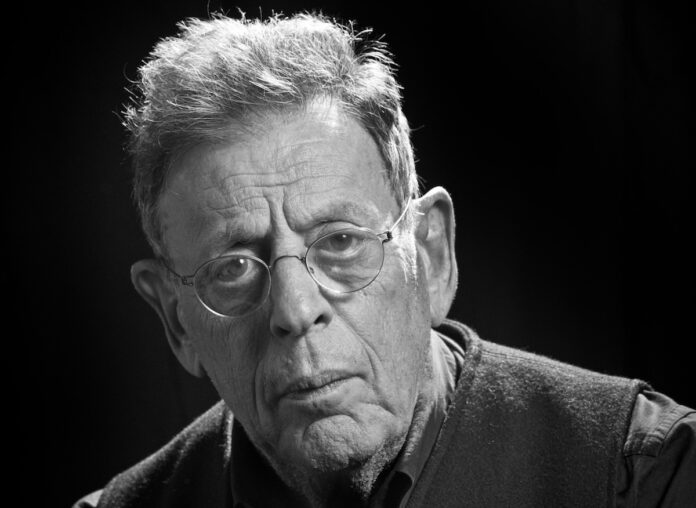
One of the great pleasures of getting older is reveling in the luminous presence of certain artists throughout your life. Like his contemporary Steve Reich, whom Cal Performances feted last month, monumental minimalist composer Philip Glass is circling 90, meaning he’s directly influenced several generations of abstract yet emotive music-lovers who came after and even before. (After studying flute and violin at age six at Baltimore’s prestigious Peabody Conservatory, entering University of Chicago at 15 to study philosophy—where he composed his first piece—and studying at Juilliard and later with Ravi Shankar, Glass broke through artistically with “1+1,” in which a single performer rhythmically tapped an amplified tabletop, in 1968. I’ll let you do the math.)
Glass has gone bigger than almost anyone with his “small” music, in epic productions like Einstein on the Beach, the 1976 avant-opera that made his name, and movies like 1982’s Koyaanisqatsi, which overwhelmed viewers with cinematographer Ron Fricke’s time-lapse images of our teeming, borderless world. Yet perhaps his most riveting and permanent works are his most intimate ones, like his first commercial hit—back when serious composers could have those—Glassworks (1981), a chamber music cycle which he deliberately composed and recorded to sound great in your Walkman. Just you and Glass and a handful of musicians and a stream of notes curling up from your personal cassette player into those fuzzy little headphones.
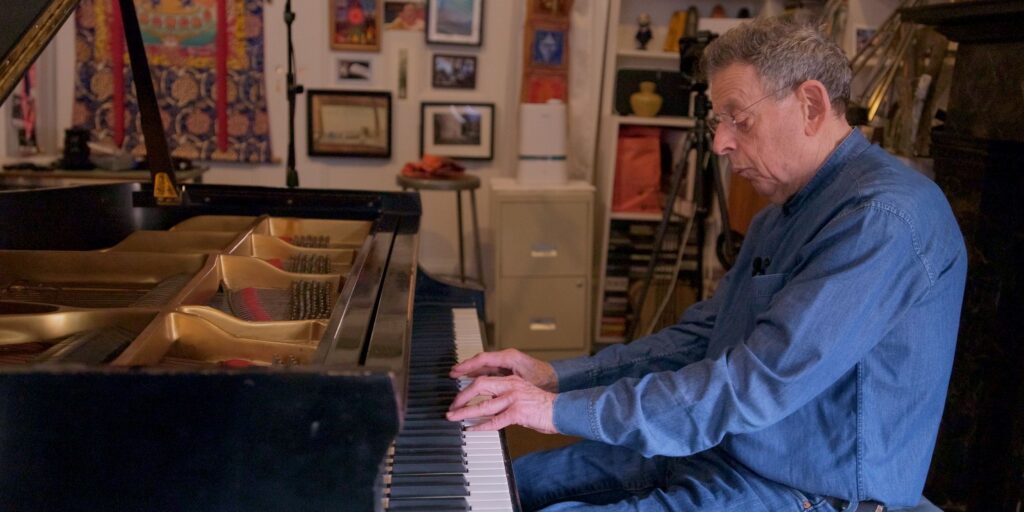
Among these more intimate works are the Etudes for Solo Piano, a series of 20 works composed from 1994 through 2012 and released in 2014, and which contain some of the most breathtaking moments of sudden stillness and wild arpeggios you can imagine. Glass originally wrote a few for friends, and then expanded them as a challenge for his own playing and compositional technique. The etudes have slowly embedded themselves into “the repertoire,” and have influenced everything from movie soundtracks to underground techno. A lot has happened the past few decades, but there’s always been the glowing helix of a Glass etude unfolding somewhere in the background.
In honor of his nonagenarian achievement, Cal Performances is presenting The Complete Philip Glass Piano Etudes (Sat/21, Zellerbach Hall, Berkeley), a marathon evening bringing in 10 star pianists, including Timo Andres, Clara Yang, Anton Batagov, and Sarah Cahill to play the whole darn cycle. The last time I can remember these little whirling dynamos being performed in whole like this is when Glass himself came to Herbst Theater in 2015 to play them as part of the San Francisco Performances series, and then I can’t recall if he did every single one. The two books’ worth of music span more than two and a half hours. Takes some very fortitudinous fingers.
One of the Etudes evening’s pianists diving into glorious task is Janice Carissa, who hails from Indonesia by way of the East Coast and Julliard, and who recently relocated to the Bay Area, which she has enthusiastically embraced—bringing her love of Glass with her. “I feel like once I made the decision to move here, there was a cosmic green light, and I’ve had so many opportunities open up. This tribute evening is an incredible one of those,” she told me over the phone.
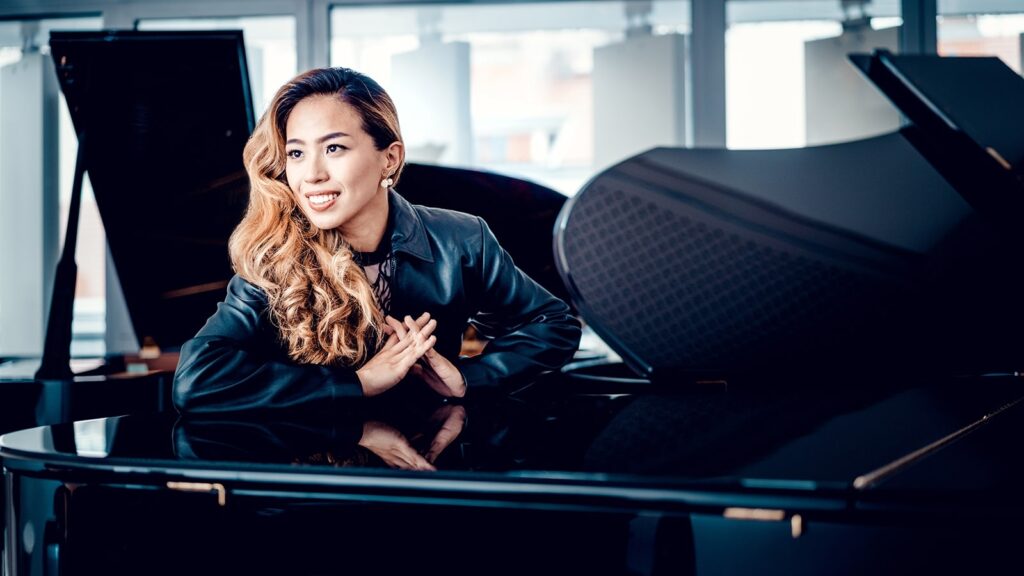
“I just made my West Coast recital debut at Noe Ministries, loosely themed around the US 250 celebration,” Carissa continued. “I bookended the performance with two Glass etudes, and in between was Bach’s French Suite No. 5, Frederic Rzewski’s Winnsboro Cotton Mill Blues, a sonata by Prokofiev, and a new composition by my Indonesian friend Eunike Tanzil. It really felt like where I’ve been at, musically.”
Including the Glass was a gesture acknowledging change and how performers and audiences can see things differently. “My approach to playing is, ‘If you don’t surprise yourself how can you surprise someone else?’ Does Philip Glass himself have just one way of playing music? What is your own truth? It’s so easy to be fixated on one way of doing things. But Glass has gifted us this mad envelope of melodies and rhythms. As a performer, I can say, Let me show you the peaks now, let me show you some patterns now… You can put it together in your own unique way. How can I make the story different this time? It’s so fun to incorporate that into my musical environment.”
How does the 28-year-old Carissa approach such a venerable composer? “When we come to a composer like Mozart, they are a mythical being, less human than more like a god,” Carissa said. “It’s easy to feel a certain way about it. But you look back, and you really listen, and you realize they were once normal people around our age. They crave love and joy, and write to say things they cannot say in words. When I started working on these pieces [the etudes] and talking people who have worked closely with Philip, I began seeing these compositions through that lens of shared humanity. Even at 90 there’s always room for growth and discovery.”
Glass continues to make music—I dozed off during the West Coast premiere of his Symphony No. 15 “Lincoln” at the Cabrillo Music Festival in Santa Cruz this summer, mostly because it was warm and I had spent the day at the beach. Don’t judge. But oh, what a privilege to doze off to new work by 90-year-old Philip Glass, as he delves into the country’s history! We can dream while the master still works.
THE COMPLETE PHILIP GLASS PIANO ETUDES Sat/21, 7:30pm, Zellerbach Hall, Berkeley. More info here. (Note: Philip Glass will not be in attendance.)