
We learned at least two things from this weekend’s (ongoing) blackout: PG&E can’t be trusted to provide reliable service to this city—and new technologies like Waymo are not ready for emergencies and could seriously hinder public safety.
The private utility has for years made maintenance and safety a second priority, after bonus payments to management and high shareholder returns. Along with the other big private power companies in the state, PG&E has asked for even more money from the ratepayers to bump up its stock price.
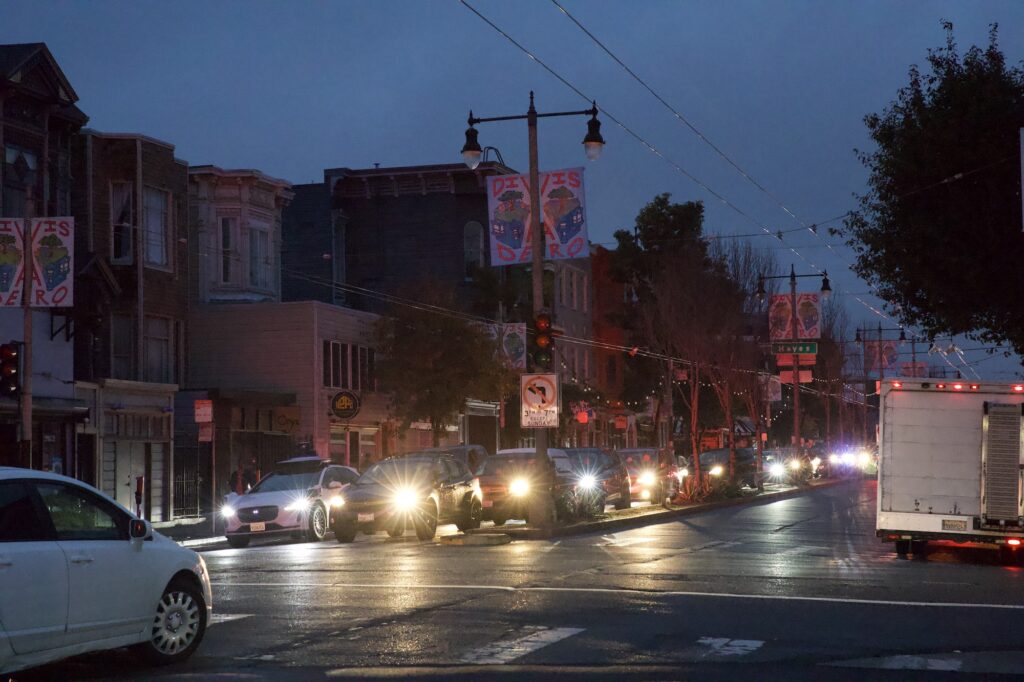
Now an old transformer caught fire, and the company didn’t have the resiliency to avoid a blackout that impacted a third of the city, and is still going as I write this. We don’t know yet whether a lack of on-duty staff made things worse.
We do know that PG&E has operated illegally in San Francisco for more than 100 years, costing the city tens of millions of dollars a year. You can read a detailed history I did about 30 years ago here.
SF has been moving, slowly, to take over the company’s system and create a public power utility in the city.
Now the case for public power is more clear than ever, and it’s time the supes hold a hearing on where the process is, what the next steps are, and how to move forward.
Meanwhile: Waymo clearly isn’t ready for prime time, not in a city where blackouts and other emergencies are common. The robocars just stopped in the middle of intersections when the streetlights went out. They’ve stopped and blocked traffic when the wifi signals aren’t getting through (like near big events).
Imagine if an ambulance or a fire truck needed to get through one of the blocked intersections.

Imagine if drones carries deliveries suddenly all dropped them—on people’s heads, or through their roofs, or onto car windshields. Even a five or ten-pound object or package can do a lot of damage from 30 feet up.
Imagine what will happen in the next big earthquake, when all power, cell service, and wifi goes down. (What will still work? Copper wire phone lines and ham radios. Old tech, which is so, so easy to abandon in favor the next shiny new thing—until it’s the only thing with the resilience to handle a real emergency.)
The tech companies have been treating San Francisco like a free beta-test lab for decades, and the people who live here have paid the price: Airbnb drove up housing costs and evictions. Uber and Lyft destroyed the lives of hundreds of cab drivers. We are very lucky that robocars didn’t block lifesaving services—this time.
Waymo suspended service Saturday night—and the city ought to keep that ban in effect until the problem gets solved. Sure, some data shows that robots are better drivers than humans—but in an emergency, humans know how to react. Robots clearly don’t.
Sup. Connie Chan has announced that she will remain as chair of the Budget and Finance Committee through one more round of the city’s budget, a huge undertaking while she is also running for Congress. She said she will step down in August—which means if she makes the top-two runoff in December, she will be able to devote more time to the Congressional campaign.
It’s going to be a particularly ugly budget season: Mayor Daniel Lurie is projecting an additional $400 in cuts for the next year, and will be prioritizing “basics,” which means cops and sweeps and ways to keep the streets “clean.”
From MissionLocal:
Today’s announcement is structured around a list of “core” priorities: affordability, strengthening the social safety net, safe and clean streets, public transit, health and homelessness, and the city’s economy.
Affordability is the buzzword for Democrats these days; it got Zorhan Mamdani elected mayor of New York. But there’s not a lot San Francisco can do to increase “affordability” without spending money. Even if the mayor’s Rich Family Zoning Plan creates more housing, which is supposed to bring prices down (though it won’t), none of that’s going to happen for at least ten more years.
Instead, in the name of propping up the development market, some of the mayor’s allies are talking about cutting the tax measure that was designed to fund affordable housing. That’s the worst thing the city could do to address affordability.
Remember: Mamdani also talked about raising taxes on the rich, which is what Prop. I did.
Chan has a different approach:
For the past few fiscal years, the city has hired managers at twice the rate of essential frontline workers. Before the city continues to reduce its workforce, the city should prioritize the elimination of vacant management positions and other vacant positions and reduce management positions accordingly.
Her priorities, from a press release:
Availability and capacity of city services serving immigrants, LGBTQ+ community, seniors and people with disabilities, children and youth, tenants and unhoused people, and working families.
Collective fiscal impact of fee waivers and tax revenue suspensions on housing production, local business revitalization, and city services that are critical in delivering public safety.
The utilization of debt and financing policies including but not limited to bonds, enhanced infrastructure finance districts, and certification of participation in correlation with the projection of economic growth for the city.
Chan is talking about examining all these tax cuts and fee waivers, which 40 years of history show don’t stimulate growth; they just make the rich even richer. (Does anyone really think the Twitter tax cut made San Francisco a better place? All those companies took the money, drove up housing prices, and left. Mid-Market has never recovered.)
Missing from most of this discussion: New revenue plans. Some labor activists are pushing an increase in the overpaid CEO tax, which could bring in $200 million a year. The Chamber of Commerce wants to cut taxes by the same amount. The mayor is talking about a parcel tax to fund Muni; opponents say there’s a much more progressive way to approach it.
None of this would be necessary, and the city would have no budget crisis, if San Francisco just slightly taxed the income of the richest 4,000 residents. The supes have called on the Legislature to make that possible. None of the local news media have even mentioned it. The mayor has ignored the idea.
So the city will see more cops, despite falling crime, more cuts to social services, and Chan will have to push a conservative majority on the board to avoid a total budget disaster.
Happy holidays.
Full disclosure: My daughter works on the Connie Chan for Congress campaign.