Nearly 40 community members gathered at 451 Galvez Street on Monday evening, hoping the Hunters Point Shipyard Community Advisory Committee (CAC) could clarify the latest mishap at the billion dollar-plus clean-up of the Hunter Point Naval Shipyard (HPNS). The main topic of a loaded agenda concerned an April 7 Navy report that radiological and chemical material was discovered in a cabinet in a secure building at the HPNS.
Any of the other topics on the agenda would have been front page news in any other San Francisco neighborhood: a reported exceedance of plutonium in the air; potential laboratory quality concerns that could affect data on contaminated soil; treating mercury in water and soil; and moving and monitoring contaminated debris in trucks that will pass through residential areas.
That only the Bayview faces problems like these was not lost on many in attendance, as tensions at the meeting grew.
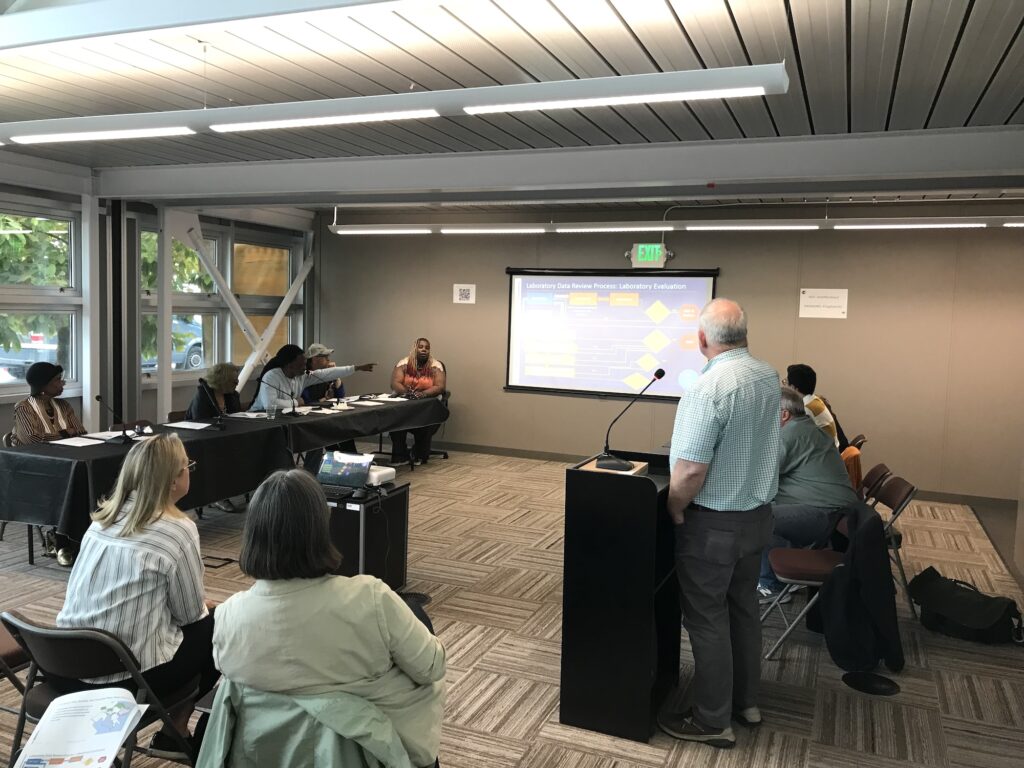
Most of the meeting consisted of the back-and-forth between the CAC chair, Dr. Veronica Honeycutt, and HPS Environmental Coordinator, Michael Pound. (Presentation slides and video of the entire meeting can be found here.) After Pound summarized the ongoing issues of the clean-up, Honeycutt asked multiple questions, many sent to her by stakeholders in the community, to try to understand the strange circumstances of the radiological and chemical materials stored for years in Building A by the former owner of EnviroChem, a subcontractor hired for the clean-up.
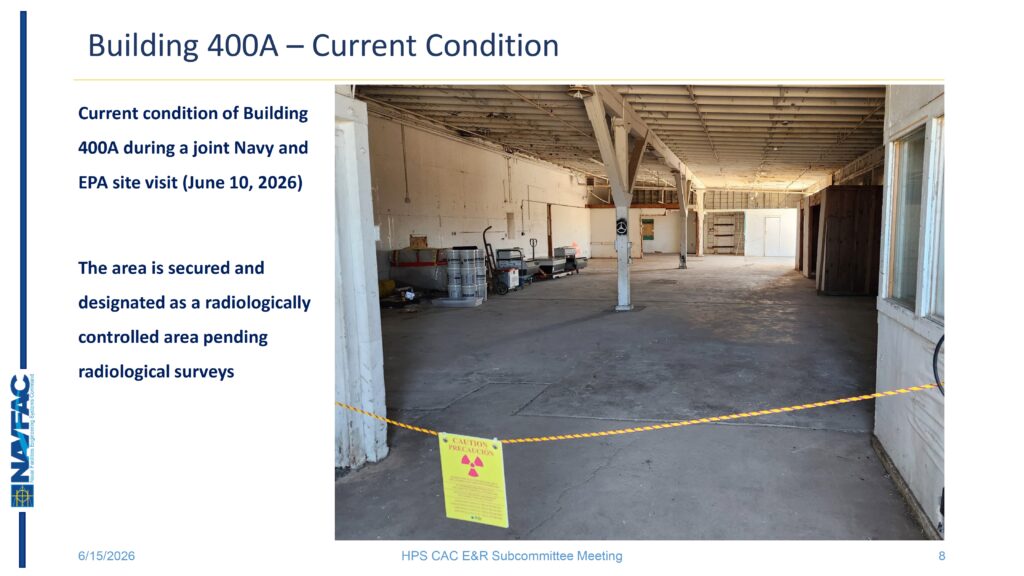
Objects included approximately 200 radiological items, including uranium and thorium samples, as well as approximately 70 glass vials of chemicals that still needed determination.
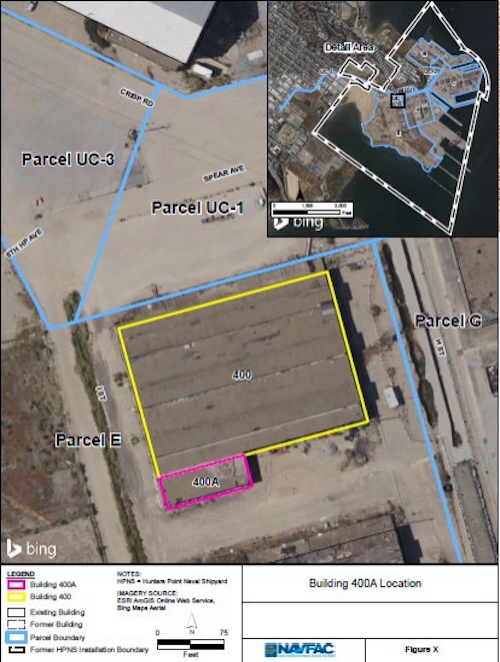
Questions from Honeycutt included: What is the point of origin for these materials? How did EnviroChem acquire, package and transport these hazardous materials to the shipyard? How did the Navy determine that the illegal transportation and storage and materials by EnviroChem occurred specifically between 2019 and 2022?
Pound reiterated the Navy’s position that the material found in 400A posed no threat to public safety and that a full investigation by the Naval Criminal Investigative Service and the Environmental Protection Agency’s Criminal Investigation Division was underway.
Pound ultimately called Jeff Bale, the VP of RSI, the company that had bought out EnviroChem in March of 2023, to the podium for help. Bale said he received a call in his office in Oak Ridge, TN on April 7 about the radiological and chemical material, flew out two days later, and has “been here for the last 10 weeks working diligently to get this situation taken care of.”
Bale said what he found was a “total surprise” and not nearly as clean as the picture shared in the slideshow. Bale and Pound both highlighted that many “check sources,” sealed radionuclide samples used to calibrate radiological instruments in the field, were found in the cabinet. Dr. Kathryn Higley, Community Technical Liaison for Radiological Health and Safety for the United States Navy, added that these “could be purchased by a high school teacher on Amazon.”
Dr. Honeycutt responded with a charge repeated by many officials over the years, from Nancy Pelosi to the EPA: the Navy is not doing a great job with this clean-up, and trust has been lost. “As far as many of our stakeholders are concerned, the Navy has advocated its responsibilities by letting RSI to conduct the inventory. From our perspective, this is unacceptable.”
Malik Seneferu, a local artist and member of CAC, pressed Pound further. He wondered how the owner of the company was able to bring the objects into the shipyard for so many years and not get caught. “I know no one can really get past this gate without getting checked by the guard,” Senefaru said, motioning to the guarded gate outside the window. “My concern is, how did he get through with all this equipment?”
When the audience had their own two-minutes at the mike, the incredulity did not stop. “I want to remind everyone about the similarities in the situation we’re seeing today, and the situation that led to the federal injunction that shut down AAA machine shop, Astoria metals in dry dock four in the year 2000, and the Tetra Tech soil scandal,” Dr. Ahimsa Porter Sumchai said.
Demetrius Williams, the president of the International Longshore and Warehouse Union Local 10, reminded everyone that the problems in the Bayview can be a double-whammy – not only do the residents suffer health consequences, but community members rarely land the consequential employment opportunities that come with the clean-up.
“You know, it’s okay when we play in it as kids, but when you get ready to start building houses and developing, it’s now considered contaminated,” Williams said. “It’s alarming to understand what is transitioning here.”
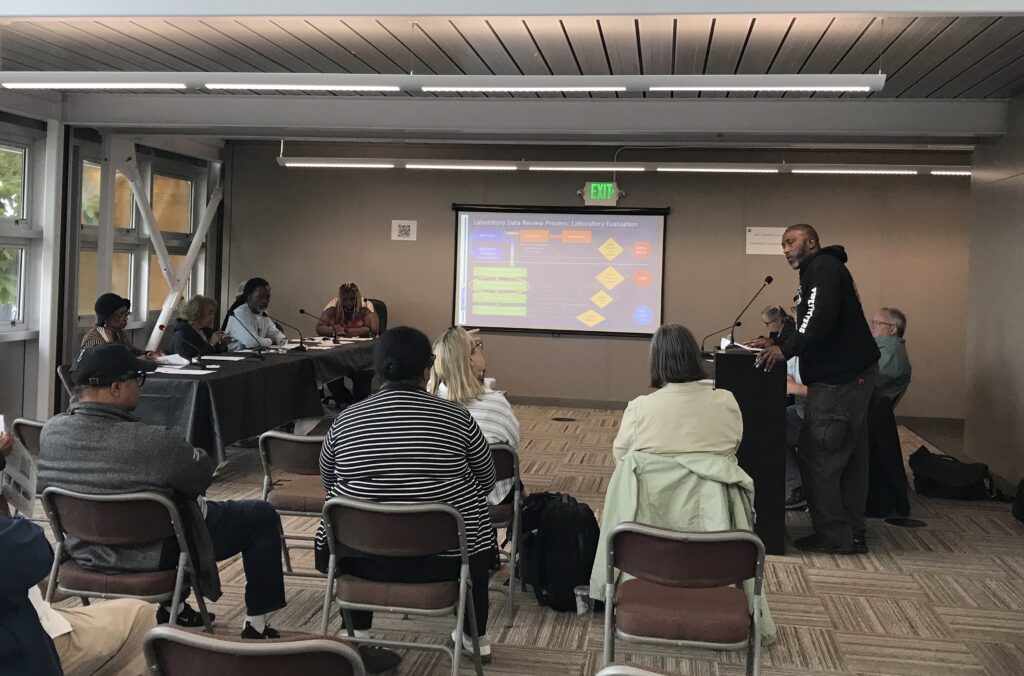
Pound answered what he could, emphasizing that the material posed no public health threat and that more details from the ongoing investigation would be forthcoming; Honeycutt repeatedly pressed the Navy rep to produce a full report as soon as possible.
One question always remains after these meetings: How many times can the Bayview community hear about surprises in the clean-up before losing all faith in the clean-up process itself?
***
With a trove of local, state, national, and even international reporting on the shipyard, more than a few San Franciscans outside the Bayview have started asking questions too. Including Lick Wilmerding High School senior Talia Bryant, who contacted 48 Hills to request publicity for her petition for a “100% cleanup of ALL radioactive waste at the Hunters Point Shipyard with complete re-testing and community oversight.”
“This was going on way before I was even born,” Bryant said by phone. “I was reading more about the groundwater and became concerned.”
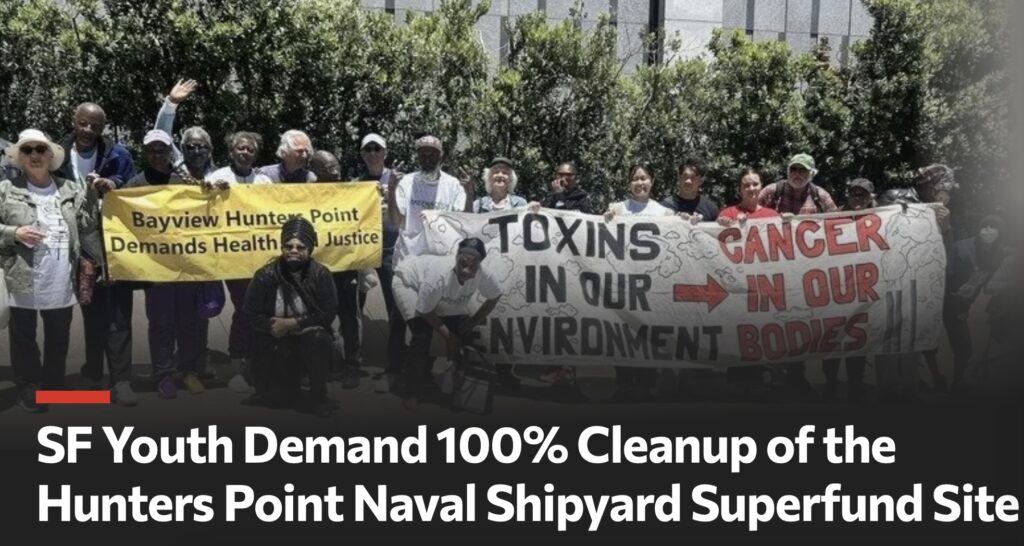
“We take an environmental justice class, and I got to talk to my peers about it. It’s not a coincidence that it’s people of color who live in the Bayview who are being affected.”
The meeting adjourned with members of the CAC asking as many members of the public as possible to attend the next meeting on July 27 to ask questions. Greenaction for Health and Environmental Justice and the Marie Harrison Foundation have organized a rally on the steps of City Hall on Wednesday, June 24, at noon, to demand that “public health, environmental justice, and human dignity come before development interests and political convenience.”
Tom Molanphy is a freelance journalist. His book on Marie Harrison, Marie’s Tree: Implosions and Injustice in San Francisco, will be published by Green Writers Press in the fall.