Mayor Daniel Lurie’s State of the City speech Thursday was entirely predictable—and showed how the politics of American cities is changing.
Of course he celebrated his first year in office:
For the first time in five years, San Franciscans believe we’re moving in the right direction. That’s not spin. That’s not politics. That’s people feeling the difference in their everyday lives.
People are proud to live here again. You can feel it.
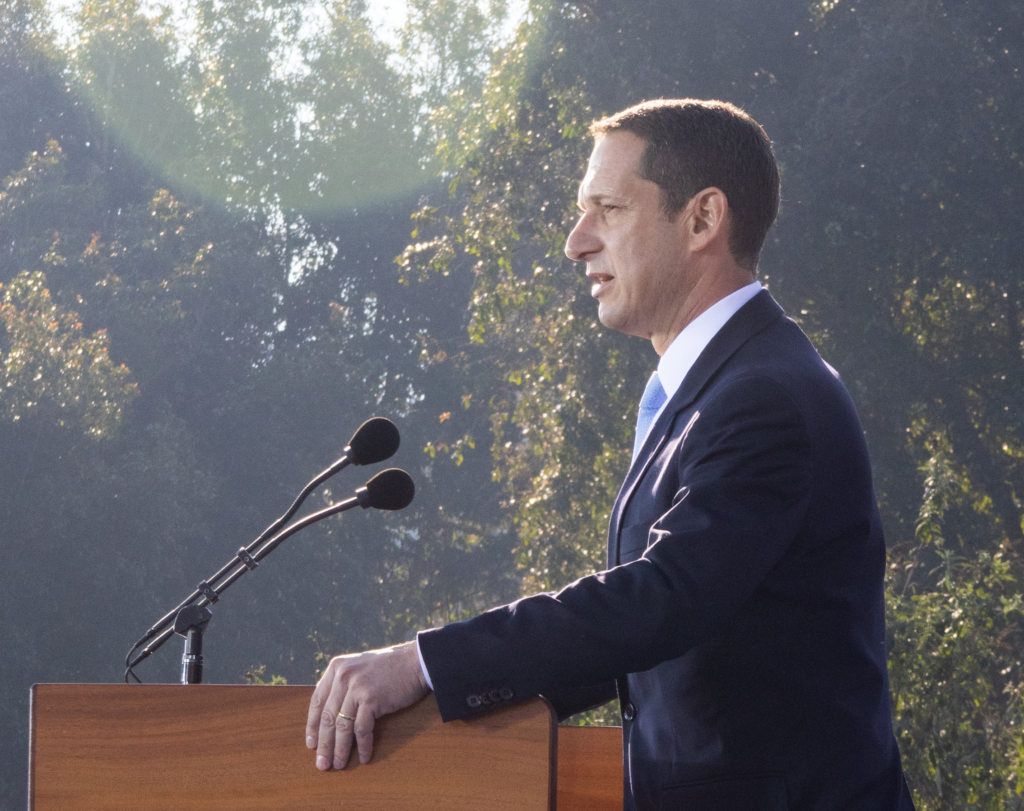
And of course, he talked about public safety:
People will look back on 2025 as the year that cleaner, safer streets helped San Francisco’s economy come roaring back.
But he also shifted gears a bit from his mayoral campaign, when all he talked about was cops and crime:
When tech booms, opportunity grows, but so does anxiety about rising rents, displacement, and a boom-and-bust cycle that has historically left too many people behind. … Affordability has been a challenge in San Francisco for a long time, but as the federal government cuts support and drives up costs on everything from the price of groceries to insurance premiums and child care, the pressure is building.
Families are being forced to make impossible choices—delaying having children, sacrificing savings, or leaving the communities they call home.
I will not let that be the future of San Francisco.
All of a sudden, the mayor who wanted nothing more than to lock up drug users and attract tech companies has discovered affordability.
No surprise: Zohran Mamdani got elected mayor of New York talking about affordability. The politics of US cities is changing; the dynamic is moving from crime to rent.
Something else is happening, too, in San Francisco.
For decades, politics in this city have been defined by two basic camps: Corporate Democrats and Progressive Democrats. (Everyone in local politics is a Democrat). The Corporate Democrats are funded by, and generally support, the billionaires, big tech, finance and real estate. The Progressive Democrats are generally supported by grassroots organizing and labor.
The Corporate Democrats favor market-based solutions like upzoning to allow more luxury housing, and seek to limit taxes and regulations on tech. The Progressive Democrats favor more affordable housing, support taxes on the rich, and favor regulations on new technology.
The Corporate Democrats allowed Airbnb to encourage illegal conversions of apartments to hotel rooms, leading to thousands of evictions, and allowed Uber to destroy the taxi industry. The Progressive Democrats tried to slow down these “disruptions” that ruined the lives of ordinary San Franciscans.
Voters on the West Side of town have often sided with the Corporate Democrats, who are more conservative on issues like crime and education. Now the politics of land use, always a defining issue in San Francisco, are, to use a techie word, disrupting that narrative.
Joel Engardio was a classic Corporate Democrat. He defeated a Progressive Democrat, Gordon Mar, and became District 4 supervisor by talking about crime and schools (the Corporate Democrats favor privatization of the schools and old, traditional approaches to public education, even when the results are clearly racist).
But Engardio lost his job, in part because of his support for closing the Great Highway—but in part because he supported Lurie’s Rich Family Zoning Plan.
So now Lurie, who is absolutely a Corporate Democrat, may be facing a new dynamic: The conservative West Side voters, for reasons both good and bad, don’t want highrise housing in their neighborhoods.
The Progressive Democrats, who argue that market-rate housing won’t solve the crisis, could wind up aligned with the “conservative” West Side voters—and that could impact the Congressional race, the supervisors races, and a future mayoral race.
See, Lurie, like a lot of Democrats, wants to talk about “affordability” without even mentioning the reality of the modern US economy. The affordability crisis is driven largely by economic inequality.
There’s a pretty simple solution to that: Tax the rich. Lurie opposes the billionaire tax. He’s done nothing to address economic inequality through progressive taxation, and he won’t.
Mamdani made that a key part of his campaign: New York can pay for free child care, free buses, and frozen rent by taxing the very rich. It got him elected.
Lurie seems to have missed that lesson.