
In a remarkable, at times stunning press conference today, Mayor London Breed and District Attorney Brooke Jenkins announced a return to a law-enforcement and incarceration-based system of addressing drug dealing and drug use, something that has never worked anywhere in the world.
“It’s a war on fentanyl, this is definitely a war,” Jenkins said.
Breed kept repeating the word “accountability,” which means criminal prosecution, and said: “This will make many people uncomfortable but it’s necessary.”
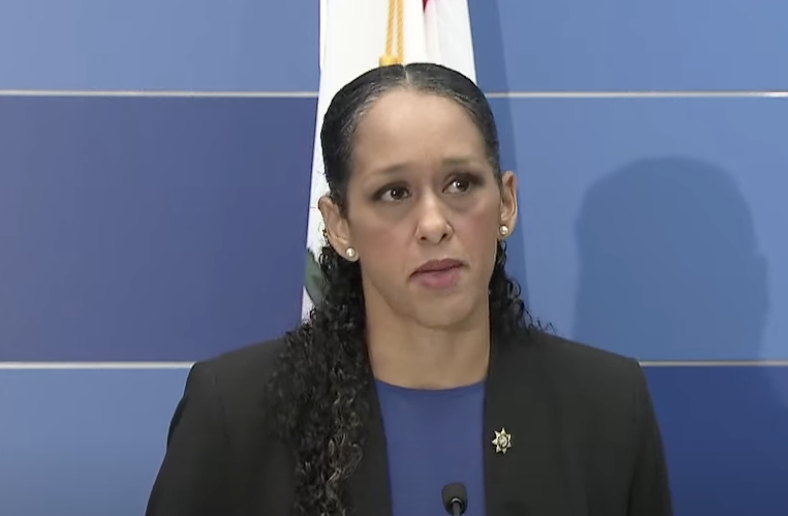
She praised Jenkins and Chief Bill Scott, along with Sup. Matt Dorsey, for “working together” to use the police to clean up neighborhoods like the Tenderloin—including directing officers to arrest people who are not dealers, just users.
“There are people publicly using drugs with no consequences,” Breed said.
You can watch the entire 56-minute event here.
Dorsey tried to back away from the War on Drugs rhetoric a bit, saying the city’s failure to address overdoses was a “war on drug addicts.” Then, oddly, he mentioned other cities that have done a better job than San Francisco at overdose prevention, including Amsterdam and Lisbon. Both cities have decriminalized drug use.
And none of the European cities that Dorsey mentioned, including Zurich and Frankfurt, have the level of systemic homelessness that San Francisco faces, in part because they provide much more affordable and social housing.

Also: None of those jurisdictions have close to the level of economic inequality that plagues San Francisco, and that Breed has never mentioned as a serious problem or policy priority.
Breed said that San Francisco “is a compassionate city” but that “we have to firmly establish what is acceptable conduct.”
She spoke of the 1,750 people who have died of overdoses in the past few years. That, Dorsey said, was more than have died of Covid in San Francisco. And it’s by any account a crisis.
It’s also a crisis that Breed’s Department of Public Health had no plan to address at all until the Board of Supes, led by Sup. Dean Preston, held a hearing on the issue in September, which led to a serious, credible public-health plan.
That plan does not suggest that more law-enforcement or police activity is the best or even a major part of the solution to overdose deaths. If anything, it says the opposite.
Scott took on that argument directly, saying that “some people say we don’t want the police involved. People need to get over that.”
He said that SFPD officers are highly trained to deal with people facing drug crises, and “we do that very well. … We need to take those excuses away.”
The proposals that the mayor and the DA are putting forward involve more arrests—again, including people who are drug users, not dealers, more prosecutions, and what Jenkins described as “new legal theories and arguments” to keep more people in jail before trial.
I’m not sure where she thinks they are all going to go, since, as MissionLocal reports, the sheriff is already unable to handle the existing jail population.
There is extensive evidence, collected over the past 50 years, showing that using law-enforcement and incarceration as solution to drug addiction is a complete failure that creates far more lasting social problems. From an ACLU report in March, 2022:
Here is the cold, hard truth: We could increase prison sentences 10-fold, cut them by half, triple them, then eliminate them, and all those changes would do absolutely nothing to protect our families and loved ones from future fentanyl tragedies …. At best, increasing prison sentences for drug-related offenses will have no impact whatsoever on this crisis. At worst, and far more likely, it will stigmatize people who need treatment, exacerbate racial injustice, and squander valuable resources … Lawmakers claiming the same failed approaches that haven’t worked for the last 50 years are now suddenly going to succeed are displaying a very dangerous mix of willful ignorance, magical thinking, and political expediency.
That’s what we apparently are seeing in San Francisco today.