
Supervisor Shamann Walton made the case for San Francisco reparations right at the start of an historic hearing today. There is, he said, a direct correlation between the racist policies the city supported and encouraged for many years and the problems facing the Black community today.
“Specific policies led to racist outcomes,” he said.
He also noted that the news media coverage of the draft reparations report has been more than misleading. There are 111 recommendations in the report, and only one—the idea that the city owes Black residents $5 million—has made headlines.
Even here in town, the Chron has made that number the focus of its coverage.
“We will not let outsiders deter us,” Walton said. He noted that the final report is not even due until later in the year.
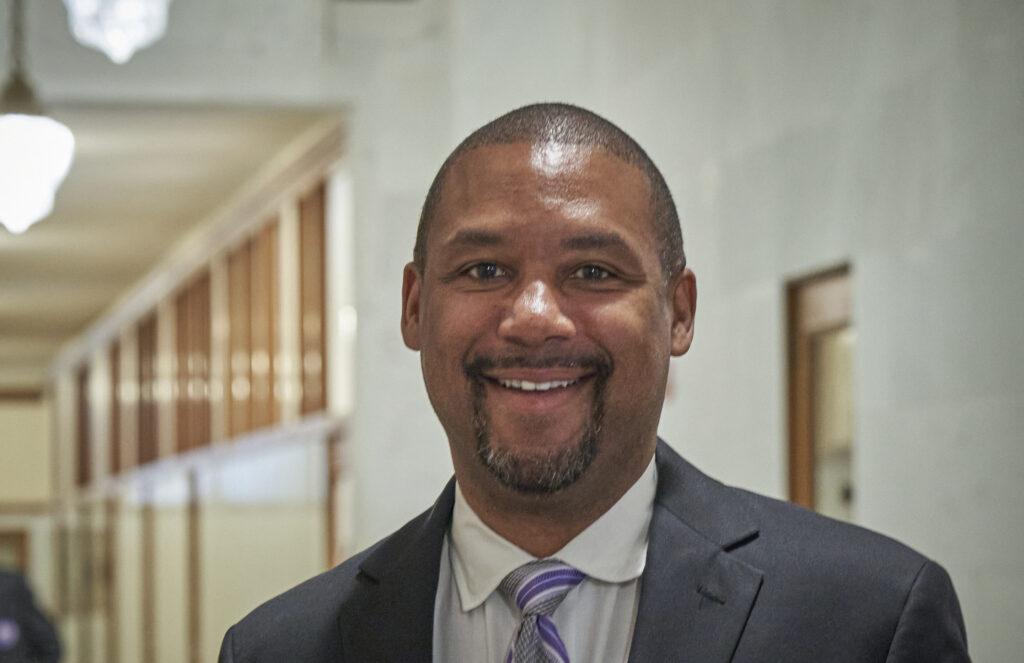
Oh and by the way: As Eric McDonald, the chair of the African American Reparations Advisory Committee, told the supes today, the mandate that the committee took on was not to look at financial feasibility. The panel was set up to research how past racist policies in San Francisco impacted Black people, and to come up with solutions that reflected the reality of those impacts.
“I am insulted that the media would focus on only one” recommendation, he said.
McDonald used a housing metaphor: “When you buy a house, you own it,” he said. “It doesn’t matter if you built the house.” In other words, even if this current city government didn’t create the historic racism (and honestly, in some ways, it is continuing that legacy), the folks who now run City Hall have to take responsibility.
Board President Aaron Peskin noted: “It’s profoundly important for us as inheritors of previous decision-makers that San Francisco has a history of racism that we need to recognize.”
He also complained about how “the media has treated this absent that historical culpability.”
Oh and by the way: There is vast wealth in this city, and much of it comes directly or indirectly from the exploitation of Black people.
And reparations are not a new concept in the US—just an idea that has never addressed the legacy of slavery.
Sup. Dean Preston noted that his great-grandmother was killed in a Nazi concentration camp, and his family fled to the United States—where, in the 1950s, the German government sent them reparations money. “I am a product of reparations,” he said. “It was that money that allowed my family to reach financial success. It wasn’t charity or a windfall, it was a recognition that my family was persecuted.”
He noted that, given the horrors of slavery on which this country was founded, and the massive debt that’s owed to the Black community, “if that number seems large, it says something about the society we live in.”
Tinisch Hollins, the vice chair, said that “San Francisco government has taken actions that have consistently led to Black population decline.”
McDonald: “Centuries of hard should be addressed with centuries of repair.”
In the end, all the supes spoke in support of the committee’s work, although some of the comments suggested that it’s not going to be a simple path forward. Joel Engardio, for example, praised the work of the panel, but then said “there are dozens of recommendations that out budget can handle.”
In other words: Let’s move forward, but not spend too much money.
Sup. Myrna Melgar noted that “reparations are not a gift, they are a payment for a debt.”
And both Sups. Hillary Ronen and Connie Chan said that the work of the committee should not be a one-time discussion but should guide the work of the city every day.
“Every day there are policies we make that have an impact on the Black Community,” Ronen said.
“As the budget chair, we need to make this a guiding principle” for city spending, Chan said.
It will interesting to see how that plays out: McDonald said that over-policing and the failed War on Drugs were among the scourges of the Black community. Tomorrow, the supes will discuss the mayor’s proposal for more money for the cops to conduct a War on Drugs in the Tenderloin.