
The major reform measures made it through their first round at the Rules Committee last week and will be back Monday/31 for what should a final vote before they move on to the full board. But it’s not clear what will happen to Mayor London Breed’s attack on the School Board.
That measure, an extraordinary power grab by a chief executive who freely accuses others of doing that, met with a chilly reception last week at Rules.
But there were enough votes to move it forward for another week.
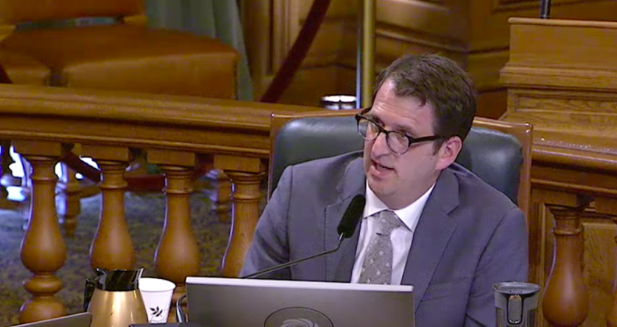
Both Sup. Aaron Peskin and Sup. Connie Chan had serious concerns about the measure. If the two of them decide to do what they did with the mayor’s other measure, it could be tabled, and die on the spot.
If not, Breed still needs to get six votes on the full board to put it on the ballot. That could be tricky since every single person from every single youth and educational organization that testified on the measure spoke against it.
The meeting starts at 9am.
Sup. Dean Preston wants a hearing to look into how many apartments in San Francisco are currently vacant, and what the city can do about it. That’s coming up at the Land Use and Transportation Committee Monday/31 at 1:30pm.
It’s a fascinating and important issue that often gets lost in all of the Yimby rhetoric about needed to build more housing—because it’s safe to say that a fair percentage of the housing that’s been built in the past ten years is empty.
The last time we checked in on this, we discovered that a lot of the new condos were bought by people as second or third or even fourth homes, and many didn’t live in them. We used property-tax data, which is available but imperfect: If someone’s tax bill for a downtown condo is sent to an address other than that condo, it’s pretty clear they don’t live there. But they could be renting it out.
My hands-on efforts to interview people who lived in some of the most expensive new buildings revealed that many didn’t know their neighbors—because they had no neighbors. The rest of the floor was empty.
But that’s not definitive information.
So how do you tell whether a housing unit, either in a condo tower that may be used as a place to park cash and not a housing unit, or an apartment in one of the city’s neighborhoods that the landlord is holding off the market?
There’s an easy way to do that, and it’s been used in other countries. You just look at the water bills.
The city has records on how much water is used at every address in San Francisco. If there’s a residential unit that is drawing almost no water every month, then clearly nobody is living there.
So far, I have been told that individual water bills aren’t public records. I disagree, but I get it.
Still, the Board of Supes should be able to see that data, even if they have to keep the individual addresses confidential, and use it to estimate how many units in these new towers are actually occupied. With a little bit of data work, you could expand that to the entire city. It can’t be that hard to ID addresses with zero monthly water use.
Then the supes can talk more seriously about how to address the problem.
It’s way cheaper to make the estimated tens of thousands of vacant units available for rent than to build tens of thousands more.
A high vacancy tax—enough to make it financially unappealing to leave a unit vacant—would be one approach. I’m sure there are more.
That committee will also hold a hearing, at Sup. Hillary Ronen’s request, on PG&E’s efforts to block the city from providing its own power to affordable-housing and other city projects. The hearing comes in the wake of a major court decision that says PG&E can’t keep charging exorbitant rates for connecting these projects to the grid.
The underlying issue here: PG&E is a criminal enterprise that can’t ever provide real clean energy to the people of San Francisco. For more than 100 years, the company has operated an illegal monopoly and used its money and power to prevent the city from operating a clean public-power system.
Breed and then-City Attorney Dennis Herrera in 2019 offered to buy out the local grid for $2.5 billion, which at the time was close to the market capitalization of the entire company. PG&E refused, of course: San Francisco, thanks to its density, is the most profitable market for the private utility.
And then the company started making it difficult for the city to use its own power to run its own operations.
The reality—and this is long overdue—is that PG&E will never come to the table, will probably not show up at the hearing, and will never work with the city. The only way to create a public-power system is to seize the grid by eminent domain.
Yes, that might take a while. We should have done it 50 years ago. So the sooner we start now, the better.