The Police Commission that Mayor London Breed wants to defang demonstrated once again this week why independent civilian oversight of law enforcement is so critical.
After Chief Bill Scott talked about the number of arrests and crimes since the start of the year, Commissioner Max Carter-Oberstone raised the kind of point he often brings up, which that has the mayor infuriated:
Last spring, he said, when Breed and Scott announced they were going to start arresting people for using drugs, not just dealing drugs, “we were overwhelmed with public health studies, comments, and white papers” that all said arresting users would increase overdose deaths—with no impact on public safety.
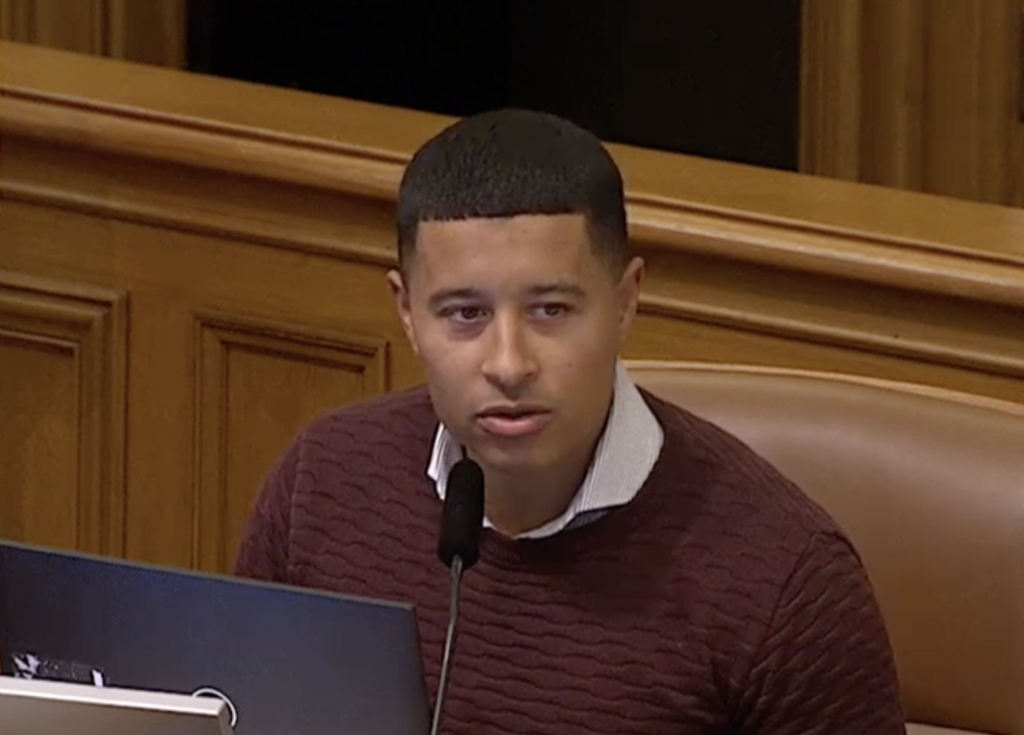
“Despite the evidence, we went forward with is,” Carter-Oberstone said—and now the city is facing a record number of overdose deaths. “Isn’t it time to abandon this approach? At what point do we say this hasn’t worked?”
Scott said he doesn’t think the new arrest strategy is the cause of the ODs.
Carter-Oberstone persisted, asking how many more months this strategy would continue, and if was the best use of eight full time officers and one sergeant. Scott: “If we had a non-law-enforcement alternative, I would be all for that.”
These are, at the very least, legitimate questions, the sort that a policy-making body ought to be discussing on a regular basis. Should the Department of Public Health take the lead on dealing with users, as opposed to dealers? What are the alternatives? And if there’s evidence that the policy is failing—and, frankly, people are dying because of it—how long should it continue?
Then we come to high-speed chases.

The department presented information about vehicle pursuits, based on records from the California Highway Patrol, which show that San Francisco cops crash their cars and cause injuries more than the statewide average.
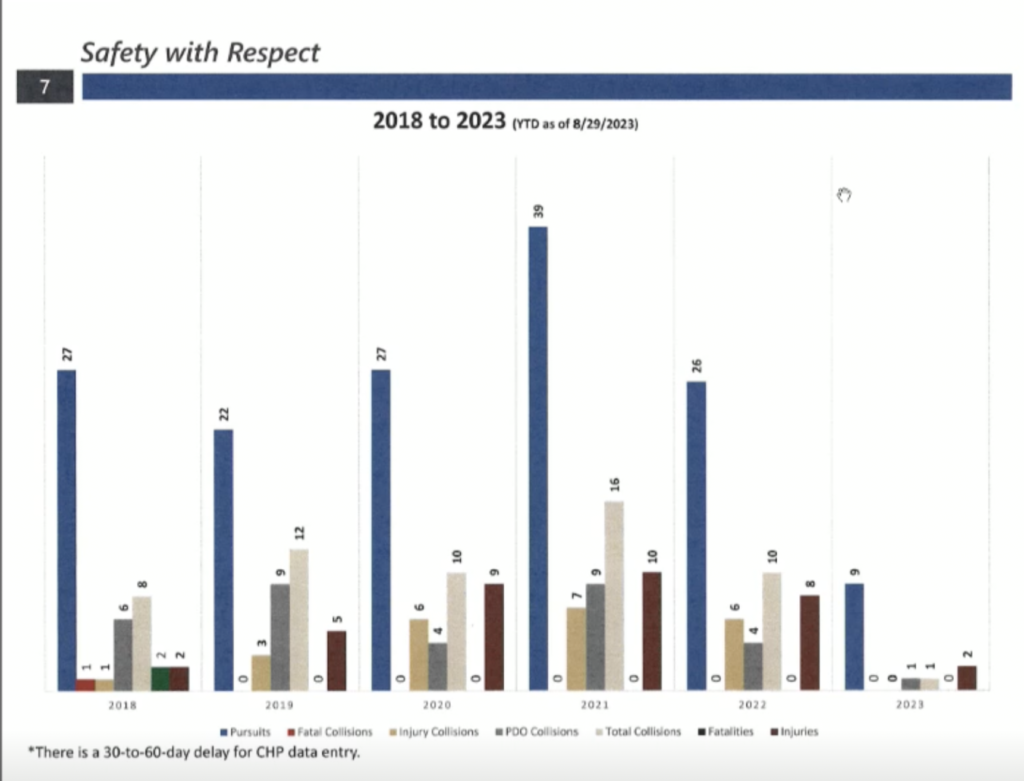
Although the chart shows only raw data, Carter-Oberstone did some simple math:
A full 38 percent of all chases end in a crash, and one in four ends with an injury to someone—and officer, the suspect, or in some cases, a bystander.
I saw a high-speed chase a week or so ago, in Bernal Heights, while I was taking my dog for a walk. It was terrifying: The rules say no more than three police vehicles are supposed to be involved, but I saw at least five, barreling up the narrow streets of Bernal, chasing a car that was weaving on and off the sidewalk to avoid pursuit.
I was a few feet away. It’s remarkable that nobody was hurt.
There’s a good reason the commission has sought to limit the circumstances of these chases—and national policing groups support strict limits—but the mayor is trying to do the opposite.
She’s gone to the ballot with a measure, Prop. E, supported by billionaire plutocrats, that would undercut the authority of the Police Commission and, among other things, allow more high-speed chases.
Never mind the evidence.
That’s why we need an independent Police Commission.