
The Chron used its front page Sunday to highlight the 806 people who have died of overdoses in 2023. It’s a terrible scourge, and I’m glad the paper is highlight it.
In an editorial, the paper argues—correctly—that this is a policy failure:
San Francisco has had a comprehensive overdose prevention plan since 2022. Part of that plan is opening overdose prevention sites, which were thrown into legal limbo after Gov. Newsom vetoed a 2022 bill that would have given the city authorization to run such facilities.
Yet providing treatment on demand for substance abuse — an essential component of our plan — is fully within our power to achieve. We have not. Instead, evidence-based policy pursuits have become mired in debates over crime and punishment.
More:
The editorial board has highlighted the efficacy of Portugal’s approach to problematic drug use, decriminalizing possession with a focus on treatment. But it’s also worth mentioning Europe’s most deadly region for drug overdoses: Scotland.
After a record 1,339 overdose deaths in 2020, Scotland moved away from a focus on punitive measures for drug use and began pivoting toward Portugal’s approach. Overdose prevention centers opened in the deadliest cities. Conservatives pushed for a universal right to treatment.
Fair enough.
The problem is that the Chron continues to endorse and support candidates who directly contribute to that policy failure and oppose candidates who are trying to fix it. Nowhere in the editorial does it criticize the governor, the mayor, or the district attorney, who are pushing the opposite of Portugal’s approach.
Dear Editorial Board: You can’t stand for policy reform then endorse candidates who are against it.
After a two-week delay, a project that represents a dramatic change in the way future housing development across San Francisco will face environmental review under state law comes before the Board of Supes Tuesday/6.
At issue is not the policy per se—the supes don’t get to set state environmental law or determine how the planners interpret and implement it—but a specific project that critics say got through the normal California Environmental Quality Act process without an adequate review.


In this case, a developer wants to convert an historic medical library on Sacramento Street into market-rate housing. The supes will hear an appeal of its exemption from CEQA review.
City planners argue that the project falls within the overall environmental review of the city’s new Housing Element, which analyzed the impacts of adding more than 80,000 new units to the city. Under what’s called a General Plan Evaluation, projects that are consistent with the Housing Element don’t have to undergo full CEQA review.
That’s a contentious issue. Richard Drury, the lawyer handling the appeal, says what the city is arguing is “absurd.” He notes:
No other city does this. … The city’s argument would apply equally to chevron wanting to open an oil refinery in an industrially zoned area of the city. Would the planning department argue that an oil refinery would be CEQA exempt? There is simply no legal distinction.
We are arguing both that the city’s interpretation is way overbroad.
The supes can determine that the project is not exempt from traditional CEQA review and send it back to the Planning Commission. I can already see the Yimby fury. (And for all we know, the developer will come back with something worse, and say it’s all legal, thanks to State Sen. Scott Wiener and his “streamlining” bills.
But as I’ve said before, this is a significant change in how environmental review is handled, and deserves some public discussion. The hearing is slated for 3pm.
The Land Use and Transportation Committee will be the first stop Monday/5 for a resolution putting the city on record opposing another Wiener housing bill, in this case one that would undermine the California Coastal Commission and allow more intensive development along Ocean Beach.
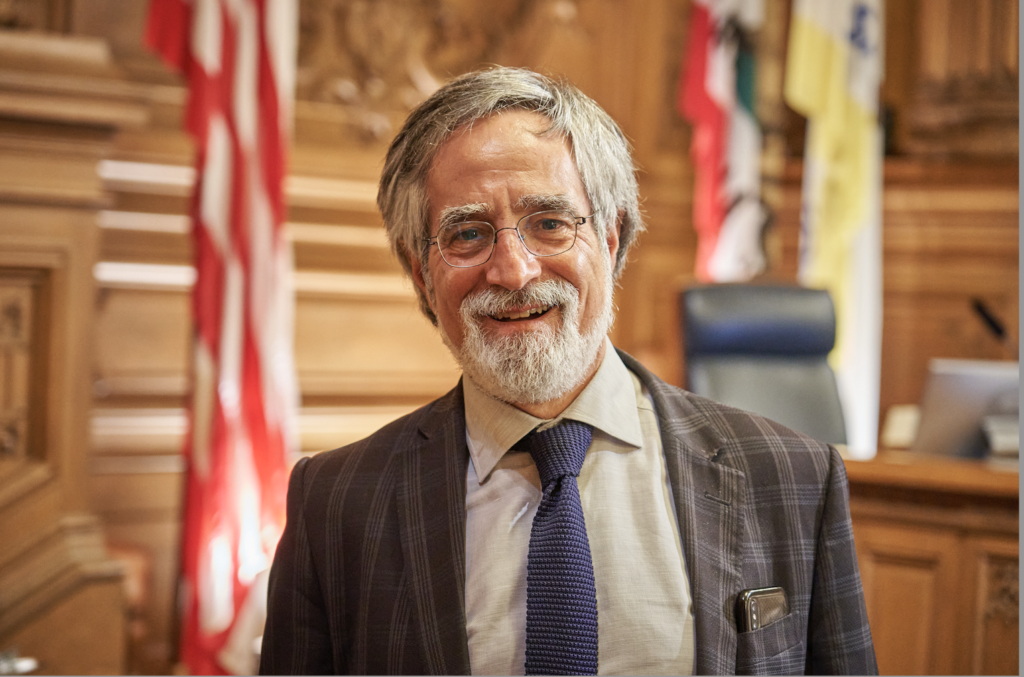
The resolution by Sup. Aaron Peskin is going to put the supes directly against the mayor and Wiener, who falsely listed San Francisco as a sponsor of the legislation. The supes set city policy on state legislation.
Peskin already has five cosponsors, and the committee is set to move the legislation to the full board Tuesday/6. If two more supes join in, the resolution will be veto-proof; even if they don’t, the mayor and Wiener will be unable to say that San Francisco is supporting the bill.
That meeting starts at 1:30pm.